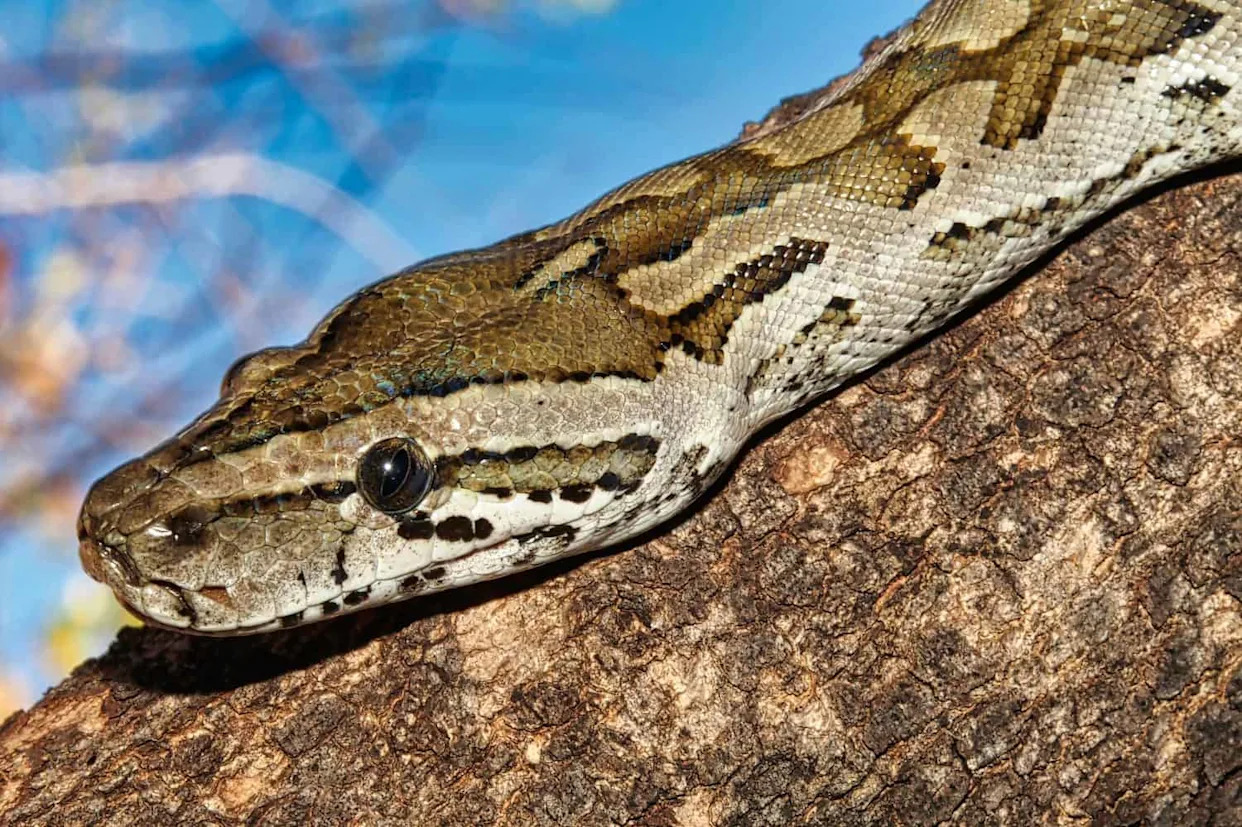
A recent incident in Kruger National Park, South Africa, captured the tension of nature as an African rock python attempted to consume a small antelope known as a duiker. This encounter, recorded by park visitors, illustrates the challenges faced by large constrictor snakes when attempting to swallow prey that possesses defensive features.
The African rock python is one of the largest snake species in Africa, renowned for its powerful constriction abilities. This snake can tackle prey significantly wider than its own head. After securing its target using backward-curved teeth, the python coils around the animal, tightening its grip to restrict blood flow and breathing. Contrary to popular belief, constriction does not crush the prey but leads to unconsciousness, allowing the snake to begin the slow process of swallowing whole.
Despite their impressive capabilities, the act of swallowing can become complicated, especially with horned animals like duikers. These small antelopes possess short, sharp horns that can create obstacles during ingestion. Ranging from a few inches to about 4-7 inches long, these horns can become lodged in the python’s mouth or throat. If the swallowing process becomes hazardous, snakes can regurgitate their meal, a physically taxing process that can prevent serious injury.
In this particular case, the python did not successfully consume the duiker. After struggling with its prey, the snake ultimately disengaged and moved away. This behavior can occur for various reasons, such as injuries to the predator, the approach of humans or other animals, or if the effort to consume the prey outweighs the benefits.
Understanding the Predatory Behavior of Pythons
The ability of African rock pythons to consume a range of mammals, including rodents, birds, monkeys, and small antelopes, is well documented. They can effectively prey on duikers under the right circumstances. The anatomical structure of snakes allows them to expand their mouths to accommodate significant prey sizes, thanks to their mobile skull bones connected by flexible ligaments.
Although there is no verified scientific evidence that duiker horns can penetrate a python’s skull during feeding, the potential for internal injuries exists if the horns become misaligned. This risk highlights the intricate dynamics of predator-prey relationships in the wild.
The incident in Kruger serves as a reminder of the unpredictable nature of wildlife. Observations of such interactions are crucial for understanding animal behavior and the risks predators face during hunting. While the python’s struggle may have seemed dramatic, it is a natural part of the cycle of life in the wild.
Conservation and Wildlife Observation
As visitors to Kruger National Park share their experiences, the importance of wildlife conservation becomes increasingly evident. Understanding the behavior and ecology of species like the African rock python and duikers helps foster a deeper appreciation for the complexities of ecosystems.
This particular video has sparked discussions about the challenges faced by predators and the delicate balance required for survival in the wild. Observations like these not only educate the public but also contribute to broader conservation efforts aimed at preserving habitats for these remarkable animals.