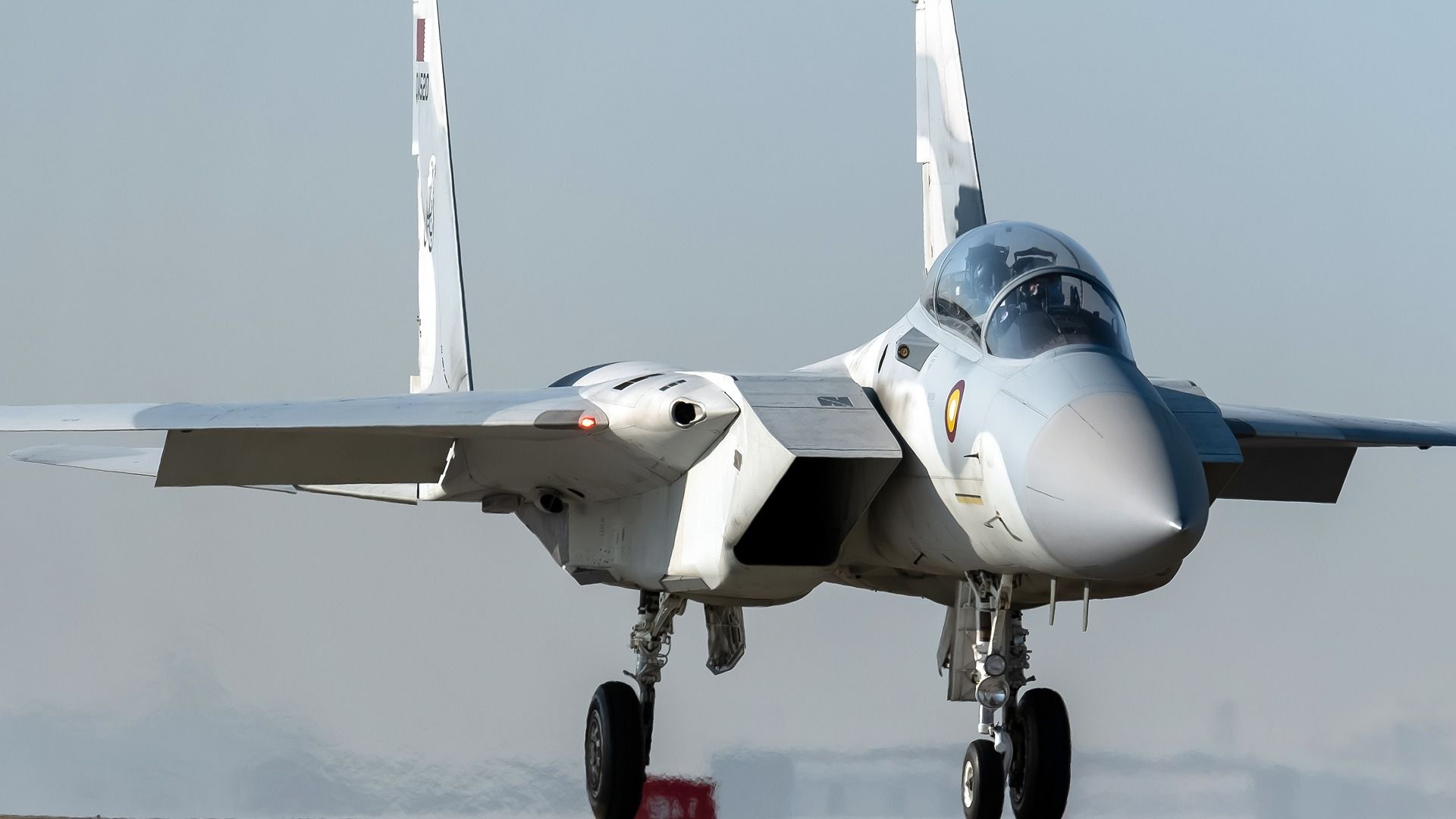
The long-serving McDonnell Douglas F-15C/D Eagle has officially concluded its active duty with the United States Air Force (USAF) as of January 24, 2025. This iconic fighter jet, which has provided unmatched air superiority for nearly five decades, is being gradually replaced by newer models like the F-15EX Eagle II and the F-35. The retirement marks the end of an era for the Eagle, which first entered service in the 1970s.
While the F-15C/D has exited front-line operations, it will continue to play a role within the Air National Guard (ANG). Units in states such as Massachusetts and Oregon still operate these aircraft, which are now tasked primarily with homeland defense missions. Their capabilities in long-range interception and aerial control remain valuable in safeguarding American airspace.
The Legacy of the F-15C/D Eagle
The F-15’s design emerged from a need for a dedicated air superiority fighter during the late 1960s. This was a response to the inadequacies of existing aircraft like the F-4 Phantom II, which struggled in dogfights against more agile opponents, particularly during the Vietnam War. The introduction of the Soviet MiG-25 ‘Foxbat’ further emphasized the need for a new aircraft.
The F-15A entered service in 1976, showcasing a significant leap in performance. With the subsequent release of the F-15C/D models in 1979, enhancements included increased fuel capacity and advanced avionics. The F-15C’s single-seat configuration was tailored for high-threat intercepts, while the twin-seat F-15D served both operational and training roles.
Over its storied career, the F-15 has recorded over 100 air-to-air victories without suffering any losses in combat. The aircraft has been a fixture in U.S. operations, with many still in service today having rolled off the production line in the early 1980s.
Operational Roles and Future Prospects
The retirement ceremony held at Kadena Air Base in Japan signaled a pivotal shift for the F-15 fleet. While the last active-duty squadrons have been deactivated, several ANG units continue to fly the F-15C/D, ensuring a defensive posture remains over U.S. airspace.
Notable ANG units still operating these aircraft include the 104th Fighter Wing in Massachusetts, which protects the northeastern U.S., and the 142nd Fighter Wing in Oregon, responsible for air defense in the Pacific Northwest. The 159th Fighter Wing in Louisiana and the 173rd Fighter Wing in Oregon also contribute to this vital mission, with the latter being the last formal training unit for the Eagle.
The ongoing modernization efforts have kept the F-15C/D relevant. Recent upgrades include advanced radar systems and avionics modernization. The integration of modern weapons, such as the AIM-120D AMRAAM and AIM-9X Sidewinder, has also enhanced the aircraft’s combat capabilities.
As the F-15C/D transitions into history, the F-15EX Eagle II is set to take its place, equipped with state-of-the-art technology and a design intended to last into the 2040s. The legacy of the F-15C/D as a steadfast defender of the skies will remain a point of pride for the USAF and the pilots who flew these aircraft.
The retirement of the F-15C/D Eagles marks a significant chapter in military aviation history. As newer models take to the skies, the sound of these veteran fighters will soon fade from the American airspace, leaving behind a legacy of unparalleled service and accomplishment.