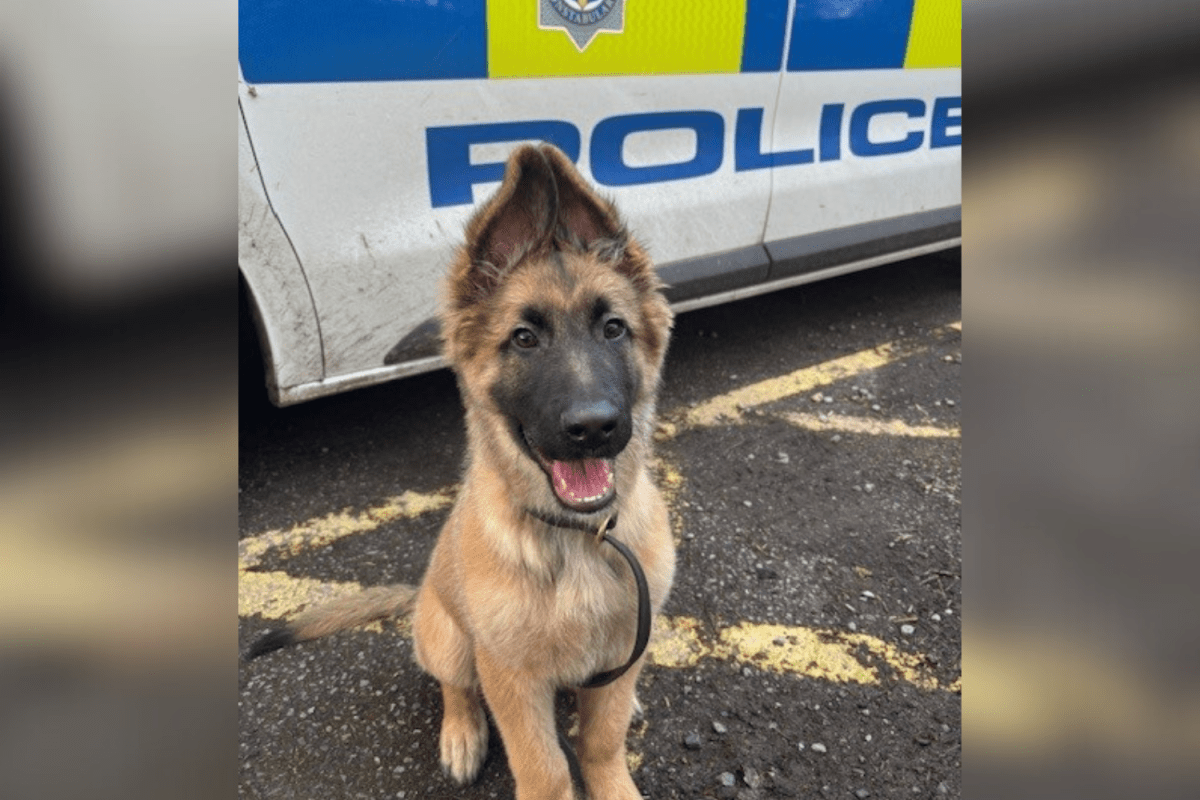
A young puppy found abandoned in northern England has been given a new lease on life after being taken in by the Durham Constabulary’s Dog Support Unit. The dog, a cross between a German Shepherd and a Malinois, was discovered as a stray and brought to the attention of animal welfare charity Stray Aid. Local dog wardens assisted in securing the puppy’s future by delivering him to the charity.
During a meeting with Stray Aid representatives, Chief Inspector of Durham Police spotted the puppy and recognized his potential for police work, as detailed in an Instagram post by the force. Following this encounter, the Dog Support Unit conducted an assessment to evaluate the young dog’s suitability for police duties. The puppy, later named Chief, impressively passed his initial evaluations “with flying colors.”
Chief’s Journey Begins
At just 18 weeks old, Chief has already taken significant steps in his new career. He has been placed with an experienced police dog handler who is guiding him through environmental training. This training is designed to build Chief’s confidence and equip him with the necessary skills for future police work.
In the UK, police canines operate within specialized Dog Support Units, assisting officers with tasks that require advanced skills in scent detection, speed, and control. Forces typically deploy general-purpose dogs, most commonly German Shepherds or Belgian Malinois, for duties such as patrol, suspect tracking, public order policing, and officer protection. Specialist detection dogs, which often include breeds like Labradors or springer spaniels, are trained to locate drugs, firearms, explosives, or forensic evidence.
Across the Atlantic, U.S. police dogs, commonly known as K-9s, perform similar functions within numerous local, state, and federal agencies. In the United States, K-9 units are frequently involved in suspect apprehensions, drug and explosives detection, search-and-rescue operations, and evidence tracking. The predominant patrol breeds in the U.S. mirror those in the UK, with German Shepherds and Belgian Malinois leading the way, while scent-based work often involves Labradors and bloodhounds.
Building Bonds Through Training
Training for police dogs takes several months and continues throughout their working lives. Handlers are responsible for both the operational deployment of their dogs and their daily care. Many departments require K-9 teams to undergo regular certification to ensure they meet legal and performance standards. Importantly, police dogs often live with their handlers, enhancing the bond between them both on and off duty.
The transformation of this once-abandoned puppy into a police recruit exemplifies the potential for change and resilience. Durham Constabulary aptly described Chief’s journey as going “from stray pup to squad recruit.” Under the guidance of his handler, Chief will continue to develop the skills necessary for a successful career in law enforcement.
As Chief embarks on this new chapter, he represents not just a promising future for himself but also embodies the spirit of second chances that can arise when communities come together to support their four-legged companions.