The quest to understand how life emerges from non-living matter has long perplexed scientists. A new approach, led by researcher Sara Imari Walker, aims to bring clarity to this complex issue by proposing a framework for measuring molecular complexity in laboratory settings. This initiative seeks to uncover the physical mechanisms behind the origin of life, a challenge that has remained elusive despite extensive research.
One of the primary obstacles in studying the emergence of life is the absence of standardized methods for comparing results across various experimental conditions and planetary environments. Walker’s work highlights current challenges in origin of life chemistry, particularly the difficulties in quantifying experimental selectivity and the de novo generation of molecular complexity.
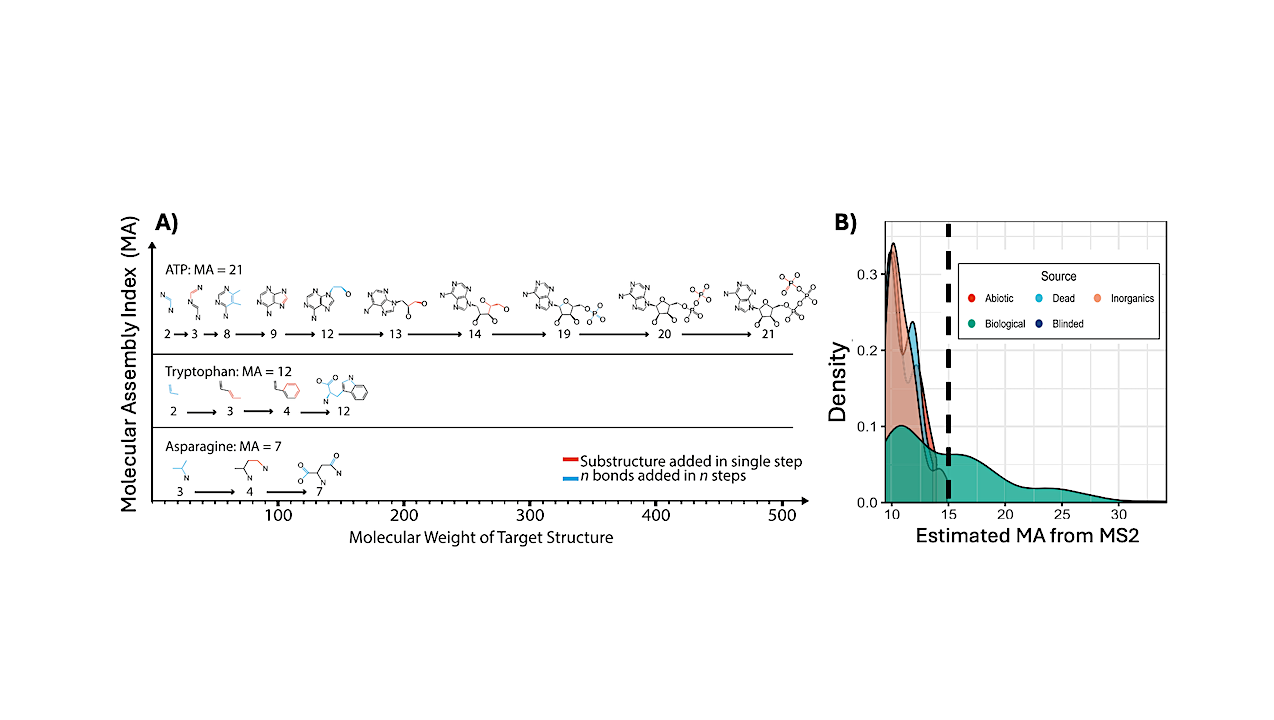
Introducing Molecular Assembly Theory
In her recent essay, Walker emphasizes the potential of molecular assembly theory as a tool for measuring molecular complexity. By employing this metrology-centered approach, researchers can conduct rigorous testing of hypotheses regarding the major transitions that contribute to the emergence of life. This could help reconcile traditional debates surrounding the origins of life, particularly the contrasting metabolism-first and genetics-first scenarios.
Grounding the study of life’s origins in measurable complexity not only enhances scientific understanding but also has profound implications for the search for extraterrestrial life. Walker suggests that establishing standardized measurements of molecular complexity may lead to more effective detection strategies for identifying biological complexity in diverse planetary contexts.
Looking Ahead in Astrobiology
As the field of astrobiology progresses, the need for robust and standardized methods to assess molecular complexity becomes increasingly critical. Walker’s insights provide a pathway toward unifying disparate approaches to understanding how non-living matter transitions to life. With ongoing research and advancements in molecular assembly theory, the scientific community is poised to make significant strides in unraveling the mysteries of life’s origins.
The implications of this research extend beyond Earth, potentially guiding future explorations in astrobiology. As scientists refine their techniques and deepen their understanding of molecular complexity, they may unlock new avenues for detecting life in the cosmos. The exploration of this exciting frontier is just beginning, and much work remains to be done.
In conclusion, the initiative led by Sara Imari Walker represents a significant step forward in the study of life’s emergence. By focusing on measurable complexity, researchers can enhance their understanding of the fundamental processes that govern the transition from non-living to living matter, paving the way for future discoveries in both laboratory and extraterrestrial settings.