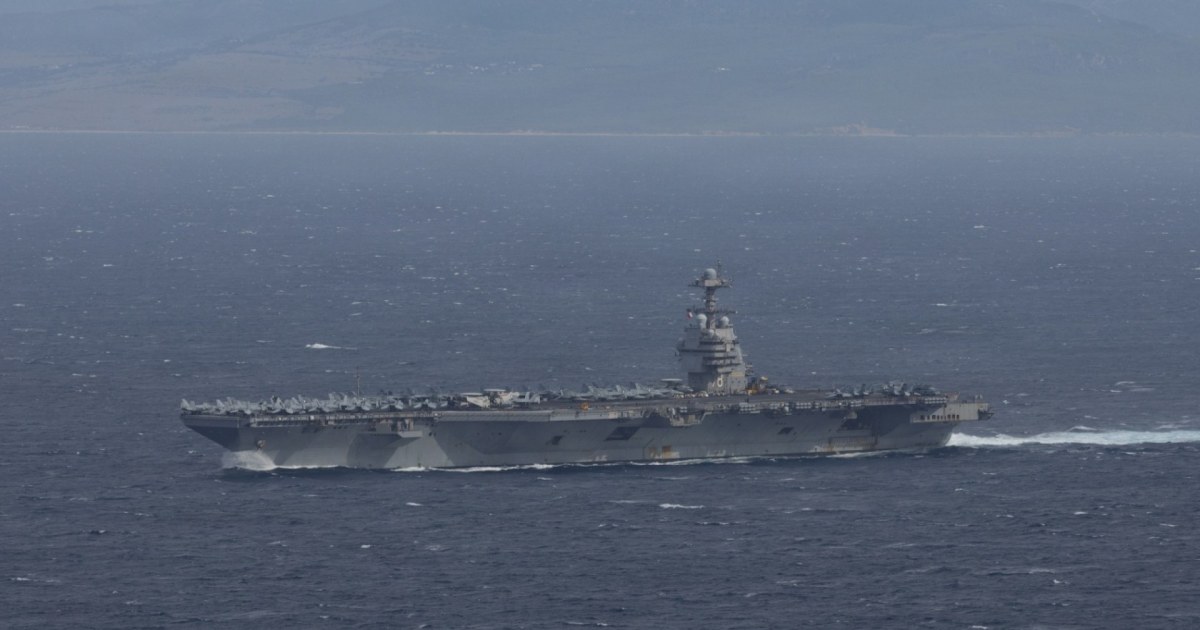
The U.S. Navy’s largest aircraft carrier, the USS Gerald R. Ford, has docked in Colombia as part of a broader strategy to combat drug trafficking in the region. This significant deployment aligns with ongoing efforts by the U.S. government to disrupt the operations of drug cartels and enhance maritime security in Latin America. The carrier arrived on November 12, 2025, signaling a robust military presence.
The USS Gerald R. Ford’s visit is a clear demonstration of the U.S. commitment to addressing the challenges posed by drug trafficking organizations. These groups have long posed threats not only to regional stability but also to public safety in the United States. The deployment comes at a time when President Donald Trump has intensified efforts to tackle the drug crisis, which remains a pressing issue for his administration.
During a press briefing, a senior Navy official stated, “The presence of the USS Gerald R. Ford in Colombia is part of our ongoing strategy to support our partners in the region and to ensure that we can respond effectively to any threats.” This visit emphasizes the importance of international collaboration in addressing transnational challenges such as drug trafficking.
The carrier, equipped with advanced technology and a complement of over 5,000 personnel, will support various missions during its time in Colombia. These include training exercises with Colombian naval forces, aimed at improving operational capabilities and fostering closer ties between the two nations. The U.S. Navy has emphasized that strengthening partnerships in the region is vital for enhancing security and stability.
Colombia has faced significant challenges related to drug production and trafficking, with the country being a major source of cocaine entering the U.S. market. The U.S. has provided extensive support to Colombia in combating these issues, including financial aid and military assistance. The arrival of the USS Gerald R. Ford represents a continuation of this long-standing partnership.
As the USS Gerald R. Ford engages in joint operations and training exercises, it is expected to enhance the capabilities of Colombian forces. The collaborative efforts are designed to target illicit drug production and trafficking networks, which have devastating effects on communities both in Colombia and in the U.S.
In recent years, drug cartels have adapted their strategies and operations, complicating global efforts to combat drug trafficking. By deploying the USS Gerald R. Ford, the U.S. Navy aims to assert its influence and commitment to fighting these evolving threats. The carrier’s presence serves not only as a deterrent but also as a means to reassure allies in the region.
This deployment is part of a broader military strategy that includes enhanced surveillance and intelligence-sharing initiatives. The U.S. Navy’s focus on maritime security underscores the need for a coordinated response to drug trafficking, which often involves complex networks operating across multiple countries.
As the situation develops, the U.S. Navy will continue to monitor and adapt its strategies in response to the changing dynamics of drug trafficking in Latin America. The arrival of the USS Gerald R. Ford marks a significant step in this ongoing battle, highlighting the importance of military readiness and international cooperation in addressing global security challenges.
With the ship now docked in Colombia, officials are optimistic about the potential impact of this mission. The collaborative efforts between the U.S. Navy and Colombian forces will not only enhance operational effectiveness but also reinforce the long-standing partnership between the two nations in the fight against drug cartels.