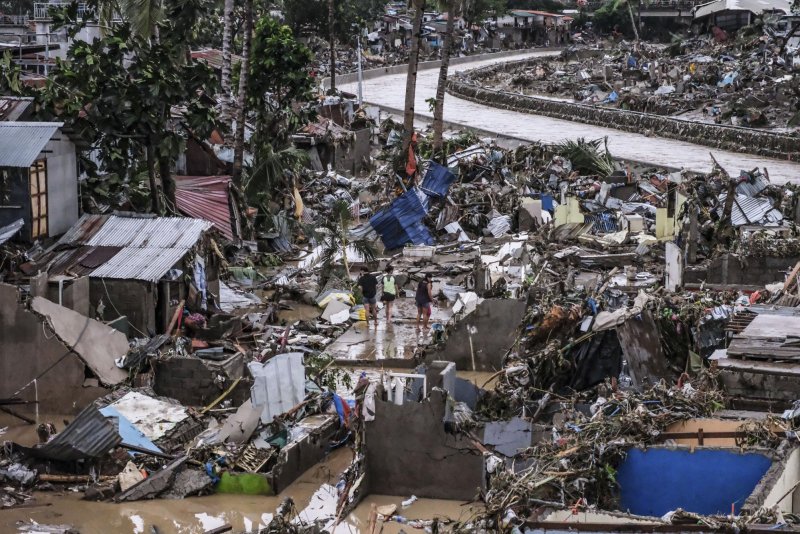
Typhoon Fung-Wong made landfall in the province of Aurora, located on the island of Luzon in the Philippines, on the evening of November 8, 2025. This super typhoon brought sustained winds of 115 miles per hour (mph) and gusts peaking at 143 mph, leading to the evacuation of nearly one million residents. At least two deaths have been reported due to the storm’s impact.
The Philippine Atmospheric, Geophysical and Astronomical Services Administration (PAGASA) had previously issued warnings regarding the potential for life-threatening storm surges associated with the “very intense typhoon.” Fung-Wong, known locally as Uwan, is the second significant storm to strike the region within a week. The nation is still recovering from Typhoon Kalmaegi, which caused nearly 200 fatalities in the Central Philippines and five additional deaths in Vietnam.
As the storm struck, civil defense officials confirmed one drowning and reported the recovery of a woman’s body trapped beneath debris in Catbalogan City. The impact of Fung-Wong has been significant, with nearly 300 flights canceled as various airports closed in response to the storm. Although meteorologists anticipate the storm may weaken after landfall, they predict it will remain a typhoon as it continues to affect the province until at least Tuesday.
Emergency Preparations and Alerts Issued
The Metro Manila Disaster Risk Reduction and Management Council issued its highest alert level in preparation for Fung-Wong’s arrival, anticipating severe weather from Sunday through Tuesday. “This is our highest state of readiness,” stated Civil Defense Director George Keyser during an emergency meeting prior to the storm’s landfall. He warned that the volume of rainfall could be unprecedented, even if the eye of the storm makes landfall far to the north.
Authorities are coordinating among 17 local governments and national agencies to effectively manage the storm’s impacts. Keyser highlighted the critical hours from Sunday afternoon through Monday night, emphasizing the need to clear streets for search-and-rescue operations and relief efforts. Emergency protocols have been activated, deploying 486 traffic enforcers, 130 flood control teams, and 40 road emergency crews, alongside K-9 units.
The Philippine Information Agency reported that flood control measures are in effect at 71 pumping stations, with video monitoring established for 85 critical locations. Additionally, boats, cranes, payloaders, and buses have been readied for evacuations as necessary.
With a diameter of approximately 932 miles, the typhoon has already begun to affect the eastern region of the Philippines with strong winds and heavy rainfall prior to making landfall. Following its trajectory, Fung-Wong is expected to move northwesterly across the northwestern Philippines before turning north on Tuesday, ultimately heading toward Taiwan.
As the situation evolves, authorities continue to monitor conditions and provide updates to ensure public safety amidst the ongoing threat posed by Typhoon Fung-Wong.