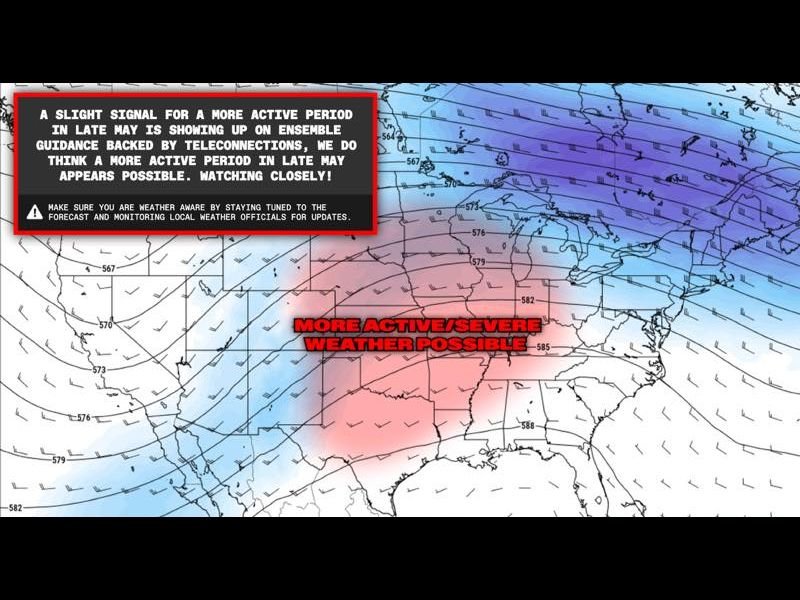
The California Herald reports meteorologists are sounding alarms as a major severe weather outbreak threatens the Great Plains and Great Lakes late this May, with the potential to rival the infamous 2004 tornado season.
Leading forecasting tools, including the highly respected European Ensemble (Euro Ensemble) model, have identified a developing atmospheric pattern poised to ignite a dramatic surge in tornado activity between now and early June.
Historic Tornado Pattern on the Horizon
The Euro Ensemble model’s latest runs, including a key May 7, 2026 forecast, reveal a textbook trough-ridge pattern across the continental U.S.—a scenario known for explosive severe weather outbreaks. This setup fosters enhanced wind shear, moisture inflow, and atmospheric instability, which together fuel powerful and long-tracked tornadoes.
“The model signals bear resemblance to meteorological conditions responsible for the 2004 tornado outbreak, one of the most destructive tornado seasons in recent memory,” explained a weather analyst familiar with the data. That season generated numerous violent tornadoes across multiple states over an extended timeframe, causing widespread destruction.
Why This Matters Right Now
Residents in the Great Plains, Mississippi Valley, and Great Lakes regions face a significantly elevated risk for severe weather outbreaks beginning in the final ten days of May and extending into June.
Forecasters urge communities to activate severe weather preparedness plans immediately, test weather alert systems, and monitor local updates as this potentially historic outbreak period rapidly approaches.
“While forecast uncertainty remains inherent with long-range ensemble projections, the consistent signal across multiple model runs strengthens the likelihood of a dangerous and active tornado pattern,” said a National Weather Service expert overseeing the region.
For California residents, the implications underscore a critical national severe weather moment. Although the state is not directly affected, the unraveling severe weather events across America’s heartland can impact supply chains, insurance markets, and national emergency response resources that extend across the U.S.
What’s Next
Weather services and emergency officials are preparing for heightened tornado alerts and outbreak monitoring as May ends. Communities are reminded that tornado season in the central U.S. often peaks in late spring but can persist through early summer, demanding vigilance.
Until more precise short-range forecasts become available, public safety experts emphasize awareness, readiness, and access to reliable severe weather notifications across the threatened zones.
Stay Informed
The California Herald will provide ongoing severe weather coverage and nationwide tornado outbreak updates as conditions evolve. For continuous storm tracking and expert analysis, readers can visit SaludaStandard-Sentinel.com.
“The late May through June period could deliver a similarly explosive outbreak pattern to 2004, elevating the threat across multiple states simultaneously,” meteorologists caution.