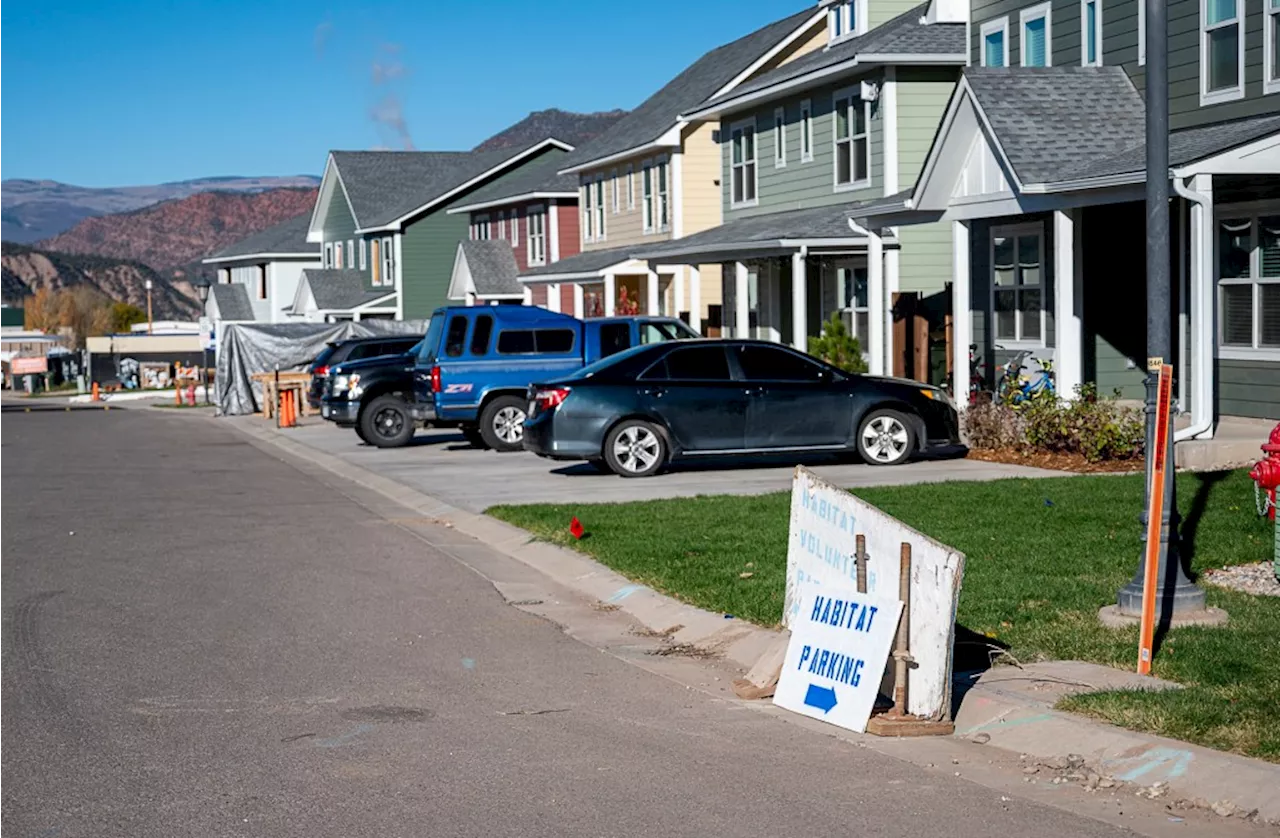
Colorado legislators are moving swiftly on House Bill 1308, a groundbreaking proposal designed to expand affordable housing by allowing residential lots to split into two homes where appropriate. This initiative, gaining momentum now, could rapidly unlock homeownership opportunities for thousands of Coloradans facing rising housing costs and land prices.
Jesselina Cordova, a homeowner in Habitat Metro Denver’s High Street Community, spoke out in urgent support of the bill, emphasizing the need for policies that make housing attainable for average residents. “I urge legislators to vote yes on HB 1308 and support more opportunities for attainable homeownership for people like me,” Cordova said, highlighting how the bill could stabilize communities and keep families rooted.
Colorado’s housing challenges are underscored by affordability struggles across the state. Habitat for Humanity Vail Valley illustrates the growing demand: their production doubled recently, from 20 homes built between 2019 and 2021 to 40 units planned from 2022 through 2024. Despite this success, organizations like Habitat face challenges from outdated zoning laws and restrictive land-use rules that drive up costs.
How HB 1308 Works and Why It Matters Now
Currently, many residential zones restrict homebuilding to one house per lot, limiting supply and driving up prices. HB 1308 proposes allowing a single lot to become two homes “where appropriate,” unlocking underutilized land and reducing land acquisition expenses. This promotes more affordable home prices without drastically altering the neighborhood character.
Experts assert the bill builds on proven successes, such as Habitat Metro Denver’s ability to create homes on smaller and split lots that are both high-quality and affordable. By promoting thoughtful land use, HB 1308 could be a crucial lever to tackle Colorado’s and, by extension, the nation’s escalating housing crisis.
Human Impact: Stability and Community Preservation
Homeowners like Cordova illustrate the deep human impact behind the policy debate. Many Coloradans worry about whether their children can afford homes nearby, whether aging parents can downsize within their communities, or if long-time residents will be priced out entirely. Stable homeownership offers predictability, generational wealth-building, and the ability to maintain community ties.
“Policies like HB 1308 help ensure more people can build stability and remain connected to their communities,” Cordova said.
Housing advocates warn that rising land costs create barriers that disproportionately hurt middle- and low-income families. Allowing lot splitting is seen as a practical, immediate solution to generate additional housing supply on land already zoned for residential use.
Broader Context: Colorado’s Evolving Housing Landscape
This movement comes amid shifting dynamics in Colorado’s urban environments, with remote work reducing daily commutes and prompting new questions about community design and transit diversity. Advocates envision neighborhoods where street space balances cars, bicycles, public transit, and communal hubs — enhancing quality of life for residents.
The bill is timely as the Colorado Legislature weighs other housing debates, including contentious zoning changes in cities like Lakewood and discussions on innovative building technologies. It also emerges alongside Colorado’s gubernatorial race with candidates like Attorney General Phil Weiser, who signals priorities on accessibility and community stability.
What’s Next: Critical Votes and Legislative Action
As voting deadlines approach, advocates urge Colorado lawmakers to act swiftly in support of HB 1308. This bill has the potential to swiftly ease housing pressure, democratize homeownership, and preserve the social fabric of neighborhoods threatened by displacement and soaring costs.
For Californians and other U.S. readers, Colorado’s lot-splitting strategy offers a timely example of innovative policy addressing the national housing shortage. Scaling such policies could unlock new possibilities in cities and suburbs across the country, including California’s high-demand regions.
Keep watching The California Herald for updates on HB 1308’s progress and analysis of housing solutions making headlines nationwide.