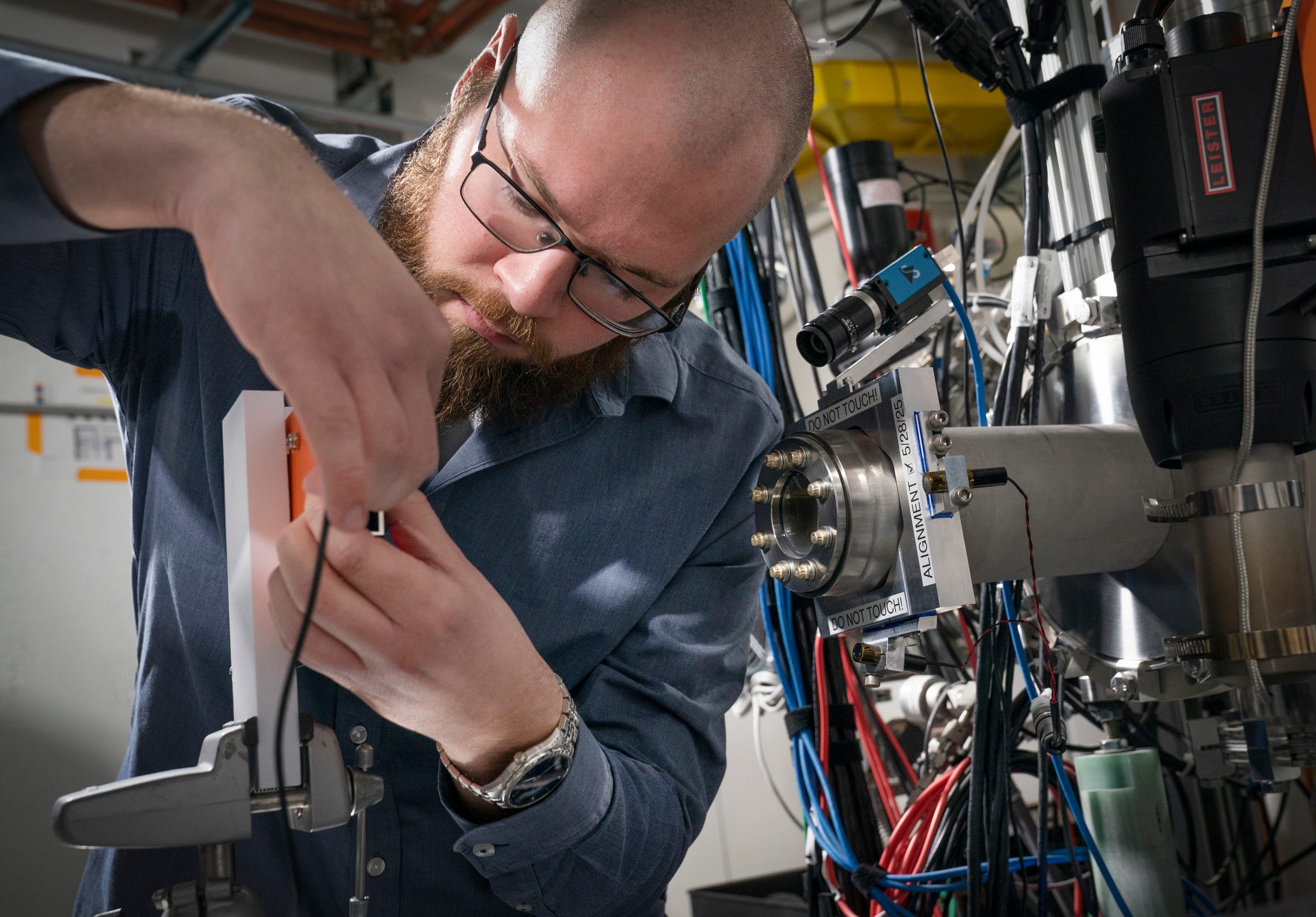
Michigan State University (MSU) has launched a state-of-the-art facility dedicated to testing microelectronics against cosmic rays. The $14 million K500 Chip Testing Facility, inaugurated in February 2023, aims to simulate decades of cosmic ray exposure within minutes, ensuring that microchips used in space, defense, and automotive sectors can withstand the harsh conditions of space.
This facility is one of only three heavy ion cyclotron locations in the United States that can conduct such specialized chip testing. The K500 facility, part of MSU’s Facility for Rare Isotope Beams (FRIB), repurposed existing infrastructure originally designed for high-energy nuclear research. Funding for the project came from the U.S. Department of Defense as part of a broader initiative to enhance national capabilities in semiconductor technology.
Addressing Cosmic Ray Threats
Cosmic rays, originating from sources like the sun and distant supernovae, pose a significant threat to electronic devices in space. These highly energetic particles can cause malfunctions, ranging from minor glitches to catastrophic failures. Notably, an incident involving a JetBlue Airbus A320 in October 2025 highlighted this risk when cosmic rays were implicated in a severe altitude drop, resulting in injuries to 15 passengers and widespread flight disruptions.
According to Thomas Glasmacher, laboratory director at FRIB, the K500 facility is crucial for ensuring that advanced technologies can endure the cosmic bombardment they will face over time. “You need to, in a limited amount of time, provide the kinds of cosmic rays a device or a chip in space sees in 50 years or so,” Glasmacher stated. This facility allows researchers to replicate decades of cosmic exposure in just a few minutes.
Facility Capabilities and Future Plans
The K500 facility employs a sophisticated process that accelerates ions using substantial energy, ranging from 20 million to 40 million electron volts per unit mass, which are then directed at chip samples for testing. “We give customers a menu, and they order off the menu,” noted Steve Lidia, FRIB beam instrumentation and measurement department manager. This flexibility allows chip manufacturers, including Texas Instruments, to tailor experiments to their specific needs.
Since its launch at the beginning of 2023, the K500 facility is operating at approximately 40% capacity, with plans to provide around 2,500 hours of testing time for clients this year. There are also plans to expand the facility by adding a new 5,500-square-foot section to accommodate more simultaneous testing activities.
In addition to serving industry needs, the K500 facility offers students at MSU valuable hands-on experience. John Papapolymerou, interim dean of MSU’s College of Engineering, emphasized the educational benefits, stating, “This facility gives us more opportunity, because we have more available hours to train more and more students.” He believes that the K500 will play a vital role in workforce development in fields such as semiconductors and electronics.
Looking ahead, the upcoming Leinweber Center for Engineering and Digital Innovation, set to open in August 2028, will further integrate the activities of the K500 facility into broader educational programs. This 265,000-square-foot center will focus on digital learning, advanced research, and career readiness in various technological fields.
The initiatives at MSU reflect a growing commitment to enhancing the capabilities of microelectronics and preparing the workforce for future challenges in space technology and beyond. As the demand for reliable technology continues to rise, facilities like the K500 will be critical in ensuring that microchips can withstand the rigors of space.