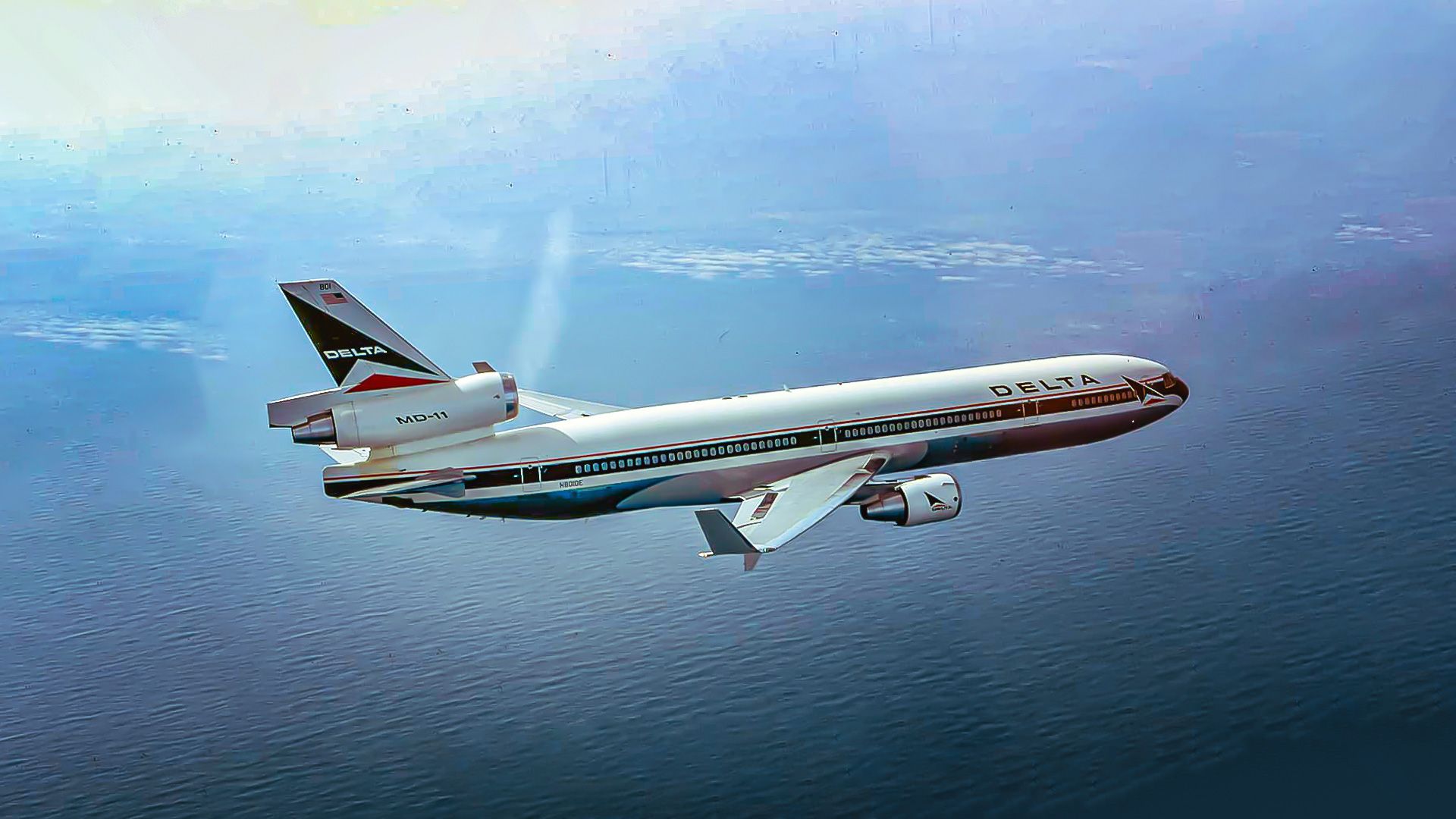
The McDonnell Douglas MD-11, aviation’s last significant three-engine aircraft, marked an era of change in the industry. Introduced in the early 1990s, the MD-11 was designed as an evolution of the DC-10, featuring a stretched fuselage, winglets, and a modern two-pilot cockpit. It promised improved range and fuel efficiency, making it an appealing option for airlines at the time. However, as twin-engine aircraft like the Boeing 777 and Airbus A330 gained traction, many airlines began to retire the MD-11 sooner than anticipated.
Between its introduction and retirement, several major airlines operated the MD-11, demonstrating its versatility and appeal. This article examines the experiences of seven airlines that integrated this aircraft into their fleets, highlighting their operational strategies and the eventual transitions away from the MD-11.
American Airlines: A High-Capacity Workhorse
American Airlines operated a fleet of 18 MD-11s, using the aircraft as a high-capacity long-range solution during a time of significant global network expansion. The MD-11 served as a bridge between the classic widebody era and the rise of long-range twin-engine jets.
The aircraft entered service in 1991 and was retired by 2001. During its tenure, it offered modern cockpit improvements and substantial cargo capacity, fulfilling American’s need for efficient long-haul operations. Ultimately, the economics of the 2000s, characterized by rising fuel costs and the advantages of twin-engine models, led to the MD-11’s retirement.
China Airlines: A Targeted Approach
China Airlines operated just four MD-11s as a focused solution to support its long-haul capabilities. The airline introduced the aircraft in 1992 and retired it by 2002, using the MD-11 primarily to add capacity during peak demand periods.
The decision to operate a limited fleet allowed the airline to maintain operational flexibility while benefiting from the aircraft’s passenger and cargo capabilities. However, as the industry shifted towards more efficient twin-engine aircraft, China Airlines also moved away from the MD-11.
Delta Air Lines: Ambition Meets Longevity
Delta Air Lines adopted the MD-11 in 1990, operating a fleet of 17 aircraft until 2005. The jet provided a modern option for Delta at a time of expanding international routes.
While the MD-11 became a specialized asset, Delta’s decision to keep the aircraft in service longer than many of its competitors suggests it was still operationally relevant. However, the combination of fleet simplification and evolving fuel economics ultimately led to its retirement.
Finnair: Geographic Alignment
Finnair’s use of the MD-11 is notable for its alignment with the airline’s geographic strategy. With a fleet of seven MD-11s, Finnair effectively utilized the aircraft to enhance its long-haul operations from Helsinki. The airline introduced the MD-11 in 1990 and retired it in 2010.
As competition intensified and fuel efficiency became paramount, Finnair’s decision to retire the MD-11 reflected a broader industry trend towards twin-engine aircraft. This transition marked a significant shift in the airline’s operational strategy.
Garuda Indonesia: A Brief Engagement
Garuda Indonesia operated a small fleet of just five MD-11s, entering service in 1991 and retiring them by 1998. The airline aimed to modernize its international offering with the MD-11 but found the aircraft’s operational costs challenging in the late 1990s.
The economic pressures of maintaining a small fleet of tri-jets ultimately led to a quick exit from the MD-11 program. As the industry gravitated towards simpler twin-engine long-haul jets, Garuda Indonesia’s experience with the MD-11 highlighted the challenges faced by airlines with limited resources.
Japan Airlines: Strategic Capacity Management
Japan Airlines (JAL) operated a fleet of 10 MD-11s from 1993 until 2004. The aircraft allowed JAL to experiment with long-haul capacity during a time of evolving market demands.
The MD-11 provided a strong combination of passenger capacity and cargo volume, aligning well with JAL’s hub-to-hub operations. However, the rapid evolution of twin-engine aircraft and their improved efficiency led JAL to retire the MD-11 as it streamlined its long-haul fleet.
KLM Royal Dutch Airlines: The Iconic Operator
KLM is recognized as the most iconic operator of the MD-11, maintaining a fleet of 10 aircraft until 2014. The airline successfully integrated the MD-11 into its network, demonstrating the aircraft’s reliability and performance.
KLM’s long commitment to the MD-11 showcased its ability to adapt the aircraft to various long-haul missions without requiring the capacity of larger jets like the Boeing 747. However, increasing competition and the appeal of twin-engine models ultimately led to the MD-11’s retirement from KLM’s fleet.
The legacy of the McDonnell Douglas MD-11 continues to resonate within the aviation industry. While it was once a staple for major airlines, the gradual shift towards more efficient and cost-effective twin-engine aircraft has marked the end of an era for this unique trijet. As airlines adapt to evolving demands, the MD-11 remains a notable chapter in the history of commercial aviation.