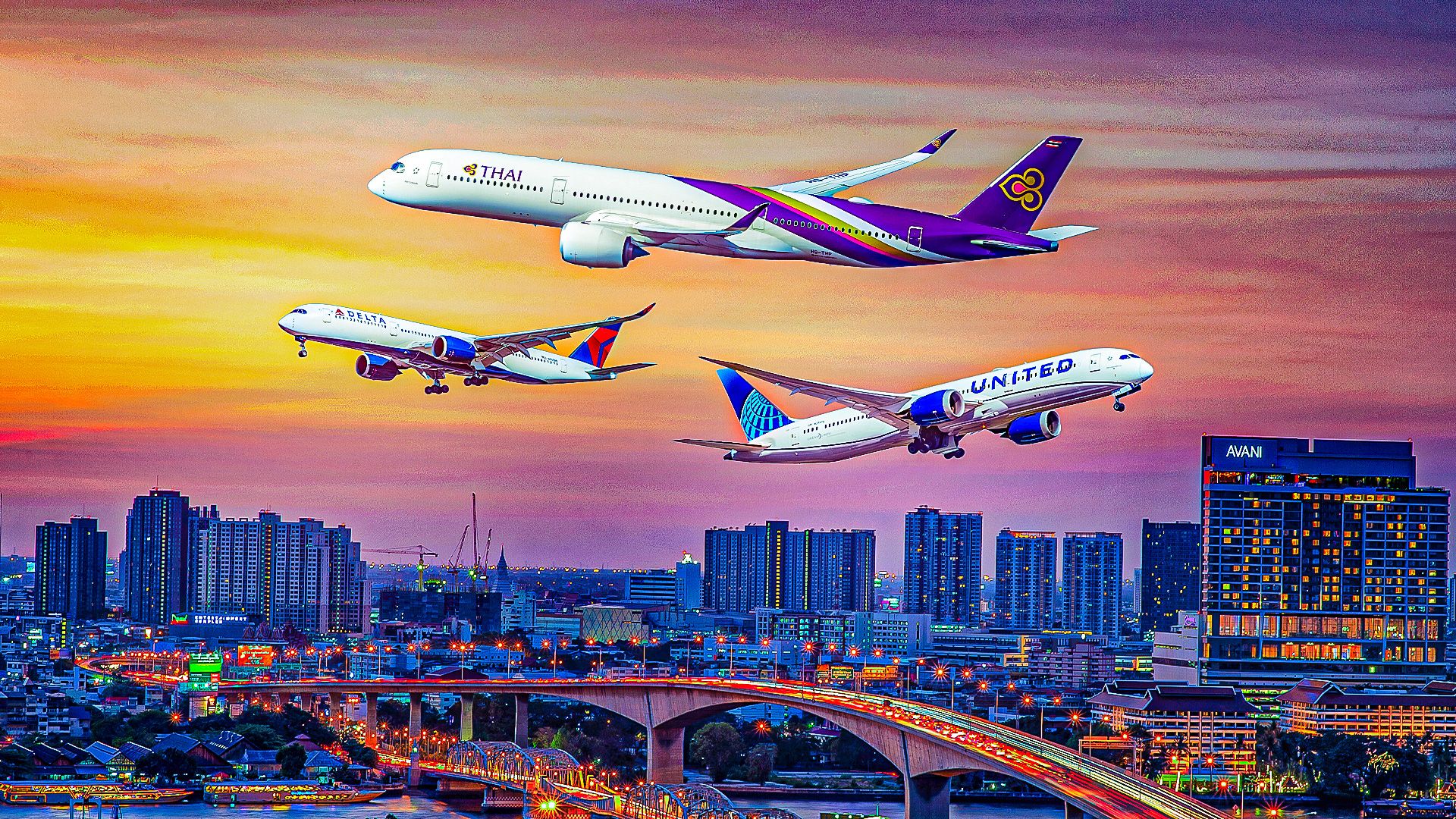
Thailand, a prime tourist destination, attracted over 35 million international visitors in 2024, with significant numbers arriving from China and India. As its appeal grows, particularly among US travellers interested in its culture and natural beauty, the absence of nonstop flights from the United States remains a notable gap. This article delves into the reasons behind this situation, explores alternative travel options, and considers the potential for future nonstop services.
Regulatory Hurdles and Safety Ratings
A crucial factor contributing to the lack of nonstop flights between the US and Thailand is the country’s Category 2 safety rating, assigned by the US Federal Aviation Administration (FAA) in 2015. This rating resulted from an audit revealing non-compliance with International Civil Aviation Organization (ICAO) safety standards, effectively barring Thai airlines from operating direct services to the US.
In April 2025, Thailand’s Deputy Prime Minister and Transport Minister, Suriya Jungrungreangkit, announced that the country had regained its Category 1 rating. This positive development prompted United Airlines to unveil a new one-stop service from Los Angeles International Airport (LAX) to Bangkok Suvarnabhumi International Airport (BKK), with a stopover in Hong Kong. Scheduled to commence in October 2025, this route will utilize the carrier’s Boeing 787-9 aircraft.
Patrick Quayle, United Airlines’ Senior Vice President of Global Network Planning and Alliances, highlighted the airline’s commitment to enhancing travel options, stating, “We connect customers to sought-after destinations and opportunities to explore new, vibrant cities.”
Challenges of Ultra-Long-Haul Flights
Despite the lifting of the safety rating, the absence of nonstop flights from US carriers to Thailand can also be attributed to the perception of low-yielding traffic on these routes. Unlike other Southeast Asian destinations, such as Singapore Changi Airport (SIN), which sees considerable business traffic, flights to Thailand are predominantly leisure-focused. This demographic tends to be more price-sensitive, often opting for longer, one-stop flights to save on fares.
For instance, the distance from LAX to BKK is approximately 8,269 miles, categorizing it as an ultra-long-haul route. Operating such flights poses profitability challenges for airlines due to high fuel and staffing costs, as well as the extended time aircraft are away from their base. Successful ultra-long-haul services typically connect major business hubs, which attract a larger share of premium passengers.
Historical context shows that Thai Airways previously operated direct flights to both LAX and New York John F. Kennedy International Airport (JFK). However, the airline discontinued its JFK route in 2008 and shifted its LAX service via Seoul in 2012, ultimately canceling it in 2015. The introduction of newer, more fuel-efficient aircraft like the Airbus A350 and Boeing 787 may make future nonstop routes more feasible.
Current Options and Future Prospects
Currently, Air Canada is the only airline offering nonstop flights between North America and Thailand, operating three weekly flights from Vancouver International Airport (YVR) to BKK. This service, which began in December 2022, increases to five weekly flights during peak winter months. The distance from Vancouver to Bangkok is notably shorter, at 7,344 miles, making it a more financially viable route for the airline.
Passengers seeking to travel to Thailand from the US have multiple one-stop options through major East Asian hubs. Airlines such as All Nippon Airways, Japan Airlines, Korean Air, and Philippine Airlines provide competitively priced services via their respective hubs. Premium carriers like Cathay Pacific and Singapore Airlines also facilitate access to Thailand, while Middle Eastern airlines such as Emirates and Qatar Airways offer extensive services.
The potential for nonstop flights from US carriers remains a subject of interest, with United Airlines positioned as the most likely candidate. Its membership in the Star Alliance alongside Thai Airways could provide a seamless connection for passengers traveling within Thailand and Southeast Asia. The most probable origins for future direct flights would be either LAX or San Francisco International Airport (SFO), both of which offer significant traffic potential.
In conclusion, while the demand for travel to Thailand is rising among US tourists, regulatory and economic challenges continue to hinder the establishment of nonstop flights. The aviation landscape may evolve, particularly as Thailand’s visibility increases through cultural exports like television series. As the market adapts, the prospect of direct services could become a reality in the coming years.