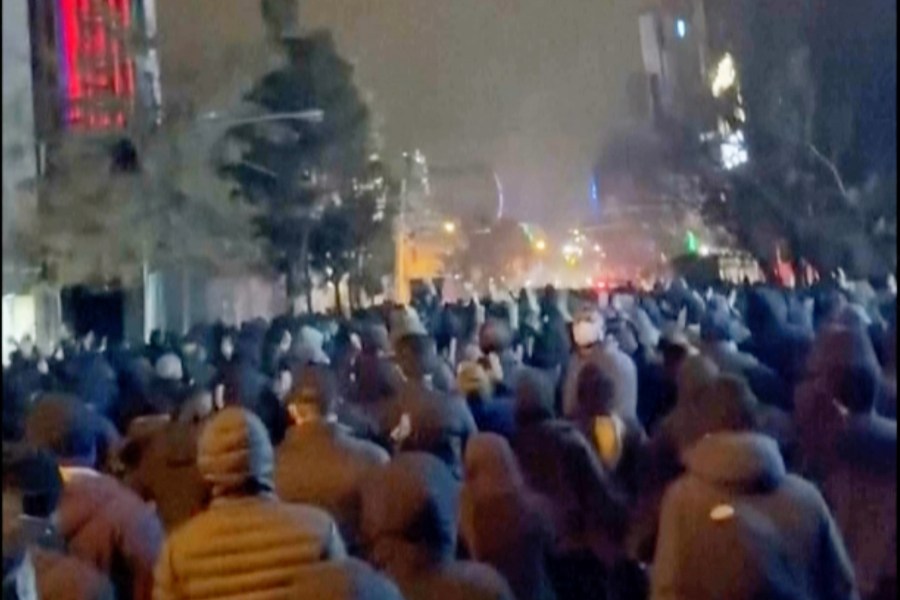
U.S. President Donald Trump asserted that Iran is interested in negotiating with Washington amid escalating tensions following a violent crackdown on protests within the country. This statement comes as activists reported that the death toll from the nationwide demonstrations has reached at least 544 as of November 20, 2023.
The protests erupted in response to the Iranian government’s handling of various social issues, with demonstrators calling for political reform and accountability. The situation has drawn international attention, particularly due to the severe measures employed by Iranian authorities to suppress dissent. Reports indicate that security forces have used lethal force against protesters, exacerbating the ongoing crisis.
Trump’s Assertion on Negotiations
During a press briefing, Trump mentioned that Iran’s willingness to engage in talks could be a direct result of the pressure exerted by the United States. He indicated that the potential for negotiations would be contingent upon Iran’s response to the unrest within its borders. “They want to negotiate, and that’s a good thing,” Trump stated, although he did not provide specific details regarding any proposed terms or timelines.
Despite Trump’s comments, Iran has not issued an official response to the claim about negotiations. The Iranian government has historically maintained a firm stance against foreign intervention and external pressure, which complicates the potential for dialogue.
In the wake of these events, activists and human rights organizations have called for global awareness and intervention in the situation. They stress the importance of addressing the humanitarian implications of the ongoing protests and the government’s violent responses.
International Reactions and Implications
The rising death toll in Iran has prompted reactions from various international bodies and governments. Many human rights advocates are urging stronger measures against the Iranian leadership, including targeted sanctions aimed at those responsible for the violence.
The situation in Iran poses significant implications not only for the region but also for international relations. As the U.S. navigates its relationship with Iran, the outcome of these protests may influence future diplomatic efforts and discussions surrounding Iran’s nuclear program and other geopolitical concerns.
The protests have highlighted the deeply rooted discontent within Iranian society, reflecting broader issues of governance and human rights. As the situation continues to develop, the international community remains vigilant, monitoring both the humanitarian crisis and the potential for diplomatic resolutions.
The coming weeks will be critical in determining whether any meaningful negotiations can take place and how the Iranian government will respond to the pressures both domestically and from abroad.