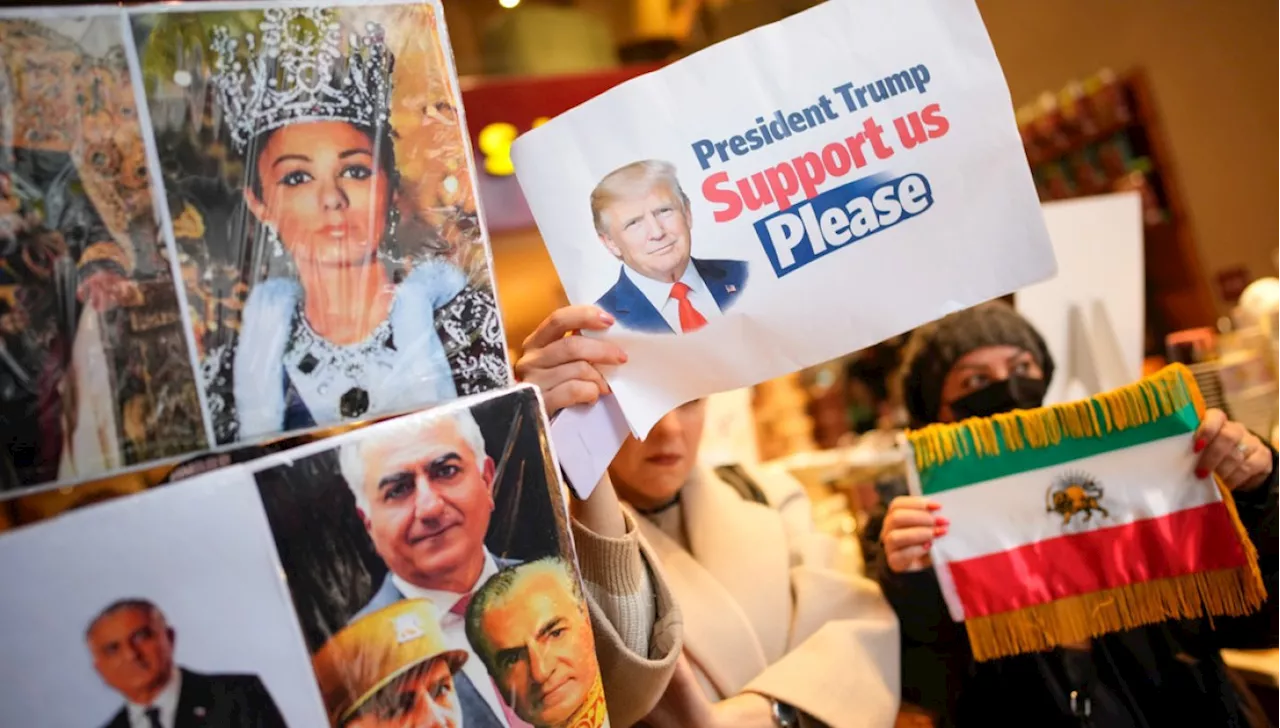
Iran’s crown prince, Reza Pahlavi, has characterized former U.S. President Donald Trump as the “total opposite” of Barack Obama and Joe Biden in his approach to fostering support from Iran. Pahlavi, who has been vocal about the need for political change in Iran, expressed his views during a recent interview, underscoring the contrasting diplomatic styles of the American leaders in relation to Iran.
Pahlavi contended that Trump’s aggressive rhetoric and policies sharply diverged from the more diplomatic stances taken by his predecessors. He stated that while Obama and Biden sought to engage in negotiations and dialogue, Trump’s approach was characterized by confrontation and sanctions. This distinction, according to Pahlavi, significantly impacts the dynamics of U.S.-Iran relations.
The crown prince, who resides outside Iran, emphasized his readiness to return to his homeland “at the first possible opportunity” should the regime led by Ali Khamenei be overthrown. His comments reflect a growing sentiment among Iranian expatriates advocating for change within the country, where political repression and economic challenges have intensified in recent years.
Pahlavi’s remarks come at a time when tensions between Iran and the United States have reached notable highs, particularly following the U.S. withdrawal from the Joint Comprehensive Plan of Action in 2018. The reinstatement of sanctions by the Trump administration has had lasting effects, complicating any potential rapprochement efforts.
In his interview, Pahlavi articulated a vision for a future Iran that embraces democratic values and human rights, contrasting sharply with the current regime’s authoritarian practices. He called on the international community to support the Iranian people in their struggle for freedom and justice, urging a reevaluation of foreign policies that prioritize short-term interests over long-term stability in the region.
The crown prince’s return to Iran would symbolize a significant shift in the country’s political landscape, particularly if it coincides with a transition away from Khamenei’s leadership. As the situation in Iran continues to evolve, Pahlavi’s perspective offers a glimpse into the aspirations of many Iranians who desire a more democratic and open society.
Pahlavi’s statements reflect the complexities of U.S.-Iran relations and the intricate interplay of global politics. As Iran navigates its internal challenges, the crown prince’s readiness to return could become a pivotal moment in the ongoing struggle for change.