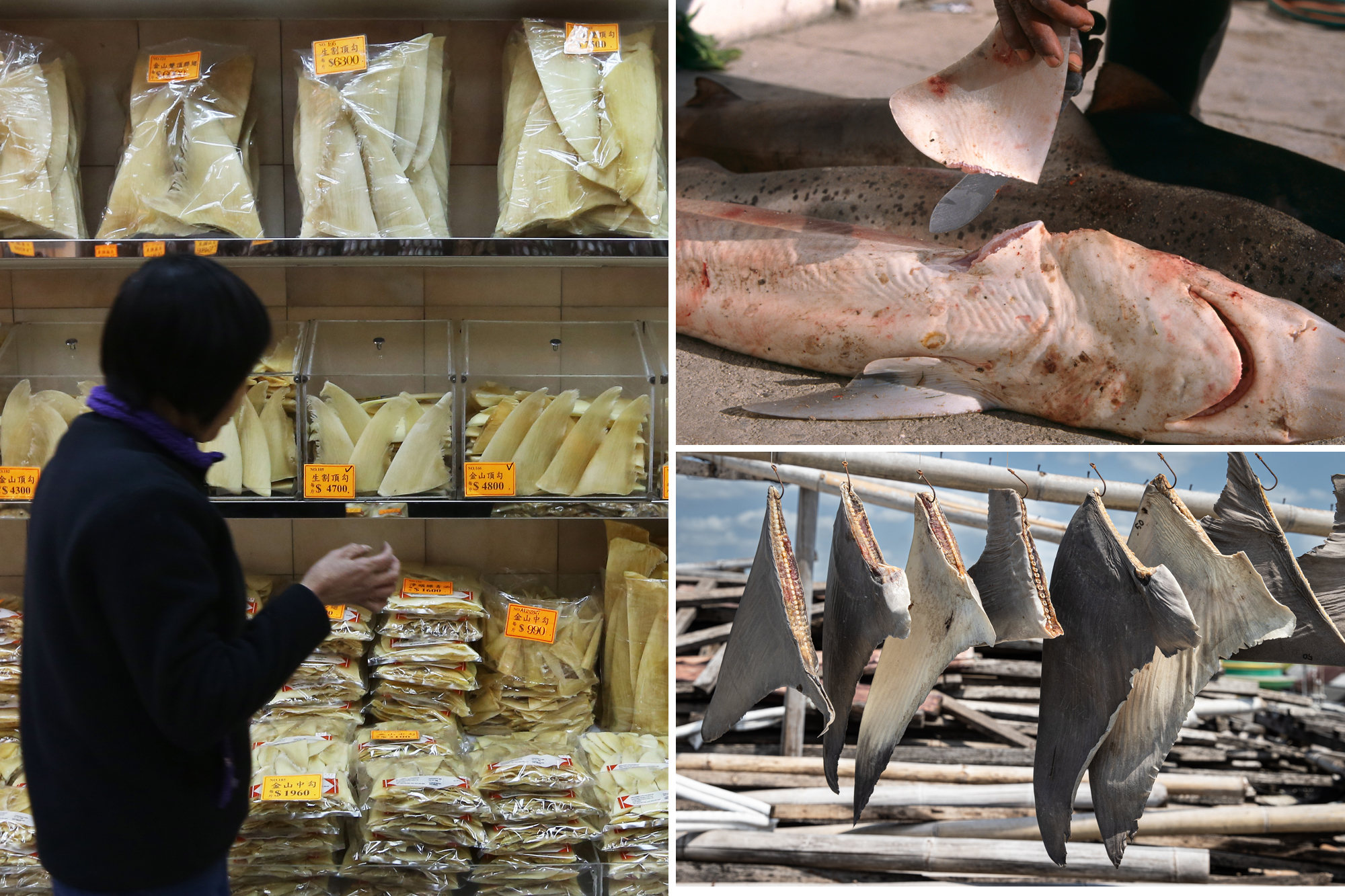
Sales of shark fins are putting several shark species at risk of extinction, according to new research from Florida International University. The peer-reviewed study, published in Science Advances, highlights the ongoing illegal trade in shark fins, which defies international regulations aimed at protecting these vulnerable creatures.
The study reveals that fins from four out of five shark species listed under the Convention on International Trade of Endangered Species (CITES) remain widely available in markets, particularly in Hong Kong, a major hub for shark fins. The species in jeopardy include the scalloped hammerhead, smooth hammerhead, great hammerhead, porbeagle, and oceanic whitetip sharks.
Dr. Demian Chapman, project leader and director of the Shark and Rays Conservation Research Program at Mote Marine Laboratory and Aquarium in Sarasota, Florida, emphasizes the gravity of the situation. “Many sharks may be headed toward extinction, with international trade in shark products driving fishing pressure beyond a species’ ability to reproduce and replenish populations,” he stated. The lucrative market for shark fin soup, a luxury dish, continues to spur demand.
Despite regulations implemented in 2014 requiring that all trade be reported and certified as non-threatening to species’ survival, the research indicates a significant lack of compliance. Alarmingly, 81 percent of shark-fin-exporting countries have never reported any trade in these listed species, suggesting widespread illegal exports.
“There’s a huge gap between what’s on paper and what’s happening in the real world,” said Dr. Diego Cardeñosa, lead author of the study. “DNA evidence clearly shows that these protected species are still entering the global market at alarming rates.” His findings underscore the need for urgent action to address the illegal trade.
The research team has identified several countries likely involved in the illegal shark fin trade, including Spain, Taiwan, the United Arab Emirates, China, the Philippines, Ghana, and Brazil. Millions of pounds of shark meat and fins are traded internationally each year, fueling practices like shark finning. This brutal method involves removing fins from live sharks and discarding the bodies back into the ocean, where they die.
Dr. Cardeñosa warns that “we are reaching a major tipping point,” where failure to curtail fishing and trade could lead to the disappearance of these shark species. Such a loss would severely disrupt marine ecosystems, given the crucial role sharks play as top predators.
Despite the grim outlook, researchers remain hopeful. Dr. Chapman notes that “shedding light on this problem is a major step toward solving it.” Continued awareness and action could still reverse the trend and protect these ancient creatures that have inhabited Earth’s oceans for around 450 million years.