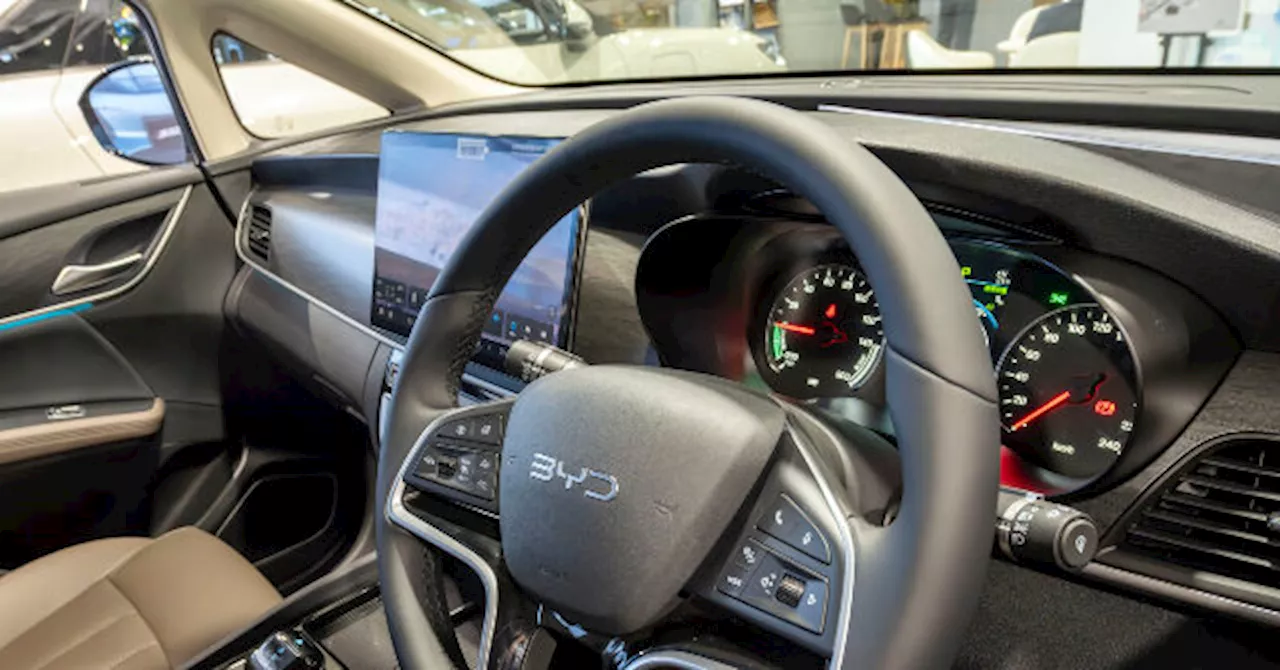
BREAKING: In a stunning turn of events, BYD has officially surpassed Tesla as the world’s leading electric vehicle (EV) seller in 2025. New reports confirm BYD sold over 2.25 million vehicles, marking a remarkable 28 percent increase in sales. In stark contrast, Tesla’s sales plummeted by 9 percent, totaling just 1.64 million vehicles.
This dramatic shift signals a major transformation in the global automotive landscape, with significant implications for consumers and the industry. Compounding Tesla’s challenges were the termination of U.S. government subsidies for EV purchases, fierce competition from Chinese manufacturers, and a lukewarm reception for its latest models. Analysts warn that these factors, combined with political tensions, have created a precarious situation for the once-dominant EV pioneer.
BYD’s success is particularly striking in the United Kingdom, where sales skyrocketed by an astonishing 880 percent. This surge highlights the growing acceptance of Chinese brands in major markets, alarming European Union (EU) officials who are already responding with protective measures. As BYD and other Chinese manufacturers gain traction in countries like Germany and France, the EU has imposed tariffs of up to 38 percent on Chinese EV imports, aiming to protect local manufacturers from perceived unfair competition.
The future looks challenging for Tesla as analysts predict a tough 2026 for the entire EV sector. However, there is cautious optimism for a rebound in 2027, driven by the introduction of affordable, domestically produced EVs. To navigate these turbulent waters, Tesla is reportedly shifting focus from consumer vehicles to self-driving “robotaxi” technology, indicating a strategic realignment in response to market pressures.
This transition in the EV market underscores the significant role of governmental policies, supply chain dynamics, and evolving consumer preferences. BYD’s rise emphasizes the importance of cost-effectiveness and robust government support, reshaping the balance of power between Eastern and Western automotive industries.
As these developments unfold, the implications for consumers are profound. With increased competition, buyers may benefit from more choices and potentially lower prices. The evolving landscape of electric vehicle manufacturing will be critical as companies adapt to shifting market conditions.
Stay tuned for more updates as this story develops, and share your thoughts on this major shift in the EV industry!