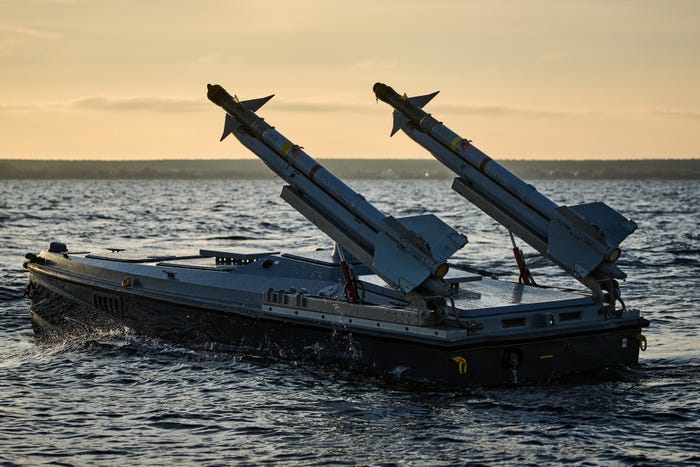
UPDATE: Russian helicopters are now steering clear of Ukraine’s naval drones, a significant shift confirmed by a Ukrainian special forces commander. The commander, known by the call sign Thirteen, stated that these drones have become “easy targets” due to their missile capabilities. This development marks a critical evolution in Ukraine’s defense strategy against Russian aerial assaults.
During a recent showcase by the GUR (Ukrainian Defense Intelligence Agency), Commander Thirteen revealed that Ukraine’s naval drones, such as the Magura V7, have been armed with missiles, effectively neutralizing the threat posed by Russian helicopters. He noted that the shift occurred after Ukrainian forces successfully deployed these advanced drones, which initially struggled against the Russian air threat.
“After that, the enemy stopped using helicopters against us altogether, realizing they had become easy targets for our missiles,” Thirteen stated. This urgent update highlights the growing effectiveness of Ukraine’s naval drones, which have already scored victories against Russian naval assets, forcing the Black Sea Fleet to retreat from its previous stronghold in Sevastopol to safer waters near Novorossiysk.
The evolution of Ukraine’s naval drone technology has been swift and impactful. Initially designed for direct assault missions, these drones have now been equipped to target Russian helicopters, showcasing their expanded capabilities. Ukraine claims that it achieved its first confirmed naval drone kill of a Russian helicopter last December 2022 when a Magura V5 drone destroyed a Russian Mi-8 helicopter, marking a historic first.
Amidst ongoing warfare, the vulnerability of Russian helicopters has become evident. While they have historically contributed to air superiority and troop transport, their increasing losses to innovative Ukrainian drone technology have prompted a cautious approach from Russian forces. This shift is indicative of the intensifying aerial conflict, as both sides adapt their strategies in real time.
Ukrainian helicopters are now focusing on countering threats posed by Russian drones, particularly long-range attack drones used to target cities. Meanwhile, Ukrainian naval drones are evolving further, being outfitted with missile launchers and other advanced weaponry, indicating a relentless push to enhance maritime capabilities.
The implications of this development are profound. With the growing effectiveness of naval drones, Ukraine is not only challenging Russian air dominance but also reshaping maritime warfare dynamics. As this situation unfolds, all eyes remain on the evolving capabilities of both Ukrainian and Russian aerial assets.
As the conflict continues, the international community is left to ponder the broader ramifications of this technological arms race. The attention on naval drones is increasing, with both Ukraine and Russia intensifying their efforts in this arena.
Stay tuned for further updates as this situation develops. The stakes are high, and the impact on the ground is felt acutely by both militaries and civilians alike.