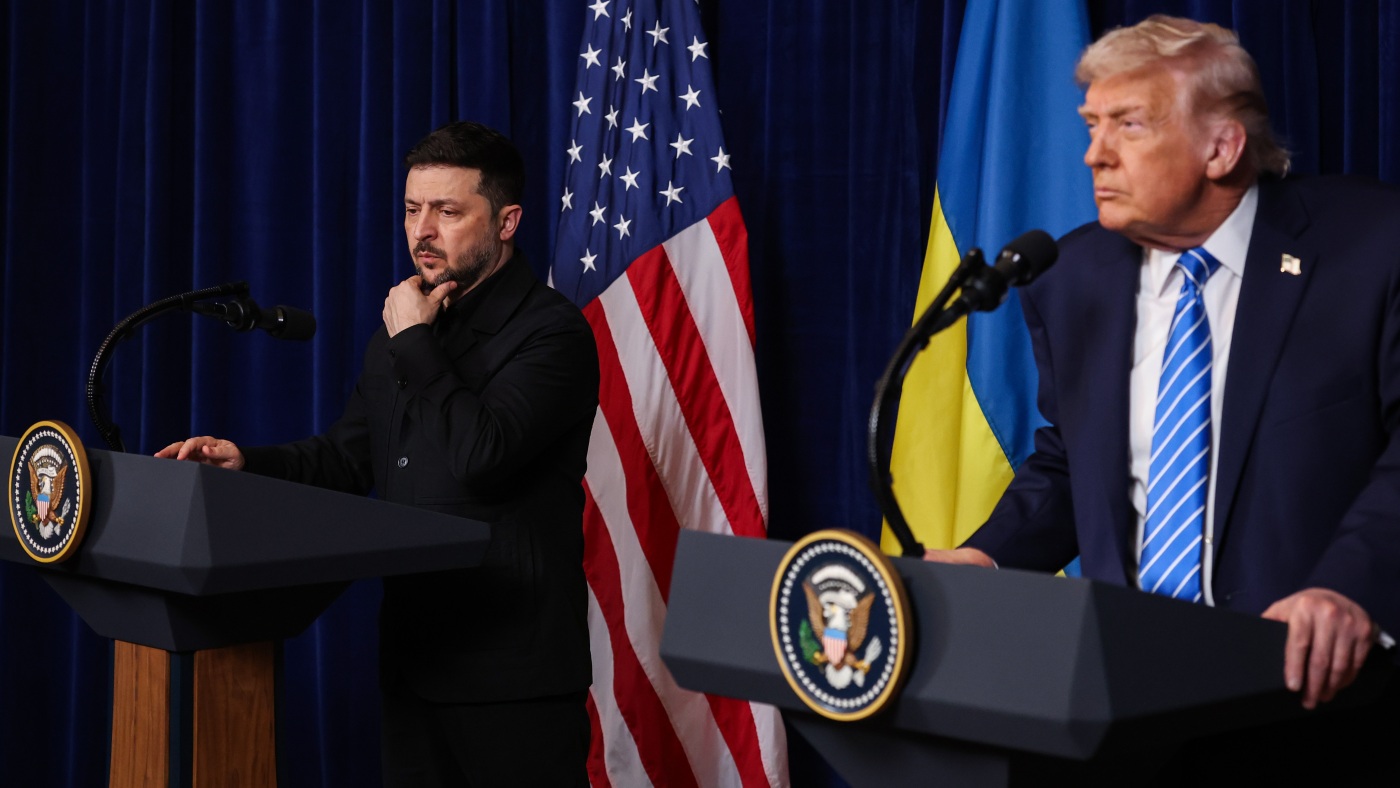
Former President Donald Trump and Ukrainian President Volodymyr Zelenskyy have indicated that peace in Ukraine may be closer following their meeting at Mar-a-Lago on March 13, 2024. Despite this positive outlook, ongoing Russian attacks in Ukraine continue to pose significant challenges, and critical issues remain unresolved.
During their discussions, the leaders focused on the ongoing conflict and potential resolutions, particularly regarding the Donbas region in eastern Ukraine. Russia has expressed intentions to assert control over this area, while Zelenskyy advocates for it to be designated as a demilitarized zone. Although both leaders acknowledged progress, they emphasized that further negotiations are necessary, and an immediate peace agreement is unlikely.
In addition to his meeting with Zelenskyy, Trump is set to engage with Israeli Prime Minister Benjamin Netanyahu later today in Florida. Their agenda will likely cover various topics, including the remaining elements of Trump’s 20-point plan to address the war in Gaza. Israeli officials maintain that there are no signs of disarmament from Hamas, which may compel Netanyahu to request continued pressure on the organization from the United States.
As the political landscape shifts, domestic issues also highlight broader concerns. Many anti-poverty organizations are facing significant challenges due to funding cuts and uncertainty under the current administration. A visit by NPR’s Jennifer Ludden to the HAPCAP organization in southeastern Appalachian Ohio revealed that approximately 80% of their funding originates from federal grants. This reliance has made them vulnerable to potential cuts.
HAPCAP’s Executive Director, Kelly Hatas, expressed concerns that the unpredictability surrounding federal funding could jeopardize essential services. The organization has already had to scale back plans, including a proposed homeless shelter, and staff turnover has increased amid fears over job security. The upcoming year may bring additional pressures, as potential cuts to Medicaid and SNAP food assistance could exacerbate the needs of vulnerable populations.
In a broader context, the divide in energy policies between the United States and China is influencing global economic dynamics. Reports indicate that the Trump administration’s stance on renewable energy has created obstacles for domestic projects. A planned offshore wind project in northern California faced significant setbacks after the cancellation of over $426 million in federal grants.
As these developments unfold, the implications for both domestic and international affairs remain significant. The evolving discussions around peace in Ukraine and the impact of funding cuts on poverty alleviation efforts reflect a complex landscape where political decisions have far-reaching consequences for communities and nations alike.
This multifaceted scenario underscores the interconnectedness of global politics and local issues, highlighting the urgent need for effective solutions in both arenas.