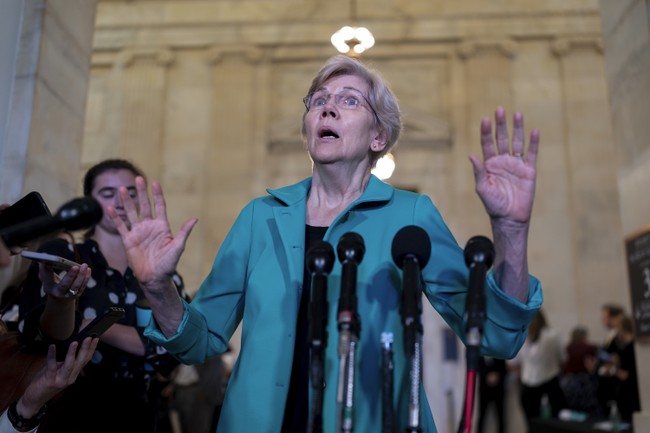
Democratic Senator Elizabeth Warren recently faced scrutiny after her dire economic predictions contradicted the latest data from the U.S. economy. Following her claims that the tariffs imposed by Donald Trump would lead to widespread job losses and a recession, new figures indicate that the economy has actually expanded significantly.
According to data released by the U.S. Commerce Department, the U.S. economy grew at an annualized rate of 4.3% in the third quarter of 2023, an increase from the 3.8% growth recorded in the previous quarter. This growth defied the expectations of many economists who had anticipated a slowdown amid concerns about hiring and consumer spending.
Warren’s pessimistic outlook suggested that the economic conditions created by Trump’s tariffs would adversely affect millions of Americans, leading to lost jobs, savings, and homes. Despite these predictions, the latest economic data shows that consumer spending, which constitutes nearly two-thirds of U.S. economic activity, has been a significant driver of growth. The surge in consumer confidence may indicate a more stable economic environment than Warren’s statements implied.
Additionally, Warren found herself in the spotlight for her past claims of Native American ancestry, which were met with public skepticism after a DNA test did not support her assertions. In light of this context, her current predictions about the economy have been met with substantial criticism as well.
In a stark contrast to Warren’s narrative, recent reports indicate that consumer behavior is more resilient than anticipated. Although some consumers are tightening their budgets due to rising costs—46% have indicated they are spending less this holiday season—overall economic indicators suggest a more favorable outlook.
As the debate continues over economic strategies and their impacts, Warren’s earlier predictions may be overshadowed by the positive growth trends reported. The latest figures not only challenge her assertions but also reflect a broader narrative of resilience within the U.S. economy.
In the political arena, Warren’s remarks and their fallout serve as a reminder of the complexities surrounding economic forecasts and the interpretations that can arise from them. With the upcoming election cycle, the impact of economic performance on voter sentiment will likely continue to be a focal point for both parties.
In summary, while Warren expressed a bleak vision for the economy, the reality as depicted in the latest data offers a contrasting perspective, highlighting the unpredictable nature of economic forecasting in a politically charged environment.