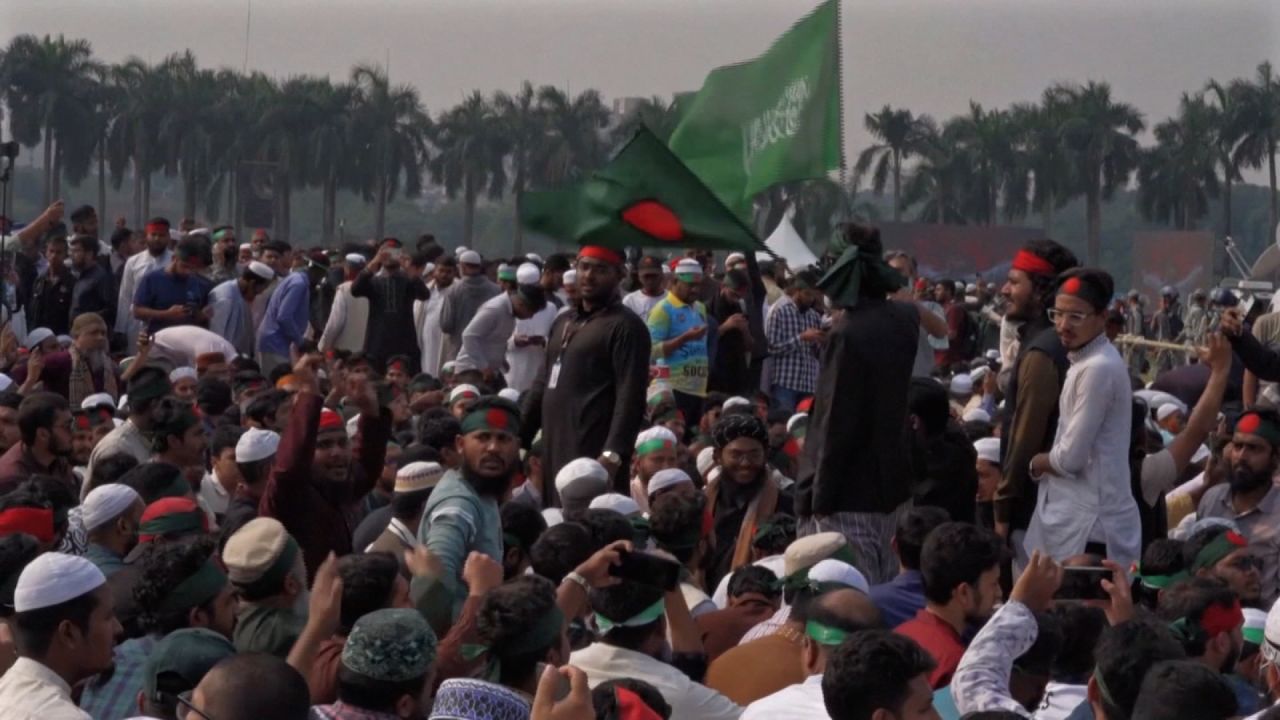
The funeral for Sharif Osman Hadi, a prominent youth leader, was held on March 15, 2024, in Dhaka, Bangladesh. Hadi was tragically shot and killed during a protest against the government, a development that has sparked widespread unrest. His role in the political landscape, particularly in the events leading to the ousting of former Prime Minister Sheikh Hasina, has made this loss particularly significant for many.
Hadi, who was a key figure in the Bangladesh Nationalist Party (BNP), had mobilized youth support and advocated for political change in a climate often marked by tension between the ruling party and opposition groups. The funeral drew a large crowd, with supporters and political allies paying their respects, reflecting his influence and the deep impact of his death on the community.
During the ceremony, mourners expressed their grief and anger over the circumstances surrounding Hadi’s death. Many held banners and chanted slogans demanding justice, claiming that his assassination was politically motivated. The atmosphere was charged with emotion as friends and family highlighted his dedication to his cause and the sacrifices he made for the youth of Bangladesh.
The violent incident that led to Hadi’s death occurred just days before his funeral, during what was described as a peaceful protest. Eyewitnesses reported that police intervened, leading to chaos and the subsequent shooting. This has raised serious concerns regarding the safety of political activists in Bangladesh, particularly those challenging the current government.
In the aftermath of the incident, the Awami League, the ruling party, faced significant backlash from opposition leaders. They condemned the violence and called for accountability, demanding a thorough investigation into the events that transpired. Critics argue that the government has a history of suppressing dissent and targeting opposition figures, making Hadi’s killing a stark reminder of the ongoing political strife.
As the nation grapples with this tragedy, the impact of Hadi’s legacy continues to resonate. Many believe that his commitment to youth activism and political reform will inspire a new generation of leaders. The funeral served not only as a moment of mourning but also as a rallying point for those advocating for change in Bangladesh’s political landscape.
The international community has also taken notice, with various human rights organizations expressing concern over the state of political freedoms in Bangladesh. Calls for peaceful dialogue and respect for democratic principles have echoed in statements from abroad, urging the government to prioritize human rights and safety for all citizens.
As the investigation into Hadi’s death unfolds, the future of political activism in Bangladesh remains uncertain. Supporters hold on to hope that his sacrifice will not be in vain, and that it will propel further efforts for justice and reform within a challenging political environment.