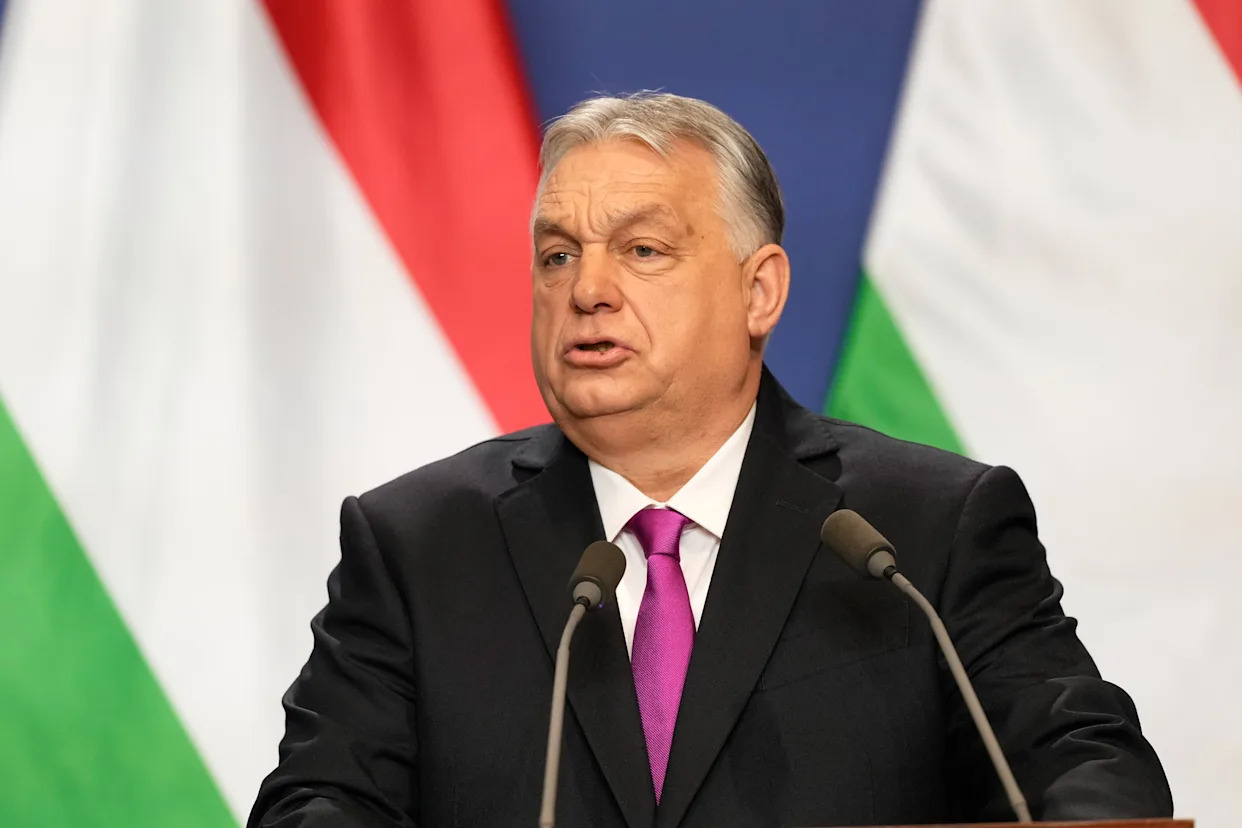
Hungarian Prime Minister Viktor Orbán has ordered heightened security measures at critical energy infrastructure locations, alleging that Ukraine is attempting to disrupt Hungary’s energy system. This decision comes after Budapest accused Kyiv of intentionally delaying Russian oil deliveries via the Druzhba pipeline, which traverses Ukrainian territory. Ukrainian officials have firmly denied these claims, attributing the pipeline’s issues to damage caused by a recent Russian drone strike.
In a video shared on social media, Orbán asserted that the Ukrainian government is employing “an oil blockade” to apply pressure on Hungary. He indicated that national security services had provided information suggesting Ukraine was preparing to take further actions against Hungary’s energy operations. Specific details or evidence regarding these accusations were not disclosed.
Orbán stated, “We will deploy soldiers and the necessary equipment to repel attacks near key energy facilities,” adding that police will increase patrols around designated power plants, distribution stations, and control centers. This move reflects the ongoing tensions between Hungary and Ukraine, particularly in light of the broader geopolitical landscape since Russia launched its invasion of Ukraine on February 24, 2022.
Hungary and Slovakia, both members of the European Union and NATO, have maintained and even increased their imports of Russian oil and gas while most European countries have significantly reduced or entirely halted such imports. Hungary received a temporary exemption from an EU policy prohibiting Russian oil imports, which has further complicated its relationship with both Ukraine and the EU.
In a related development, Hungary recently threatened to block a substantial €90 billion (approximately $106 billion) EU loan intended for Ukraine and vetoed a new round of EU sanctions against Russia. Orbán has pledged to obstruct any EU initiatives supporting Ukraine until oil shipments resume through the Druzhba pipeline, which has been non-operational since January 27. Ukrainian officials have stated that repairs are hazardous, and the pipeline’s reliability hinges on Russia ceasing attacks on energy infrastructure.
Additionally, Orbán announced a ban on drone operations in Szabolcs-Szatmár-Bereg County, a region bordering Ukraine. The Prime Minister has frequently accused Ukraine of “blackmail,” suggesting that Kyiv seeks to manipulate Hungary’s energy prices in the lead-up to a crucial election set for April 12, 2024.
Facing strong opposition, Orbán’s ruling party, Fidesz, is trailing in polls against a center-right challenger, Péter Magyar. In response, Orbán has intensified a media campaign portraying Ukraine as an existential threat to Hungary. His party’s messaging implies that losing the election could lead to Hungary’s involvement in the war, potentially resulting in economic collapse and loss of life among its youth.
The situation remains fluid as Hungary navigates its energy policies and relationships with both Ukraine and the European Union.