New 3D Map of Universe Reveals 47 Million Galaxies as Climate Alarm Sounds
Scientists have just revealed the largest-ever 3D map of the universe, capturing 47 million galaxies and unveiling cosmic structures from our Milky Way to the distant era known as ‘cosmic noon.’ This groundbreaking achievement offers unprecedented insight into the universe’s large-scale matter distribution, reshaping our understanding of cosmic evolution.
At the same time, researchers are sounding urgent alarms over the Atlantic Meridional Overturning Circulation (AMOC), a vital ocean current system thought to be on the brink of collapse. Such a failure could drastically alter global climate patterns, including weather impacting California and the wider United States.
From Space Exploration to Ancient Discoveries, Science Unfolds Rapidly
The Artemis II crew recently shared a powerful moment: witnessing Earth disappear from view on their mission, an experience highlighting our planet’s fragility. Their mission returned stunning first images from the Moon’s far side, featuring ‘Earthset’ views and a total lunar eclipse, providing a unique window into space phenomena never seen before.
Meanwhile, attention is turning skyward across the US, as a massive hole opening in the sun’s atmosphere is expected to produce spectacular Northern Lights visible from multiple states. This rare opportunity promises breathtaking aurora displays visible even far south of usual viewing areas.
Hubble Space Telescope Captures Stellar Evolution in Stunning Detail
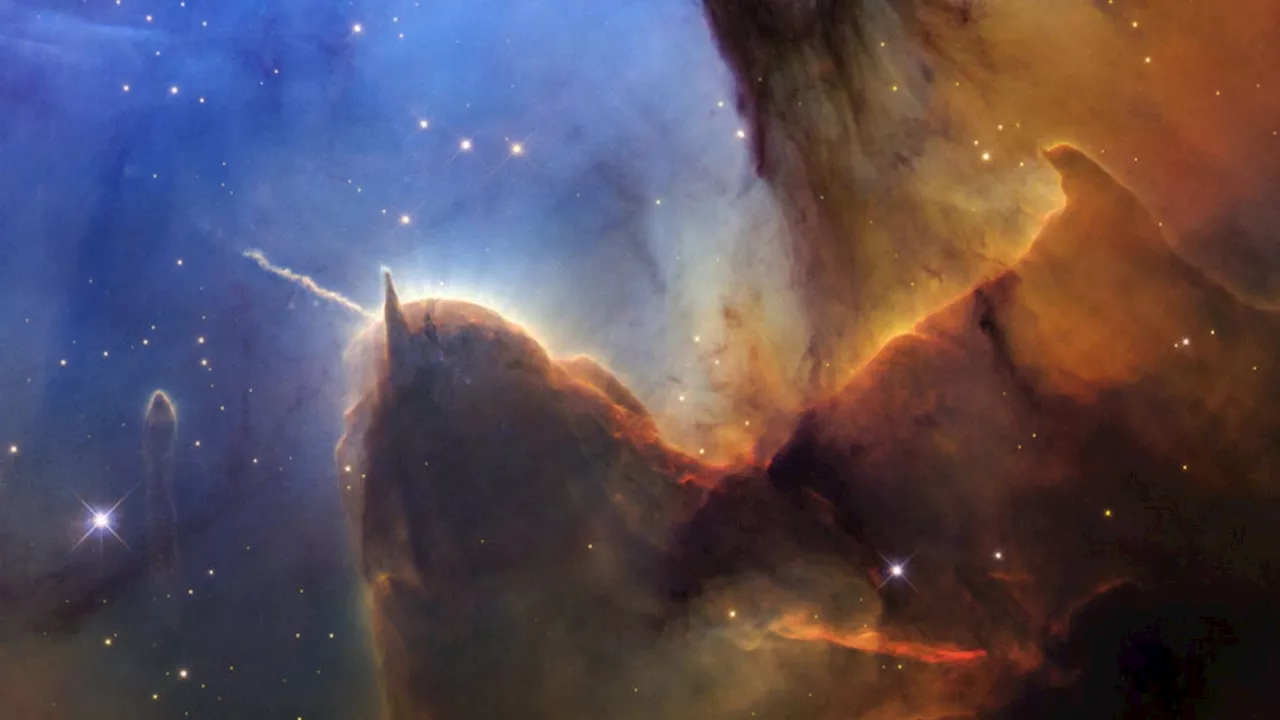
The Hubble Space Telescope continues to captivate with breakthrough imagery, recently revisiting the Trifid Nebula—located 5,000 light-years away and nicknamed the ‘Cosmic Sea Lemon.’ New images reveal vibrant glowing ridges shaped by massive young stars over hundreds of thousands of years, as stellar winds erode gas and dust surrounding star-forming regions.
Scientists studying the Trifid Nebula have also observed a jet of material expelled by a baby star, enabling precise energy and speed calculations. The evolution of these features provides critical insight into star birth and cosmic gas dynamics that have direct implications for understanding stellar life cycles.
In another cosmic revelation, Hubble’s 25-year comparative images of the Crab Nebula show striking changes in the supernova remnant, allowing scientists to chart its ongoing transformation and refine models of stellar explosions.
Breakthroughs Extend Beyond Space — Artificial Neurons and Ancient Texts
Groundbreaking advances are not limited to the cosmos. Researchers have successfully engineered artificial neurons, marking a huge leap toward bio-integrated technologies and promising future treatments for neurological disorders impacting millions.
In archaeology, a fascinating find emerged: a copy of the Iliad discovered within an Egyptian mummy, shedding light on ancient cultural exchanges and literary traditions previously unknown.
Simultaneously, health experts intensify the search for treatments against brain-eating amoebas, spotlighting the ongoing battle against these rare yet devastating infectious diseases that can affect US populations.
Why These Discoveries Matter Right Now
The cosmos is unveiling new layers of mystery at a faster pace than ever, but so too is Earth’s environment showing signs of distress. The potential collapse of the AMOC poses an immediate risk to global climate stability, with direct consequences for California’s weather, agriculture, and coastal communities.
On the frontiers of space, the Artemis II mission’s fresh lunar images and emotional impact remind us of Earth’s preciousness amid vast cosmic expanses. The expected aurora displays could unite millions across the US beneath a rare natural spectacle, an uplifting moment amid climate concerns.
Meanwhile, telescope data continues to feed revolutionary knowledge about star formation, cosmic evolution, and the universe’s grand architecture. These discoveries drive scientific curiosity and technological innovation, influencing long-term space exploration and medical breakthroughs.
What’s Next?
Scientists will continue monitoring the AMOC closely to assess its trajectory in coming months, critical for preparing climate responses. Artemis II’s mission data will fuel upcoming lunar exploration initiatives, particularly NASA’s plans to deepen human presence on the Moon.
Updates from Hubble and other observatories are expected to further clarify dynamic changes in star nurseries and supernova remnants, expanding our cosmic understanding. Medical researchers will advance trials with artificial neurons, and ongoing efforts to combat infectious diseases will remain a public health priority.
As these cutting-edge discoveries unfold, The California Herald will keep you informed with real-time updates across science, technology, and environmental news shaping California and America’s future.