Rev. Adam Hamilton Enters Kansas Senate Race Against Incumbent Roger Marshall
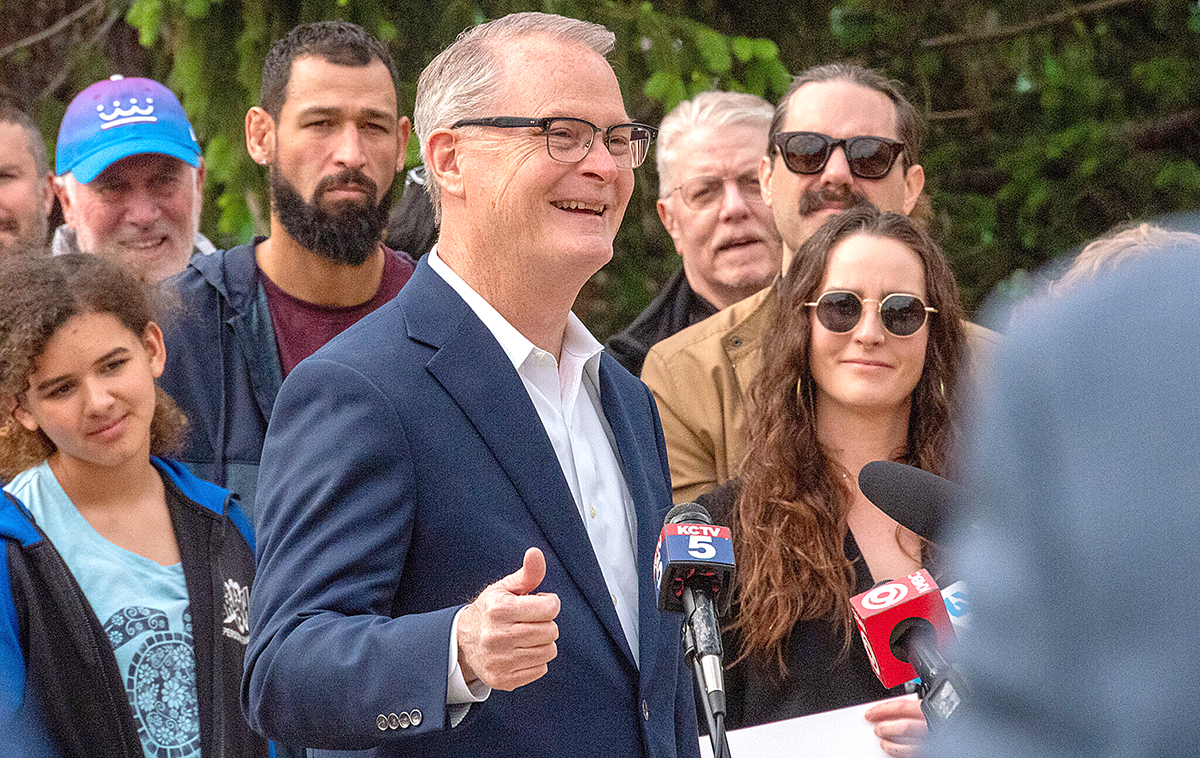
The Kansas U.S. Senate race just escalated as Rev. Adam Hamilton, senior pastor of the largest church in Kansas, officially filed to challenge Republican incumbent Sen. Roger Marshall. Hamilton, who leads the United Methodist Church of the Resurrection with 24,000 active members and around 22,000 weekly attendees, has emerged as the standout Democrat ahead of the August primary.
Initially considering an independent bid, Hamilton shifted gears after a statewide listening tour through 18 Kansas towns, driven by voters’ concerns that an independent run would split opposition and hand Marshall an easy victory. “The first question in every town was, ‘Why not run as a Democrat?’” Hamilton told reporters, explaining his decision to embrace the two-party path.
Political Context: A Rare Threat to GOP Stronghold
Marshall, a two-term congressman who has coasted through elections as the Republican favorite, faces unprecedented vulnerabilities in 2026. His close alignment with former President Donald Trump has become a liability amid Trump’s plummeting approval ratings, recently hitting an all-time low of 34% in a Reuters/Ipsos poll. The unpopular war on Iran and rising fuel prices, up 40% locally compared to last year, are significant local issues Hamilton plans to spotlight relentlessly.
“Kansans are saying, ‘Our life is not better under Roger Marshall,’” Hamilton stated, highlighting tariffs, struggling farmers and rising health insurance costs as critical concerns affecting middle-class families.
Marshall’s Public Image Under Scrutiny
Marshall’s reputation suffered after revelations about his ownership of a $1.2 million Florida coastal home, contrasting sharply with his minimal Kansas residency. His perceived aloofness reached a peak when he abruptly ended a tense town hall meeting in Oakley without answering direct voter questions, forcing the senator into carefully managed public appearances since.
GOP Pushes Back with FEC Complaint
In a move that some see as politically motivated, the Kansas Republican Party filed a Federal Election Commission complaint against Hamilton, alleging a campaign finance violation for announcing his Senate exploration via a YouTube video shared with church members. Observers note the irony since Kansas Republicans have longstanding ties with conservative churches and routinely distribute political voter guides at church doors.
Experts say this complaint is an attempt to distract voters from substantive campaign issues while Marshall appears increasingly vulnerable.
Democratic Primary Remains Crowded but Hamilton Leads
Among nine candidates vying for the Democratic nomination, Hamilton stands out with unmatched name recognition and the backing of a massive congregation that spans the Kansas-Missouri border. This provides him a large grassroots base to challenge Marshall, whose seat was long considered “safe Republican” by election analyst site 270 to Win. That assessment could be shifting in light of recent developments.
As the Senate balance of power remains razor-thin—with Republicans holding a narrow edge and just four tossup seats nationally—Kansas has suddenly become a focal point in the 2026 midterm election battle.
What’s Next?
Over the coming months, Kansas voters will see intensified campaigning as Hamilton mobilizes his broad church network and independent supporters focusing on economic challenges and quality of life issues. Marshall must repair his public image while countering growing Democratic enthusiasm fueled by frustrations over rising prices and political complacency.
Both campaigns are positioning for a high-stakes fight that could ripple far beyond Kansas, potentially influencing control of the U.S. Senate in Washington.
“If you make $80,000 a year, you’re spending 40% of your income on health insurance if you don’t get it through your employer. That’s untenable,” Hamilton said, underlining his campaign focus on affordability and workers’ wellbeing.
The California Herald will continue to monitor this developing race and its national implications.