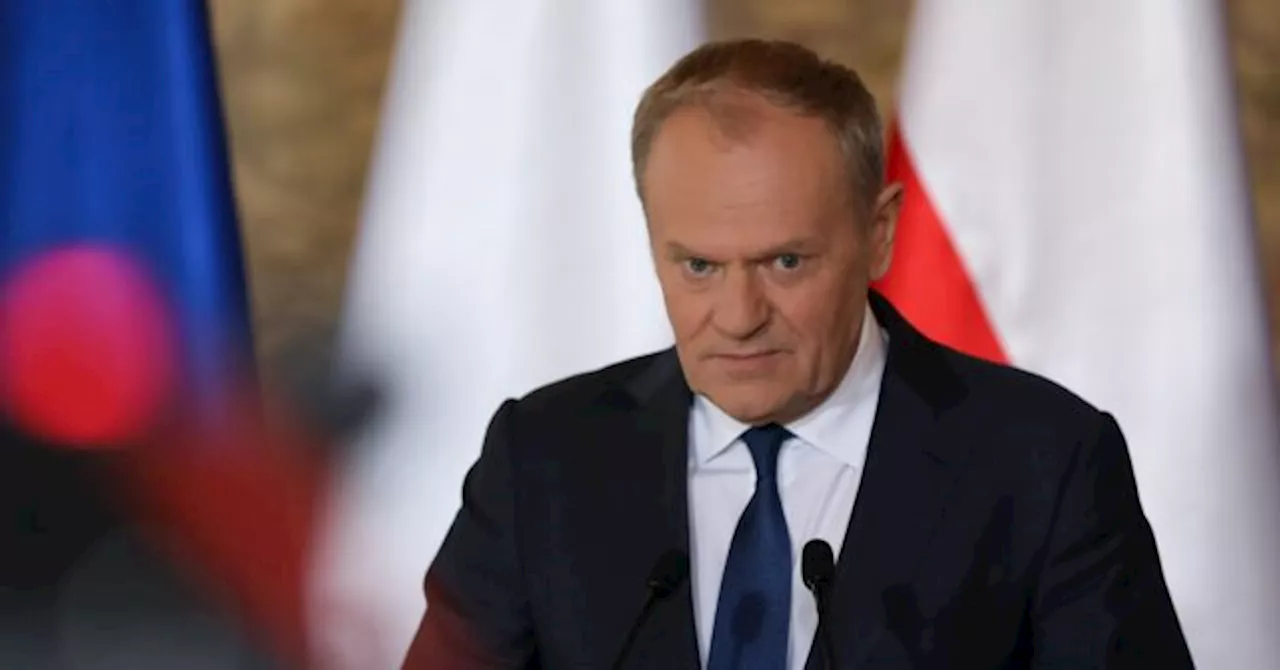
Polish Prime Minister Donald Tusk has issued a stark warning that the NATO alliance faces the threat of “disintegration” following the announcement of U.S. troop reductions in Europe. The Pentagon confirmed that approximately 5,000 American soldiers will be relocated from bases in Germany over the next year as part of a wider shift in U.S. military forward deployment.
President Donald Trump indicated on Saturday that this drawdown could expand significantly beyond the initial figure, but he did not specify how many of the total roughly 36,000 U.S. troops currently stationed in Germany might be moved. Trump also floated plans to pull forces out of other European countries, including Italy and Spain, citing dissatisfaction with their policies regarding Iran.
While Washington has not announced plans to reduce its presence in Poland, where about 8,500 U.S. troops are stationed, Tusk warned that these troop shifts could unravel decades of transatlantic security cooperation.
“The greatest threat to the transatlantic community are not its external enemies, but the ongoing disintegration of our alliance,” Tusk said on Friday, urging all NATO members to act decisively to stop this “disastrous trend.”
The Polish leader has publicly questioned America’s commitment to Article 5 of the NATO treaty, which requires member nations to defend each other if attacked. This comes despite repeated assurances from President Trump that the U.S. stands firmly behind its allies if needed.
“Europe’s biggest question today is whether the United States is ready to be as loyal as it is described in our treaties,” Tusk stated, expressing cautious skepticism but underscoring the urgent need for clear commitments.
Beyond immediate troop movements, Tusk has been a vocal advocate for strengthening European defense independence. Formerly the head of the European Council in Brussels, he has pushed for the European Union to evolve into a capable defense alliance, possibly with its own standing army.
Recently, Tusk met with French President Emmanuel Macron to explore the possibility of extending Paris’s nuclear deterrent across Europe and stationing French nuclear weapons in Poland. Macron is also in talks with Germany about similar defense arrangements as part of his broader efforts to bolster Europe’s strategic autonomy.
Germany, meanwhile, plans to build the strongest army in Europe by 2039, aiming for a force of 460,000 combat-ready troops, though it has had difficulty meeting recruitment goals.
The U.S. military realignments and shifting NATO dynamics come at a critical juncture amid rising geopolitical tensions. For California and U.S. audiences, the evolving NATO crisis highlights uncertainties in global security partnerships that could have far-reaching consequences, including impacts on defense cooperation, military readiness, and the stability of global alliances.
As these troop reductions begin and discussions over European defense intensify, NATO members and Washington must navigate growing mistrust and strategic recalibrations. The coming months will be pivotal in determining whether NATO can hold together or face serious fragmentation that reshapes the alliance’s future.