Berlin Unveils Yiddish Street Signs Reviving Debate on Minority Language Recognition
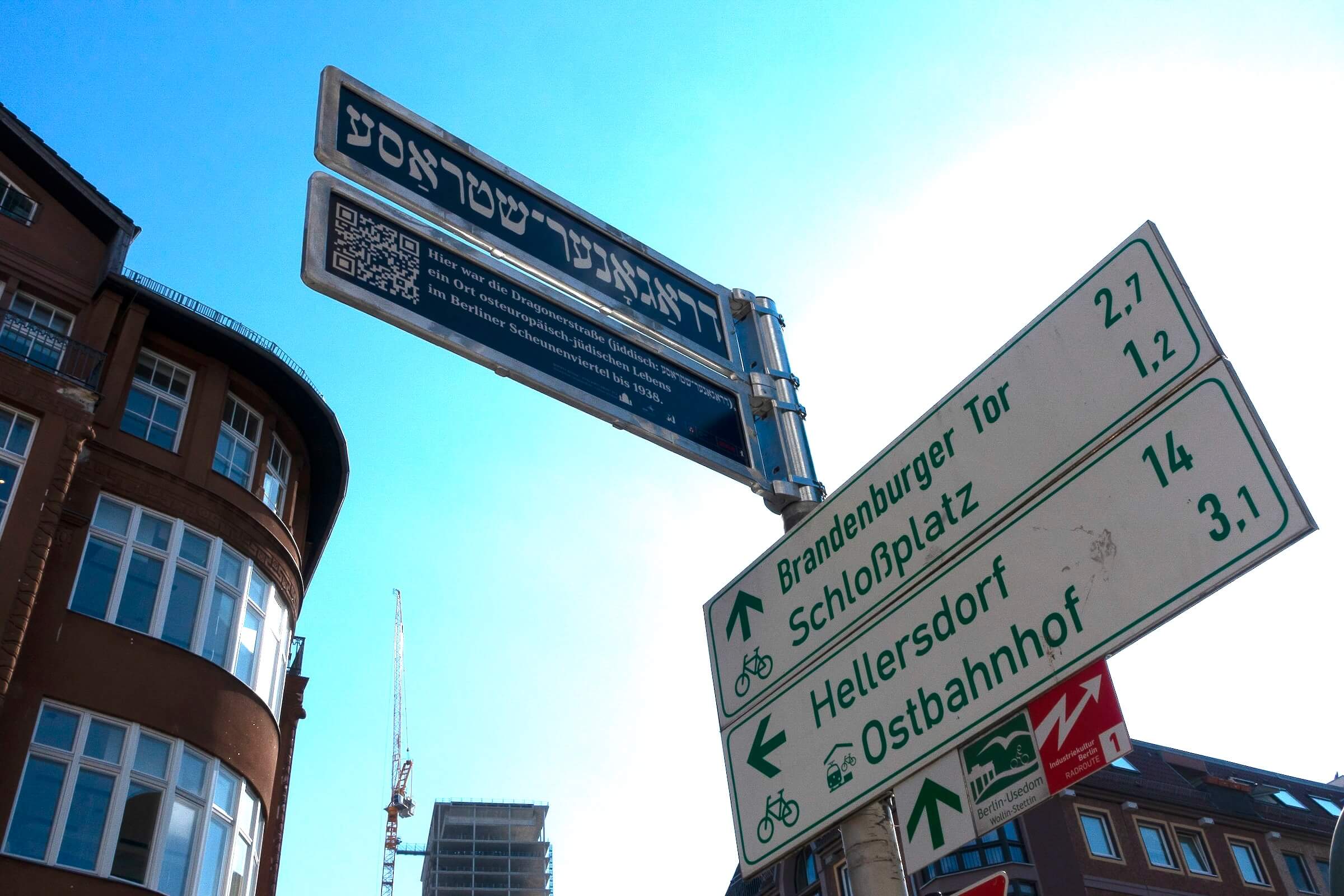
Berlin just took a bold step to reclaim its lost Jewish heritage by officially unveiling Yiddish street signs in the city’s historic Jewish quarter on March 11. The effort, led by cultural activists and local officials, has ignited a heated debate about Yiddish’s recognition as a minority language in Germany.
Artist Sebestyén Fiumei first spotlighted this cause in spring 2021 with a daring, unauthorized installation of a street sign bearing the antiquated Yiddish spelling of Grenadierstrasse, once Berlin’s most Jewish and Yiddish-speaking street. His artwork replicated the German street sign but emphasized Yiddish heritage that had been erased following the Holocaust and decades of assimilation.
Though initially removed by authorities, the installation deeply moved Jewish district official Nathan Friedenberg and historian Jess Earle. They sought to make Fiumei’s vision official and secured funding for 10 Yiddish signs around the former Jewish quarter, challenging legal restrictions that still largely exclude Yiddish from Germany’s minority language protections.
Official Recognition Still Blocked Despite Public Unveilings
The new signs went up with a compromise: while the Yiddish script is prominent, accompanying plaques explain the historical context in German and English, and conspicuously, no Yiddish speakers participated in the unveiling ceremony. “Yiddish isn’t the focus,” Earle remarked, highlighting ongoing tension between commemoration and marginalization.
The project underscores a gap in Germany’s language policies. Unlike the Slavic Lower and Upper Sorbian languages in Lusatia—both protected under the European Charter for Regional or Minority Languages with legal signage and institutional support—Yiddish remains unrecognized despite its cultural significance to Jewish communities.
Revived Culture and New Activism Fuel Hope for Yiddish
Today’s Jewish community in Berlin, mostly descendant from Eastern Europe, has reignited Yiddish culture with festivals, music, and literature. Activists like Latvian-born Yiddish singer Sasha Lurje, who leads a thriving Yiddish music scene in the immigrant-rich neighborhood of Neukölln, are backing calls for official minority language status.
“We’re relaunching the campaign,” said Eliana Jacobs, who co-founded the push for Yiddish’s eighth minority language status in Germany. This renewed momentum comes five years after the initial street sign controversy ignited public attention.
Why This Matters to California and US Communities
From Los Angeles to San Francisco, California hosts vibrant Jewish and Yiddish-speaking communities. The visibility of Yiddish in public spaces abroad resonates here, spotlighting ongoing struggles for language rights worldwide and the preservation of cultural identity. It raises urgent questions about how minority languages, especially those tied to tragically uprooted communities, are recognized and preserved.
Berlin’s Yiddish street sign initiative serves as a powerful reminder that language can both connect and divide generations. It challenges authorities to embrace fuller stories of Jewish life beyond assimilation and loss, a lesson extending far beyond Germany’s borders.
What’s Next?
Activists plan to expand efforts by involving Yiddish speakers in ceremonies and educational events, pushing German authorities to provide official minority language status to Yiddish. This status would unlock funding, institutional support, and public visibility comparable to the Sorbian languages.
California readers should watch this space as the campaign’s next steps could inspire broader recognition of endangered languages in the US, affecting policy and cultural preservation nationwide.
“I’ve often wondered why Yiddish is not a minority language in Germany, as it is in eight European countries,” said activist Měto Nowak, spotlighting a global inequity.
For now, Berlin’s Yiddish street signs stand as urgent symbols — part commemoration, part challenge — pushing for the language to reclaim its rightful place in public life.