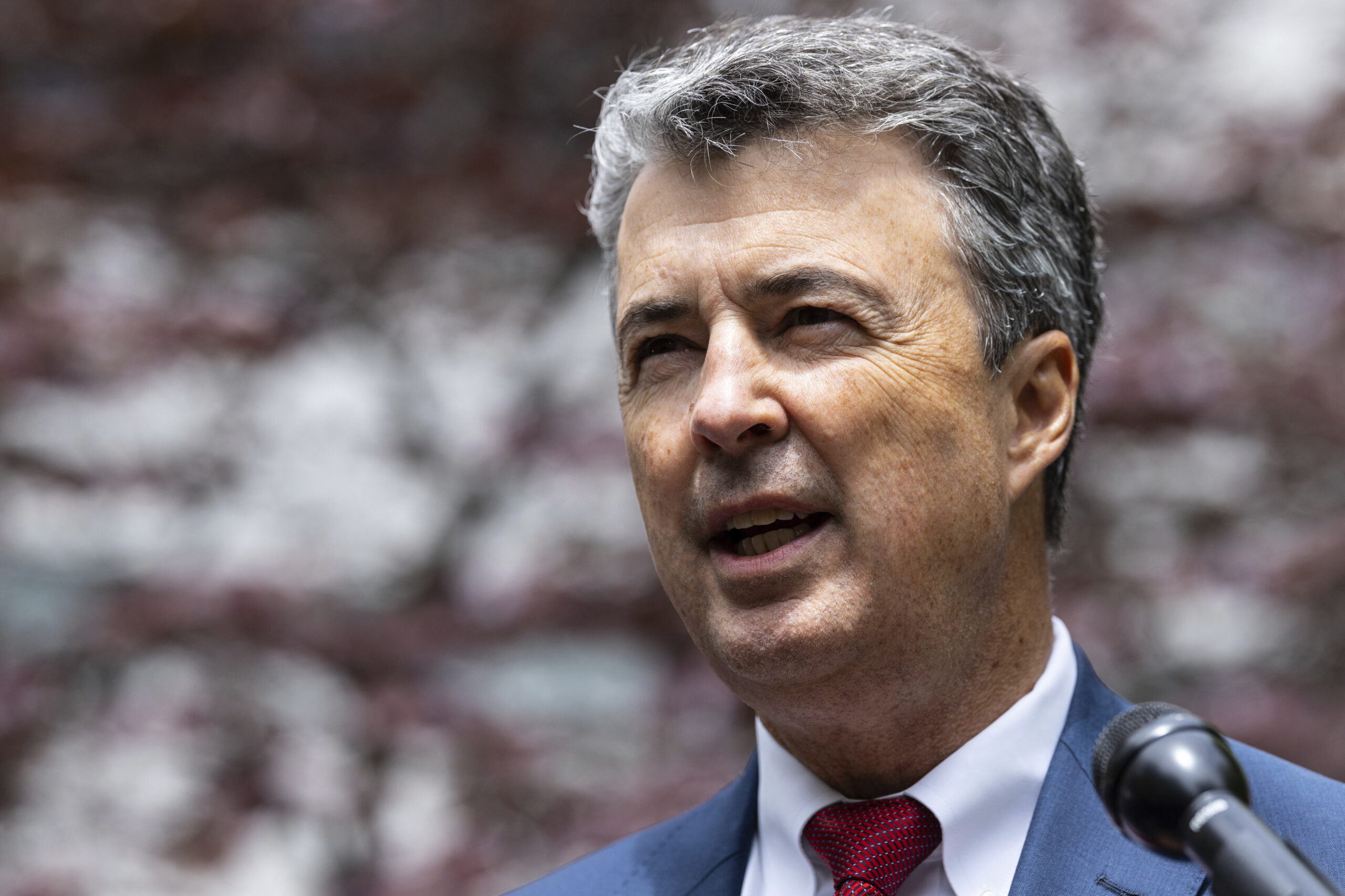
Alabama Attorney General Steve Marshall has filed motions to immediately lift federal injunctions blocking the state’s 2026 congressional map following a landmark U.S. Supreme Court ruling. This decisive legal move comes in response to the court’s recent Callais decision, which significantly undercuts a major component of the Voting Rights Act by declaring Louisiana’s effort to create a second majority-Black district unconstitutional racial gerrymandering.
The Supreme Court’s Wednesday decision sends shockwaves through ongoing redistricting battles nationwide, including Alabama, where a three-judge federal panel had previously blocked the state’s map for failing to comply with Voting Rights Act protections. The injunction halted Alabama lawmakers from using their newly drawn 2026 congressional districts, pending resolution of multiple cases, including Allen v. Singleton, Allen v. Milligan, and Allen v. Caster.
Attorney General Demands Immediate Map Reinstatement
In response, Steve Marshall argues that Alabama should regain the right to use its own congressional map without federal interference. “The Supreme Court has now made clear that you cannot assume race and politics are the same thing, you have to actually show they’re separate,” Marshall said.
Alabama’s 2026 congressional map was drawn after the panel’s earlier ruling concluded the state likely violated the Voting Rights Act by refusing to create a second majority-Black district. While the Supreme Court sided 5-4 acknowledging the violation, state lawmakers’ later proposed lines were again rejected by the federal panel for not providing a district close to a Black voting-age population majority. The panel instead selected a different map boosting Alabama’s District 2 Black voting-age population to 48.7%.
However, the Supreme Court’s Callais decision undermines the basis of the panel’s injunctions, according to Marshall’s filings. By asking the courts to lift all injunctions in the ongoing cases, Alabama seeks to restore the congressional map it first submitted in 2026.
Governor Kay Ivey Backs Legal Challenge
Governor Kay Ivey quickly expressed support for the filings, stating:
“Alabama knows our state, our people and our districts better than federal courts or activist groups. I remain hopeful that Alabama receives a favorable ruling.”
The legal fight highlights deep divisions over the balance between race-conscious redistricting protections and states’ rights to set their own electoral boundaries. The Supreme Court’s ruling signals a shift away from courts intervening in racial gerrymandering cases based heavily on Voting Rights Act claims.
What Happens Next?
Lower courts now face pressure to comply with the Supreme Court’s direction by lifting blocks on Alabama’s map. The outcome will affect Alabama’s political landscape and could set precedent influencing redistricting disputes nationwide, including in California, where debates over fair representation and Voting Rights Act enforcement are ongoing.
For voters, these developments will shape congressional districts heading into upcoming election cycles, impacting community representation and political influence. The decision also raises urgent questions about protections for minority voters across the United States.
As the situation unfolds, Alabama’s Attorney General and Governor are pushing for swift rulings that allow the state to move forward with its preferred map — igniting a critical moment in the national conversation over election law and civil rights enforcement.