Minneapolis Mayor Jacob Frey and former President Donald Trump have sparked significant public discourse following their recent use of profanity in separate incidents. Frey, during an encounter with Immigration and Customs Enforcement (ICE) agents, declared they were “not welcome” in Minneapolis, a statement that the media has dubbed the “F-bomb heard across the nation.” This remark received widespread praise, particularly from outlets like USA Today, which highlighted Frey’s bold stance.
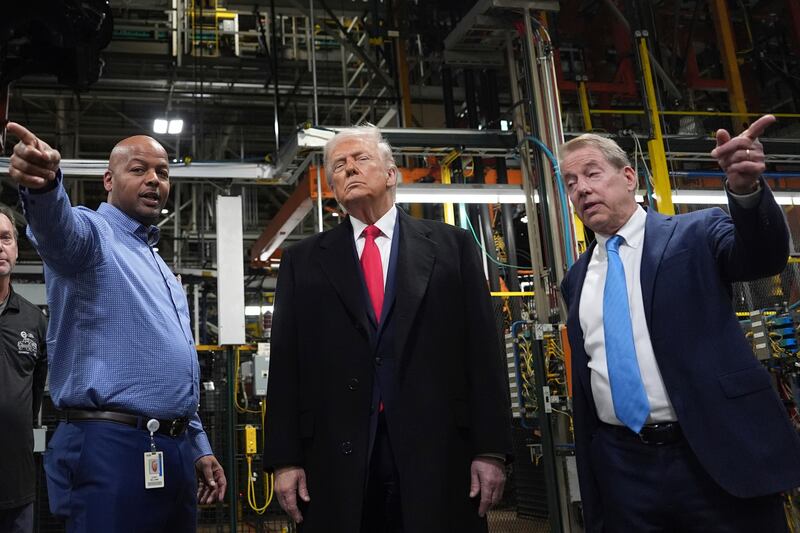
In a contrasting incident, while touring a Ford plant in Michigan, Trump responded to a factory worker who accused him of being a “pedophile protector” with an expletive and an obscene gesture. The White House communications director defended Trump’s outburst, asserting that he provided an “appropriate and unambiguous response” to the heckler.
Frey, defending his remarks, remarked to CNN’s Kaitlan Collins, “I’m so sorry if I offended their Disney princess ears, but here’s the thing. If we’re talking about what’s inflammatory, on the one hand, you got someone who dropped an F-bomb, and on the other hand, you got someone who killed somebody else.” He emphasized that a response to violent actions carries greater weight than the use of profanity.
The reactions from both Frey and Trump have brought to light the evolving standards of public discourse in American politics. Despite a growing acceptance of profanity among younger generations, a significant portion of the population still believes that leaders should adhere to decorum. According to a Pew Research Center report, approximately 65% of Americans view cursing in public as inappropriate, indicating that many citizens prefer a more restrained form of communication.
Some political figures, including California Governor Gavin Newsom and South Carolina Representative Nancy Mace, have adopted similar language, raising concerns about the normalization of coarse language in politics. Jeff Jacoby of The Boston Globe described this trend as both a symptom and a catalyst for a broader cultural decline, noting that profanity has increasingly become accepted as a credential rather than a breach of propriety.
Critics argue that such language usage is often premeditated. Barton Swaim, writing for The Wall Street Journal, suggested that today’s politicians employ foul language intentionally to project toughness and authenticity. This perspective implies a calculated approach to communication that may alienate more traditional constituents.
Prominent media personalities also contribute to this trend. Megyn Kelly, known for her conservative audience, has made profanity a staple of her public discourse. Her recent comments, including telling “hateful people” to “go f— yourselves,” highlight the pitfalls of frequent profanity. Such remarks can disconnect leaders from audiences who may find such language offensive or inappropriate.
As the debate over the acceptability of profanity continues, the question remains: who can effectively lead a cultural shift towards more respectful discourse? The followers of Frey and Trump, and indeed the broader public, are increasingly demanding leadership that reflects their values.
In a different cultural arena, the Ringling Bros. and Barnum & Bailey Circus has embarked on a new chapter with its upcoming “Greatest Show on Earth” tour, set to launch in 2026. This iteration of the circus will notably exclude live animals, a significant change following the retirement of elephants in 2016 and a six-year hiatus. The promotional materials describe the event as a “nonstop celebration of high-energy music, pop culture, vibrant color, and jaw-dropping circus acts,” aiming to attract audiences without the traditional animal performances.
The inclusion of teen pop-country star Maddox Batson in this production marks a significant shift, as he will provide a unique musical collaboration blending modern sounds with circus entertainment. While this new direction aims to revitalize the circus brand, it raises questions about whether such changes can still resonate with audiences accustomed to the classic animal acts that defined the circus experience for generations.
As public figures grapple with the implications of their language and cultural institutions evolve, the conversation about decorum and tradition in American society is more relevant than ever. The ongoing dialogue about profanity in politics and entertainment reflects deeper currents within the culture, prompting reflection on what constitutes effective leadership and authentic expression.