As the inaugural edition of the Doha Film Festival (DFF) unfolds, it shines a spotlight on Sudanese cinema and music. This showcase arrives during a tumultuous year for Sudan, where ongoing conflict and mass displacement challenge the visibility of its cultural narratives. Among the highlights is Cotton Queen, the debut feature from Sudanese filmmaker Suzannah Mirghani, which is competing in the festival’s International Feature Film category. Recently, the film garnered significant acclaim, winning the Golden Alexander for Best Feature at the Thessaloniki International Film Festival, marking a pivotal moment for both the film and Sudanese cinema.
Mirghani notes that the film resonates deeply with Sudanese audiences abroad. “The first reaction is always: ‘We’re seeing Sudan on screen,’” she remarks. For many younger Sudanese viewers, the film evokes a sense of relief as they encounter familiar faces and landscapes. Mirghani, who has developed this project with support from the Doha Film Institute, emphasizes the importance of having Sudanese culture featured prominently in a major festival. “In many parts of the world, Sudanese communities feel overlooked. Here, there’s a sense of being seen,” she reflects.
Exploring Sudanese Identity Through Film
The journey of Cotton Queen began as a script that shifted between short and feature formats. This led Mirghani to create the short film Al-Sit in 2020, which served as a proof of concept. That film won the Canal+/Cine+ Award at the Clermont-Ferrand International Short Film Festival, laying a solid groundwork for her feature debut. Central to both projects is Sudanese cotton, a crop that holds a rich history and significance in the country.
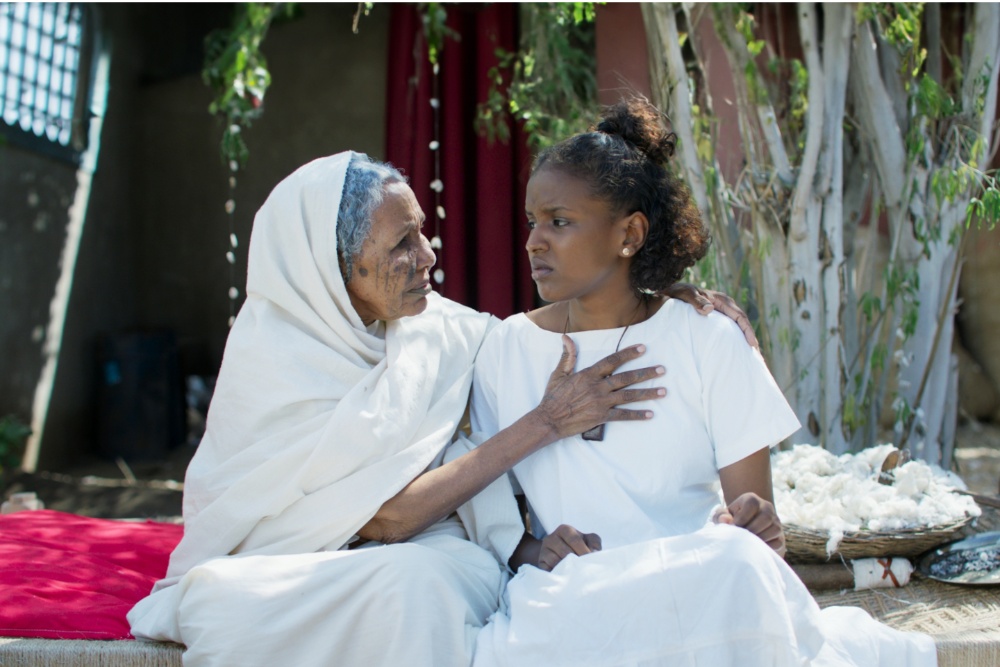
“Cotton is central to Sudan in every aspect,” Mirghani asserts. The crop is woven into Sudan’s domestic rituals and communal heritage, intertwined with the nation’s colonial past. She shares that women of her grandmother’s generation spun cotton into thread, allowing them to achieve economic independence. “Even when others in the house had no income, the grandmother always had cash because she was selling her thread,” she explains. This intertwining of history and women’s empowerment is a recurring theme in the film.
The narrative of Cotton Queen unfolds around teenage Nafisa (played by Mihad Murtada), who becomes entangled in a power struggle over genetically modified cotton seeds introduced in Sudan. Mirghani weaves a coming-of-age story with ecological and economic critiques, ensuring the film remains engaging rather than didactic. “The film isn’t a lesson, even though there are lessons within it,” she states.
The film also draws inspiration from the historical Cotton Queen competitions of the 1930s, which were beauty contests for mill workers in England and had similar yet less documented events in Sudan. “It was a competition for the prettiest girl working in the mills to put a beautiful face on a terrible industry,” Mirghani explains, aiming to reclaim and redefine that narrative.
Adapting to Change Amid Conflict
Initially, Mirghani planned to film entirely in Sudan with a predominantly Sudanese cast and crew. However, the outbreak of war in April 2023 forced her to adapt those plans. Many collaborators fled to Egypt, prompting the production to relocate. “In Sudan, there was genuine momentum for a film industry,” she observes, referencing the international acclaim of films like Goodbye Julia and You Will Die at Twenty. The war disrupted lives and livelihoods, making the relocation a matter of solidarity as much as logistics.
The natural landscape along the Nile provided continuity for the film, as the setting mirrored that of Sudan’s cotton fields. However, the emotional landscape was starkly different, with some cast members grappling with their recent experiences fleeing the conflict. Mirghani notes that filmmaking became a source of stability for many young, non-professional actors who were displaced. “Sudan is deeply communal, and they found that on set,” she remarks.
The production team built a Sudanese village in Egypt that felt authentic, creating a disorienting experience when crew members stepped outside and realized they were not in Sudan. The film emerged as a multinational co-production, with key contributions from producers Caroline Daube and Didar Domehri, along with several international partners, including ZDF/Das Kleine Fernsehspiel, ARTE, and Film Clinic.
DFF’s focus on Sudan extends beyond cinema into its Sounds of Sudan music program. Mirghani, who views music as a narrative voice, incorporates traditional elements into Cotton Queen. The film opens with girls singing aghani albanat, or “girls’ songs,” performed in women-only spaces. The score, composed by Tunisian-French musician Amine Bouhafa, integrates Sudanese instruments like the oud and tambour, while Brooklyn-based Sudanese singer Alsarah features in a modern rendition of a traditional song.
The Future of Sudanese Cinema
Sudanese filmmaking remains a rarity, a gap that Mirghani feels keenly. “There may be only 10 Sudanese fiction films ever made by Sudanese filmmakers,” she estimates. This scarcity underscores the significance of DFF’s spotlight on Sudanese culture. Many cast and crew members, still based in Egypt, are being brought to Doha for the film’s screening. “We’ll watch the film together, on screen, for the first time,” Mirghani reflects. “That’s a gift.”
Looking ahead, Mirghani’s aspirations center on fostering connection. “Right now, we don’t have a country. Right now, the country is destroyed. So to be connected through this film would be my greatest measure of success,” she shares. With international sales already secured by Totem Films, she hopes to see the film reach far and wide, especially within Sudanese communities in the diaspora and refugee contexts. A global platform could amplify its impact, but ultimately, Mirghani envisions it as a means to connect Sudanese audiences wherever they may be.