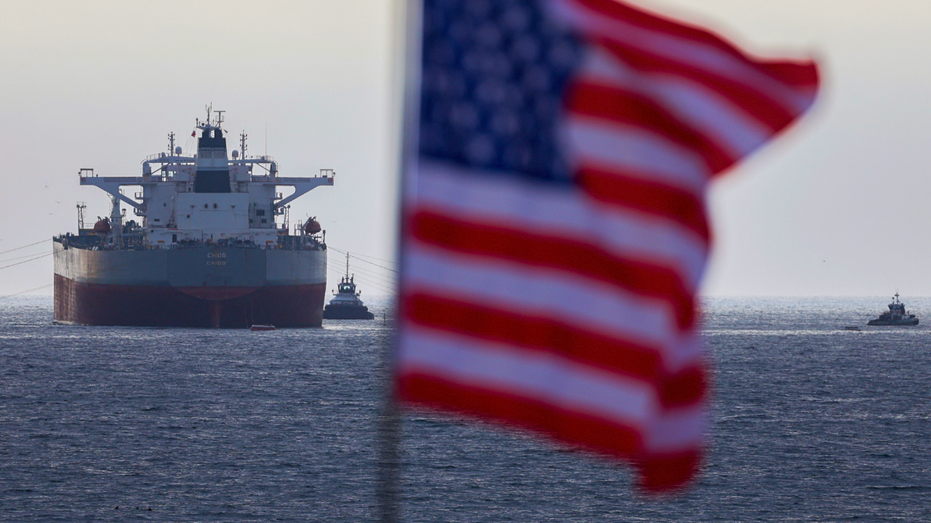
The escalating conflict involving Iran has prompted U.S. officials to explore an unconventional approach to mitigate rising oil prices. Stephen Moore, co-founder of Unleash Prosperity, suggests that the United States can leverage its record oil and gas production to counteract market disruptions. As tensions in the Middle East intensify, the White House is considering a government-backed insurance program aimed at reducing war-risk premiums for vessels navigating the Strait of Hormuz.
The Strait of Hormuz: A Critical Energy Corridor
The Strait of Hormuz is a vital maritime passage that facilitates the transit of approximately 20 million barrels of oil daily, accounting for roughly one-fifth of global liquefied natural gas supply. When conflicts arise in this region, even the mere threat of disruption can send ripples through global markets. Recent U.S.-Israeli strikes on February 27, 2026, followed by retaliatory actions from Iran, have heightened concerns about the security of oil shipments.
In light of these developments, the White House is focusing on insurance as a potential solution. Under the proposed plan, the U.S. government would assume part of the financial burden associated with war-risk coverage, thereby alleviating some of the pressure on private insurers and shipowners. This strategy aims to keep oil flowing through the Strait of Hormuz while preventing further increases in gasoline prices.
Insurance Market Responses to Regional Tensions
In recent weeks, the insurance market has reacted to the heightened risk. Major maritime insurers such as Gard, Skuld, and the London P&I Club have already tightened their terms or canceled war-risk coverage for voyages through Iranian waters. This shift has left many vessels without necessary insurance, complicating shipping logistics.
Conversely, Lloyd’s of London, a prominent insurance marketplace, reports that coverage for its vessels in the Gulf region remains intact, with a combined hull value exceeding $25 billion. A spokesperson from Lloyd’s indicated that discussions with U.S. officials regarding possible insurance options are ongoing.
According to Matt Smith, an analyst at Kpler, having insurance is crucial for vessels operating in the Strait of Hormuz. “You simply cannot pass through the Strait of Hormuz if you don’t have the insurance, given the high possibility of getting struck by a missile,” he explained. Yet, he acknowledged that even with insurance, the risks remain substantial.
In response to the escalating situation, Maersk, a leading global shipping company, announced it would suspend all vessel crossings through the Strait of Hormuz until further notice. This decision underscores the significant impact that major shippers’ actions can have on global supply chains. Delays in oil deliveries could lead to increased costs that ultimately affect consumers at the pump.
As the situation evolves, how long these disruptions last and whether the shipping and insurance markets stabilize will play a crucial role in determining the impact on oil prices. Until then, the world’s most critical energy chokepoint continues to create uncertainty for traders and consumers alike.