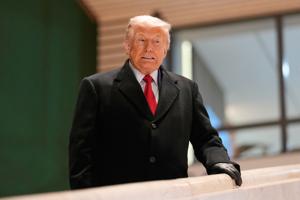
President Donald Trump has recently adjusted the United States’ approach to Greenland amid rising geopolitical competition in the Arctic. A week prior, his administration issued threats of tariffs against several European allies—specifically France, Germany, Sweden, Norway, the United Kingdom, the Netherlands, Finland, and Belgium—due to their deployment of small military contingents to Greenland. This strategy raised concerns about damaging relations with key partners and undermining the strategic goals the U.S. aims to achieve in the region.
During the World Economic Forum in Davos, Switzerland, President Trump announced a new “complex” security framework with NATO Secretary-General Mark Rutte, signaling a departure from coercive tactics and emphasizing the importance of cooperation in Arctic defense. The remarks reflect a growing acknowledgment that effective diplomacy relies more on collaboration than on intimidation.
The shift comes against a backdrop of protests in Greenland, where slogans such as “Greenland First” and “Greenland Is Not for Sale” highlight local sentiments about foreign interest in the territory. The contemporary dynamics of securing influence in the Arctic underscore that soft power is as crucial as traditional hard power.
The strategic rationale for U.S. interest in Greenland remains compelling. The Arctic is becoming an increasingly significant arena of geopolitical competition. As climate change accelerates ice melt, new maritime routes are opening, prompting aggressive maneuvers from both Russia and China. Russia has ramped up military infrastructure across its Arctic territory, while China has claimed status as a “near-Arctic state” and is investing heavily in the region, including in Greenland.
Greenland is pivotal for U.S. defense systems, particularly regarding missile defense architecture. It plays a vital role in early-warning radar systems and future missile defense initiatives, such as Trump’s proposed “Golden Dome.” Effective defense against advanced missile threats necessitates Greenland’s inclusion in strategic calculations.
In addition to its strategic military importance, Greenland is abundant in resources, including oil, gas, and rare earth elements critical to various technologies. China currently dominates the global supply chain for rare earths and actively seeks access to mineral resources worldwide, making Greenland’s resources essential for the U.S. to maintain its technological edge.
The security landscape in Greenland presents significant challenges. With a population of approximately 56,000 spread over a territory much larger than Denmark, Greenland lacks the military capacity and infrastructure to ensure its own defense. The island’s inhabitants primarily consist of fishermen and traditional hunters, not military personnel trained for defense.
Since gaining expanded autonomy from Denmark in 2009, Greenland has the right to pursue independence through a referendum. However, independence poses considerable risks. Without Denmark’s support, Greenland would lose NATO protection and face an uncertain security future. Thus, even within NATO, Greenland’s security heavily depends on U.S. military capabilities.
The historical interest of the United States in Greenland is not new; it has sought to acquire the territory since the 19th century and revisited the concept during the Cold War. President Trump’s public interest merely articulates a long-standing strategic understanding among American policymakers.
The framework presented in Davos suggests a constructive path forward. It reportedly includes updates to the 1951 U.S.-Danish defense agreement, allowing American military operations on the island while reaffirming Danish sovereignty. It also aims to enhance NATO’s role in Arctic security and address threats from Russia and China, including the potential deployment of missile defense systems in Greenland.
To bolster Arctic security, expanding U.S. military presence in Greenland from the current 150 personnel to thousands would enhance defense capabilities and support critical missions. Such an expansion could also provide economic benefits to Greenlanders through job creation and infrastructure investment.
Despite the strategic rationale behind U.S. interest, previous remarks by Trump suggesting a forceful acquisition of Greenland prompted backlash. The assertion that “Greenland is not for sale” resonated strongly with Greenlanders, who felt the U.S. was more focused on its interests than engaging in meaningful dialogue.
A more diplomatic approach is necessary. Increasing American engagement through cultural exchanges, educational programs, and high-level visits could foster goodwill. U.S. investments in Greenlandic businesses and responsible resource development would offer tangible benefits, further strengthening ties.
From a broader perspective, the implications of U.S. actions extend beyond Greenland. Countries in Central and Eastern Europe, which have traditionally supported the U.S., also maintain loyalty to Nordic partners and other NATO allies. Any threats directed at allies can create confusion and anxiety, eroding security rather than enhancing it.
President Trump recognizes the importance of Greenland to both U.S. and NATO security. The framework discussed in Davos marks progress, but to solidify a lasting agreement, the administration must prioritize diplomatic charm over coercive tactics.