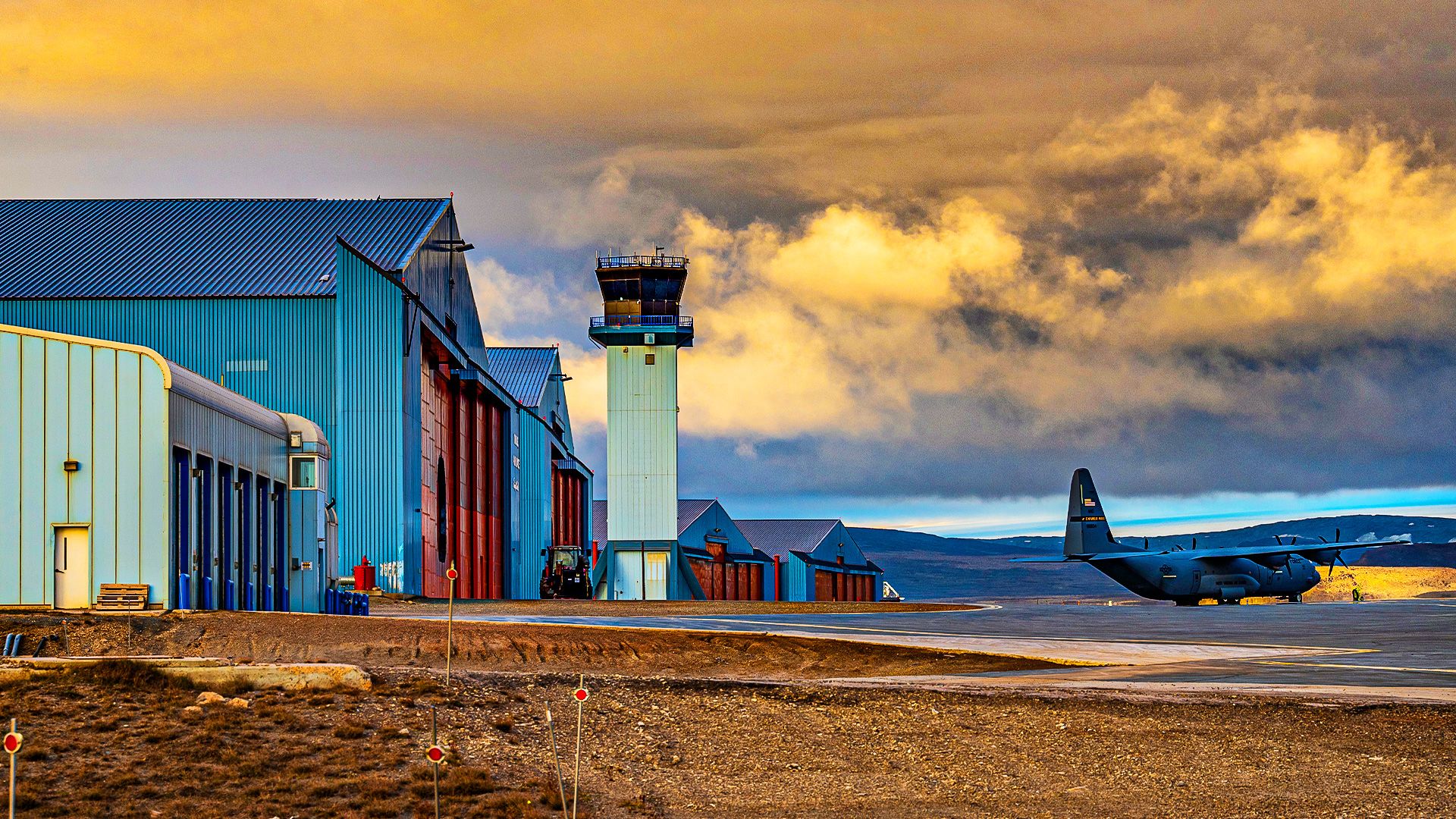
The United States Air Force Base in Greenland, formerly known as Thule Air Base, has been renamed Pituffik Space Base as of 2023. This facility, now the northernmost military installation of the United States Department of Defense, plays a vital role in the country’s missile warning and defense system, safeguarding against ballistic missile threats. Under the management of the US Space Force, Pituffik continues its essential mission to protect North America and its allies.
Geostrategic Importance
Pituffik Space Base’s strategic value is rooted in its unique location within the Arctic. This position enables critical monitoring of air and space activities between North America and Russia. Serving as a key sensor node for the North American Aerospace Defense Command (NORAD), the base houses the 12th Space Warning Squadron, which operates an Upgraded Early Warning Radar (UEWR) system. This advanced radar is designed to detect and track ballistic missiles launched from both land and sea, providing early warnings essential for national security.
The base is also pivotal in NORAD’s Operation Noble Defender, a routine exercise that showcases the capability to deploy forces rapidly into the Arctic. This ensures “Total Domain Awareness,” deterring rival actions in the region. Pituffik closes vital capability gaps that could be exploited by adversaries, solidifying its role in modern defense frameworks.
Infrastructure and Operations
The facility is undergoing significant modernization, with investments aimed at filling existing infrastructure gaps. Enhancements include the construction of new refueling hangars and personnel recovery facilities. The base features a 10,000-foot-long runway, one of the few in the High Arctic capable of supporting modern fighter jets like the F-35 Lightning II and F-16. Managed by the 821st Space Base Group, Pituffik accommodates a workforce that varies between 150 and 600 personnel, depending on seasonal demands.
Pituffik also boasts the northernmost deep-water port within the US Armed Forces’ network, facilitating the arrival of supply ships during the summer when sea ice is minimal. The base’s design incorporates advanced engineering techniques to protect the underlying permafrost, with all structures raised above ground to prevent melting.
The AN/FPS-132 UEWR radar system, operated by the 12th Space Warning Squadron, provides extensive coverage with a detection range exceeding 3,000 miles. Additionally, the Satellite Control Network supports telemetry, tracking, and commanding services for US and allied satellite programs.
A Historical Perspective
The facility’s history is significant, particularly during the Cold War when it served as a critical staging area for the Strategic Air Command. Thule Air Base was instrumental in several missions, including “Operation Chrome Dome,” which involved continuous airborne alert patrols by nuclear-armed bombers.
The base’s transition from a bomber station to a warning facility was solidified with the installation of the Ballistic Missile Early Warning System (BMEWS) radar in 1961, which became a cornerstone in detecting Soviet missile threats.
Incidents like the 1968 crash of a B-52 bomber during a “Thule Monitor” mission, which resulted in the release of hydrogen bombs, have shaped the base’s operational protocols and heightened awareness of nuclear safety.
As the Arctic becomes increasingly accessible due to climate change, Pituffik’s significance continues to grow. The Kingdom of Denmark granted the United States permission to establish the base under a 1951 treaty, which allows for “unrestricted freedom of operation” in the region, reaffirming the collaborative defense commitments between the two nations.
The ongoing geopolitical landscape, marked by heightened interest from countries like Russia and China in Arctic resources, underscores Pituffik’s role as a strategic hub for military operations and scientific research. As the region evolves, Pituffik Space Base will remain a critical component of North Atlantic defense efforts and broader NATO security initiatives.