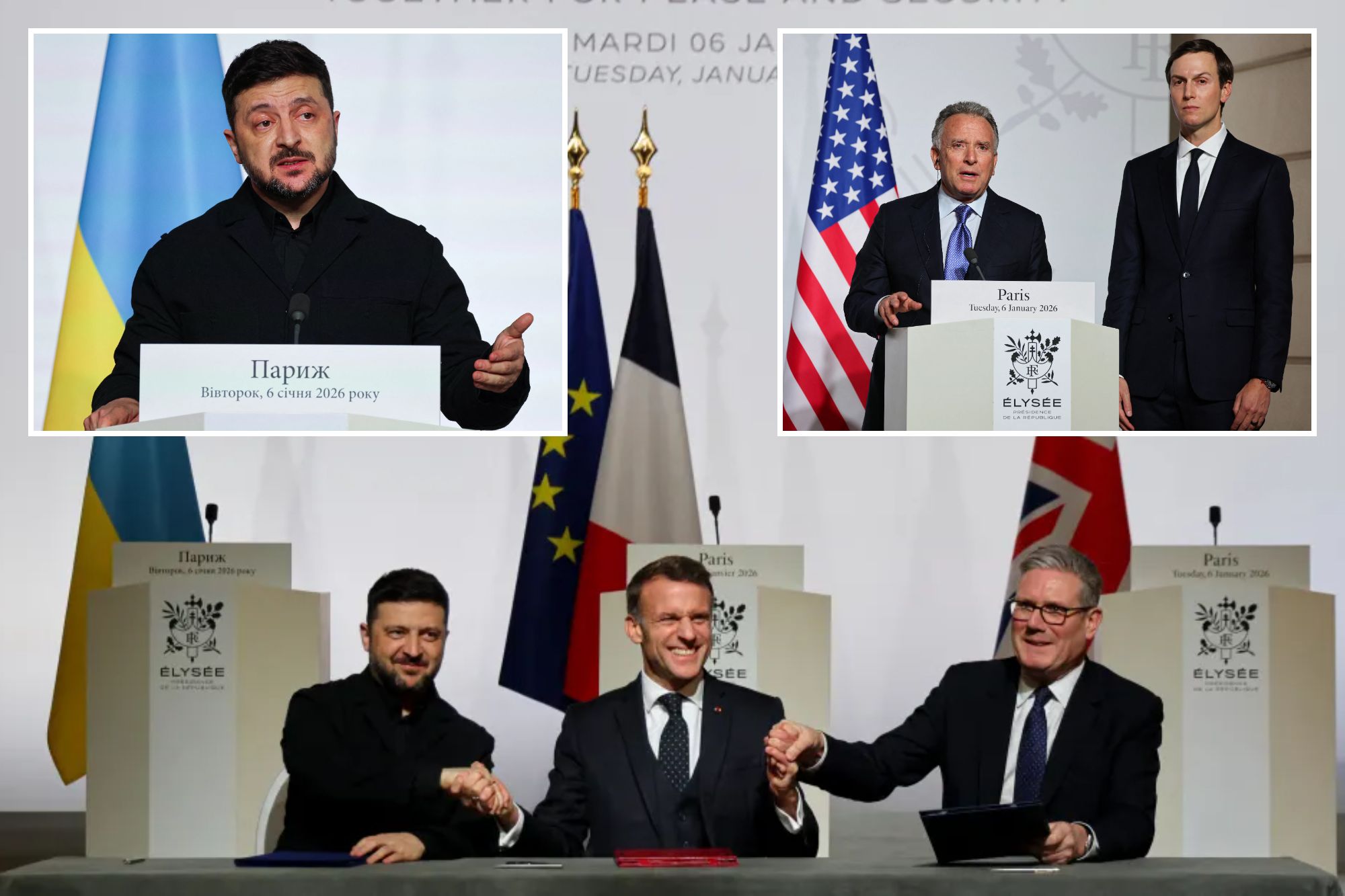
Ukraine’s allies have reached a significant agreement to provide the country with multilayered international defense guarantees aimed at ending Russia’s ongoing invasion, which has persisted for nearly four years. In a pivotal meeting held in Paris on January 6, 2024, leaders from various European nations, along with representatives from Canada, the United States, the European Union, and NATO, confirmed plans to bolster Ukraine’s military capabilities with equipment, training, and comprehensive support across air, land, and sea.
The specifics regarding the size and scope of the supporting forces have not been disclosed, leaving many aspects of the plan unclear. UK Prime Minister Keir Starmer described the discussions as having made “excellent progress,” while also emphasizing that challenges remain, particularly in light of ongoing Russian assaults on Ukrainian territory.
Commitments to Support Ukraine’s Defense
Starmer stated that allied nations would engage in US-led monitoring and verification of any potential cease-fire, alongside a commitment to provide long-term military support, including armaments for Ukraine’s defense. He underscored the necessity for binding commitments to assist Ukraine in the event of further Russian aggression. There was no immediate response from Russian officials following the meeting, coinciding with the eve of Orthodox Christmas.
Russian President Vladimir Putin has consistently dismissed the possibility of NATO troops being deployed on Ukrainian soil and has reiterated that a cease-fire cannot be achieved without a comprehensive settlement. Starmer noted that lasting peace would only be possible if Russia shows willingness to compromise, stating, “Putin is not showing that he is ready for peace.”
In the context of a cease-fire, the UK and France plan to establish military hubs across Ukraine, which would include fortified facilities for weapons and military supplies to support Ukraine’s defense needs. Ukrainian President Volodymyr Zelensky acknowledged progress in the discussions but highlighted that agreements must be ratified by each participating nation to ensure implementation following a settlement.
Details on Security Guarantees and Ongoing Diplomacy
Zelensky elaborated on the outcomes of the talks, indicating that leaders have identified countries willing to take the lead in providing security guarantees on land, in the air, and at sea. He mentioned that the specifics surrounding the operational command of these forces and the necessary levels of military presence are still under discussion.
“We determined what countries are ready to take leadership in the elements of security guarantees on the ground, in the air, and at sea,” Zelensky stated during a news conference.
The joint statement issued by the allies emphasized the continuation of long-term military assistance and stated that Ukraine’s armed forces would remain the first line of defense and deterrence once a peace agreement is finalized. Prior to the meeting, significant diplomatic efforts were evident, with multiple discussions taking place on the sidelines, including a meeting between Zelensky and Macron, as well as military leaders from Ukraine, France, and the UK.
French President Emmanuel Macron characterized the security statement from the allies as a “significant step” toward resolving the conflict. The assembly in Paris featured an unprecedented number of officials, with 35 participants, including 27 heads of state and government.
Despite the positive developments, uncertainties loom regarding the specific nature of troop deployments, as Zelensky noted that not all countries are prepared to commit forces, and many would require approval from their respective legislatures. He emphasized the importance of support in forms beyond troop deployments, such as weapons, technology, and intelligence sharing.
As discussions continue, the urgency for concrete outcomes remains high. Participants are focusing on key priorities, including monitoring cease-fire agreements, bolstering Ukraine’s armed forces, and establishing a multinational military presence.
On the ground in Ukraine, military operations persist. Reports emerged on January 6 that Ukraine’s Security Service (SBU) conducted drone strikes on military assets within Russia, targeting a military arsenal in the Kostroma region and an oil depot in the Lipetsk region. The strikes reportedly caused extensive damage and disruptions in the affected areas.
The evolving situation underscores the complexities of international diplomacy surrounding Ukraine’s defense, as allies navigate the balance between support and the need for a sustainable resolution to the conflict.