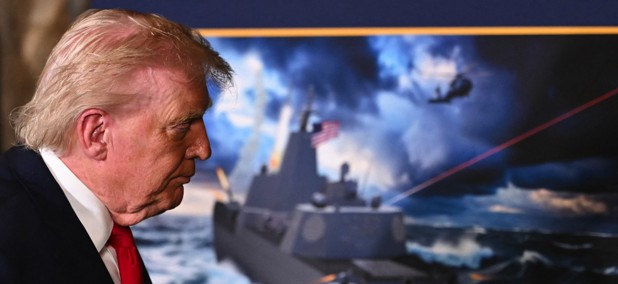
President Donald Trump has announced plans to develop a new class of warships named after himself, yet these plans have raised significant concerns regarding their proposed armament. The announcement includes the arming of these vessels with a new nuclear-armed cruise missile, a departure from previous statements that suggested a reduction in the need for new nuclear weapons. In February, Trump stated, “There’s no reason for us to be building brand-new nuclear weapons. We already have so many.”
The history of U.S. nuclear policy regarding sea-launched cruise missiles (SLCM-N) offers valuable lessons. In 1991, President George H.W. Bush ordered the removal of all nuclear-armed Tomahawk cruise missiles from Navy surface ships and submarines. He identified the forward deployment of such weapons as destabilizing and chose to place them into storage. Two decades later, under President Barack Obama, these weapons were permanently dismantled, reflecting a long-standing strategy to limit the Navy’s nuclear mission to strategic missiles on select submarines.
A significant shift occurred in 2018 when then-Defense Secretary James Mattis and Joint Chiefs Chairman Gen. Mark Milley approved a Nuclear Posture Review advocating for the development of a new SLCM-N. In 2021, President Joe Biden cancelled this program; however, Congress subsequently overruled this decision and continued funding. This unprecedented move highlights the rare occurrence of Congress compelling the executive branch to initiate a new nuclear weapons program.
Andrew C. Weber, a former Assistant Secretary of Defense for Nuclear, Chemical, and Biological Defense Programs, argues against the development of the SLCM-N. While he supports the modernization of the strategic nuclear triad, he emphasizes three primary concerns regarding the proposed tactical nuclear weapon.
Firstly, Weber points out that introducing a new tactical nuclear capability could lead adversaries to misinterpret the United States’ response to a limited nuclear strike. He believes a more effective deterrent would be to maintain a posture that emphasizes overwhelming retaliation. The current U.S. nuclear modernization program is designed to enhance this type of strategic deterrent.
Secondly, Weber warns that the presence of tactical nuclear weapons may increase the likelihood of their use in regional conflicts. Once the nuclear threshold is crossed, there is a heightened risk of escalation to full-scale nuclear war.
Additionally, he raises concerns about the potential for miscalculation in a crisis. In environments where intelligence capabilities are compromised, adversaries may struggle to distinguish between conventional and nuclear weapons. This ambiguity could prompt a dangerous escalation, as nations may resort to nuclear options to protect their interests.
Weber concludes that pursuing the SLCM-N could undermine the effectiveness of the U.S. strategic weapons triad. He urges President Trump to align the new battleship program with his earlier statements, advocating for investments in capabilities that enhance national security without the need for this new tactical nuclear weapon.
As this debate unfolds, the implications for U.S. nuclear policy and global security remain profound. The decision on whether to develop the SLCM-N will not only shape the future of military strategy but also influence international perceptions of U.S. nuclear deterrence.