Donald Trump has decided to withdraw National Guard troops from Los Angeles, Chicago, and Portland, marking a significant shift in his administration’s approach to law enforcement in Democratic-led cities. The announcement came on December 26, 2023, following a decision by the U.S. Department of Justice to no longer contest a California court ruling that restored control of the National Guard to Governor Gavin Newsom.
This unexpected retreat follows a rare rebuke from the U.S. Supreme Court, which blocked efforts to deploy National Guard units in Illinois. Trump characterized the withdrawal as temporary, asserting in a post on his Truth Social platform that the initiative had successfully reduced crime. He stated, “We are removing the National Guard from Chicago, Los Angeles, and Portland, despite the fact that CRIME has been greatly reduced by having these great Patriots in those cities.”
The president claimed that without federal intervention, cities like Portland, Los Angeles, and Chicago would have faced severe crime issues. He hinted at the possibility of redeploying troops in the future, stating, “We will come back, perhaps in a much different and stronger form, when crime begins to soar again.”
Legal Challenges and Political Reactions
Newsom welcomed the decision from the Justice Department, viewing it as an end to what he described as an illegal intimidation tactic. He expressed satisfaction with the ruling from the Ninth Circuit Court of Appeals, which had previously decided that Trump’s administration lacked the authority to maintain control over state National Guard troops indefinitely. Newsom stated, “This admission by Trump and his occult cabinet members means this illegal intimidation tactic will finally come to an end.”
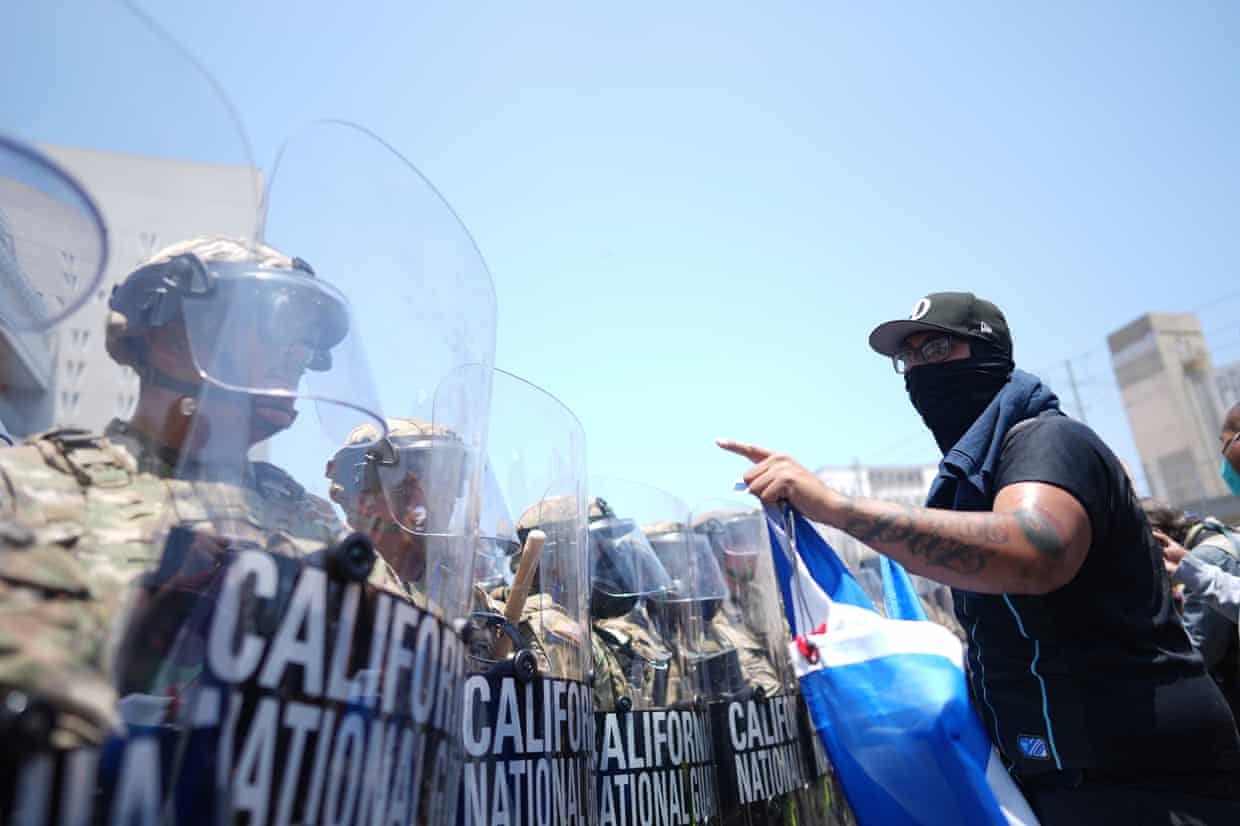
The deployment of National Guard troops initially began in June 2023 as a response to protests against actions by Immigration and Customs Enforcement (ICE) agents. Trump faced ongoing legal challenges regarding the deployment, which Newsom argued was unwarranted. A lower court ruled earlier in December that the president had unlawfully seized control of the National Guard, leading to the administration’s shift in strategy.
This latest development represents the second setback for Trump concerning the federalization of National Guard units in response to dissent against his immigration policies. Last week, the Supreme Court refused to allow the administration to deploy National Guard troops in Chicago, a plan opposed by both Chicago Mayor Brandon Johnson and Illinois Governor J.B. Pritzker, both Democrats.
Future of National Guard Deployments
Trump’s announcement raises questions about the future of National Guard deployments in other Democratic-led cities, including Washington, D.C., and New Orleans. Troops were expected to arrive in New Orleans by New Year’s Eve, while over 2,000 National Guard members have been stationed in Washington, D.C., since August 2023, ostensibly to address a supposed rise in crime.
The deployment has not been without incident; one National Guard member was killed and another seriously injured in a shooting outside a metro station in the city on November 26, 2023. This incident prompted an increase in the number of deployed National Guard members in Washington, coinciding with Trump’s intensified anti-immigrant rhetoric, particularly after it was revealed that the alleged shooter was an Afghan national granted political asylum in the U.S.
A recent legal ruling confirmed that National Guard troops can remain in Washington, D.C., while a panel of judges reviews the legality of their deployment. The lower court had previously ordered their removal, illustrating the ongoing legal complexities surrounding the use of National Guard troops in domestic law enforcement roles.
As the situation continues to evolve, the implications of Trump’s withdrawal decision will likely resonate within the political landscape, influencing discussions surrounding law enforcement, immigration policy, and state-federal relations.