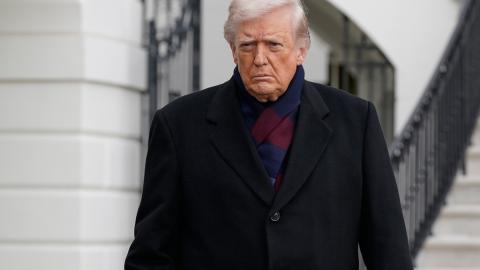
President Donald Trump has promised “very serious retaliation” in response to the murders of two Iowa National Guard members and a U.S. civilian during an ambush in Palmyra, Syria, on March 23, 2024. The attack, which has been attributed to the terror group ISIS, left three other American personnel wounded. The U.S. Central Command reported that the ambush involved a lone gunman who was subsequently killed.
In his remarks, Trump expressed condolences to the victims’ families while also defending Syrian President Ahmed al-Shaara. The president stated that al-Shaara was “devastated” by the news of the attack. Trump noted that the three wounded Americans “seemed to be doing pretty well,” suggesting a degree of optimism regarding their recovery.
The Pentagon has confirmed that it will withhold the names of the deceased for 24 hours to allow family members to be notified before the public release. Their deaths mark a significant tragedy, drawing attention to the ongoing dangers faced by U.S. military personnel in the region.
International Reactions and Support
In the wake of the attack, Israeli Foreign Minister Gideon Sa’ar extended condolences to the families of the deceased Americans. Sa’ar emphasized Israel’s solidarity with the United States, stating, “Israel stands shoulder to shoulder with the United States, its closest ally.” He also expressed hope for the swift recovery of the injured personnel.
The ambush highlights the persistent threat posed by ISIS, even as the group has faced significant territorial losses in recent years. The U.S. military continues to maintain a presence in Syria, working alongside allies to combat extremist factions and stabilize the region.
The situation remains fluid as further details emerge. The U.S. government is expected to respond decisively, reflecting its commitment to protecting its personnel and addressing threats to its national security interests.
As investigations continue into the circumstances surrounding the attack, the implications for U.S. military strategy in Syria and the broader Middle Eastern region will likely come into sharper focus in the coming days.