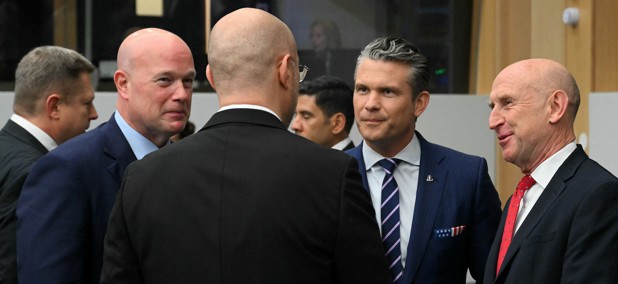
U.S. President Donald Trump will host the leaders of Congo and Rwanda on March 15, 2024, for the signing of a peace agreement aimed at resolving the ongoing conflict in eastern Congo. This initiative, termed the Washington Accords for Peace and Prosperity, represents a culmination of extensive diplomatic efforts involving the U.S., the African Union, and Qatar. The agreement seeks to stabilize a region that has been plagued by violence and humanitarian crises for decades.
The signing ceremony, taking place at the U.S. Institute of Peace in Washington, will feature President Felix Tshisekedi of Congo and President Paul Kagame of Rwanda. It follows a previous agreement reached in June. The conflict in eastern Congo has intensified recently, with the M23 rebel group, allegedly backed by Rwanda, capturing key cities such as Goma and Bukavu. This escalation has resulted in a significant humanitarian crisis, displacing millions and exacerbating local suffering.
While the White House has hailed the agreement as a “historic” moment, analysts express skepticism regarding its immediate impact on peace. Many residents, like Amani Chibalonza Edith, a 32-year-old from Goma, voice concerns about the ongoing violence. “We are still at war,” she stated, emphasizing that without a cessation of hostilities, true peace remains elusive.
The Washington Accords will also aim to establish a Regional Economic Integration Framework, which will define the terms of economic collaboration between the three nations. This framework is seen as vital for enhancing access to Congo’s rich mineral resources, crucial for industries ranging from technology to defense. The Trump administration has viewed this engagement as a strategic move to reduce reliance on Chinese rare earth minerals, which currently dominate global markets.
In conjunction with the peace talks, the U.S. Chamber of Commerce will host an event focused on potential investment opportunities in critical minerals, energy, and tourism. According to Yolande Makolo, a senior adviser to Kagame, these discussions underscore the importance of economic partnerships in the region’s recovery.
Despite the diplomatic efforts, fighting continues in eastern Congo. Reports indicate ongoing clashes between M23 rebels and Congolese soldiers, complicating the peace process. Both sides have accused each other of violating ceasefire agreements, heightening tensions further.
The humanitarian situation remains dire, particularly in areas previously considered safe. Infrastructure in Goma, home to around 2 million people, has deteriorated significantly since the escalation of violence. The international airport remains closed, and essential services, including banking, are still disrupted. Residents report rising crime rates and soaring prices for basic goods. Moise Bauma, a 27-year-old student in Bukavu, expressed uncertainty: “We are waiting to see what will happen because so far, both sides continue to clash and attack each other.”
The historical roots of this conflict trace back to the aftermath of the 1994 Rwandan genocide. Following the genocide, nearly two million Hutus fled into Congo, leading to ongoing tensions between Rwandan authorities and Congolese forces. Rwanda accuses Hutu militias of threatening its security, while Congo demands the withdrawal of Rwandan troops and support for the M23.
U.N. experts estimate that between 3,000 and 4,000 Rwandan forces are currently operating in eastern Congo alongside M23 rebels, a claim that Rwanda disputes, asserting its actions are purely defensive.
As the leaders prepare for the signing, both countries emphasize the importance of U.S. involvement in fostering peace. “We need that attention from the administration to continue to get to where we need to get to,” Makolo stated, acknowledging the challenges ahead. “This is not the end but it’s a good step.”
The outcome of the peace agreement remains uncertain. While it represents a potential turning point, the reality on the ground continues to reflect a complex and volatile situation that will demand sustained international attention and support.