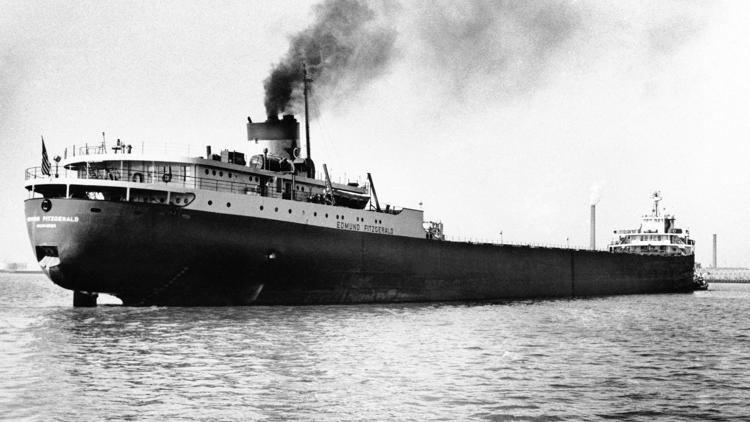
On November 9, 1975, the S.S. Edmund Fitzgerald met a tragic fate during a violent storm on Lake Superior, resulting in the loss of all 29 crew members aboard. As the ship transported a load of taconite from Superior, Wisconsin, to Zug Island, Detroit, Michigan, it vanished from radar, prompting an extensive search. The tragedy marks its 50th anniversary, continuing to captivate public interest in one of the most notorious maritime disasters in American history.
The Edmund Fitzgerald, named after the president of Northwestern Mutual Life Insurance, launched on June 8, 1958. Spanning 729 feet and weighing over 13,000 tons, it held the title of the largest ship on the Great Lakes until 1971. The ship’s journey on that fateful November night would be its last.
As the storm raged, another vessel, the S.S. Arthur M. Anderson, was about ten miles behind the Fitzgerald. Captain Bernie Cooper reported that the Fitzgerald had been in peril for hours, suggesting that it might have passed dangerously close to shallow waters. The U.S. Coast Guard’s official report, released in 1977, stated that “the most probable cause of the sinking of the S.S. Edmund Fitzgerald was the loss of buoyancy and stability resulting from massive flooding of the cargo hold.” The flooding was attributed to ineffective hatch closures as waves crashed over the deck.
Despite extensive investigations, the exact cause of the sinking remains unknown. Theories abound, including the possibility of a fracture in the hull due to design flaws or a large wave that overwhelmed the ship. These unanswered questions contribute to the enduring fascination with the Fitzgerald’s tragic end.
The sinking of the Edmund Fitzgerald is often compared to the Titanic, making it one of the most famous shipwrecks in modern American history. Its legacy is preserved not only through the stories of those who lost their lives but also through their families who continue to remember them. Missy Clark-Nabozny, whose grandfather, John Simmons, was on board during the disaster, described the aftermath of the sinking as “quiet chaos.”
The cultural impact of the Edmund Fitzgerald has been further solidified by Canadian singer Gordon Lightfoot’s folk song, “Wreck of the Edmund Fitzgerald,” released in 1976. The song pays tribute to the sailors lost that night and has become a beloved classic in the folk genre. Recently, the song has experienced a resurgence, with popular TikTok videos retelling the story of the ship’s final voyage, bringing it to a new generation of listeners.
As the 50th anniversary approaches, the story of the Edmund Fitzgerald carries a profound weight, connecting past and present. The ongoing intrigue surrounding this maritime disaster serves as a reminder of the perils faced by those who navigate the unpredictable waters of the Great Lakes.