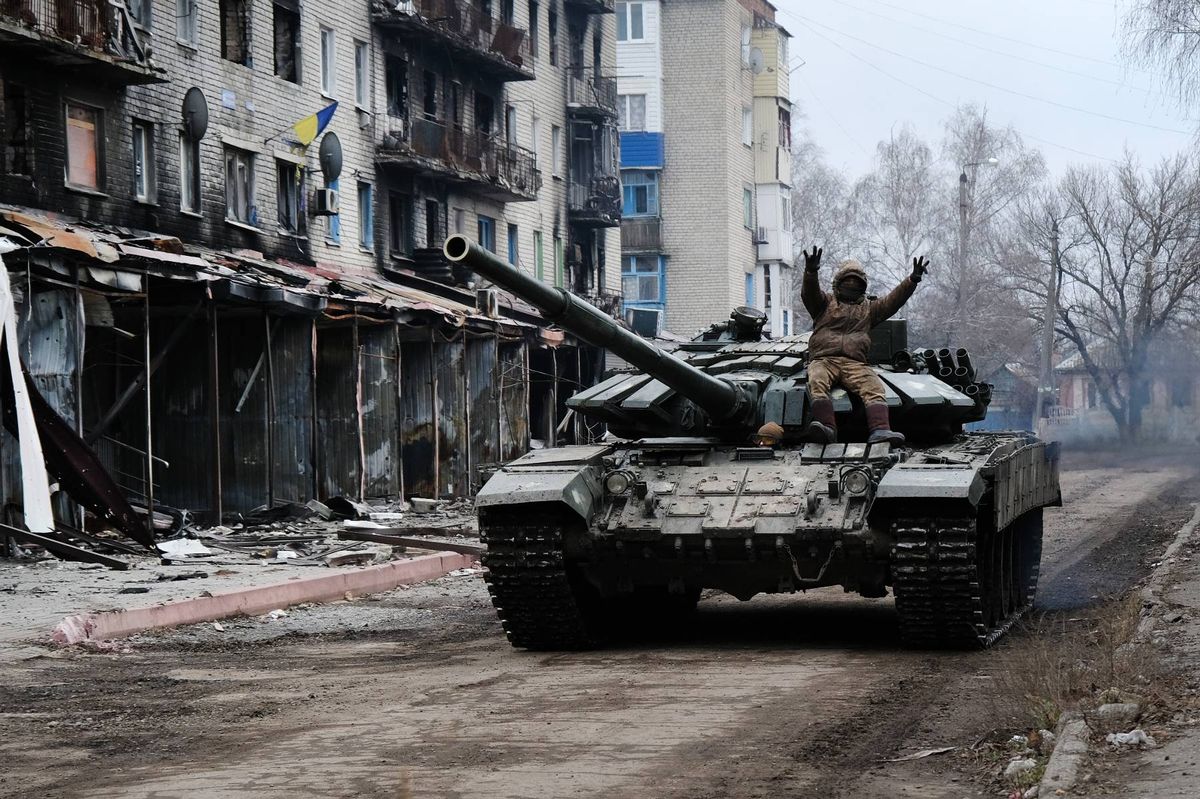
Russian President Vladimir Putin has ordered an escalation of military operations in Ukraine, directing forces to seize substantial territories in the Sumy and Kharkiv regions. This aggressive move, announced by General Valery Gerasimov during a visit to a frontline command center, poses a significant challenge to the peace proposal recently put forth by former U.S. President Donald Trump.
Gerasimov indicated that the military’s objective is to create a broader “buffer zone” in the region. He stated, “The troops of the joint grouping are confidently advancing deeper into the enemy’s defences and in December achieved the highest offensive tempo to date.” He reported that more than 700 square kilometres (approximately 270 square miles) of territory were captured in a single month.
### Allegations of Provocation
This new directive appears to be a response to claims from Russia that Ukraine executed a drone strike on Putin’s Valdai palace, a heavily fortified location. While Putin reportedly expressed anger over the incident to Trump, the U.S. has questioned the veracity of these allegations. Matthew Whitaker, the American NATO ambassador, remarked, “It is unclear whether it actually happened,” suggesting that Ukraine would not engage in actions that could jeopardize potential peace negotiations.
Ukrainian President Volodymyr Zelensky dismissed the claims as a “hoax,” stating, “The attacks on Putin’s residence in Valdai are a fabrication. Nobody attacked it.” Railway employees working near the palace corroborated that no air defense systems were activated during the supposed incident, leading some analysts to speculate that this may be a “false flag” operation aimed at sabotaging peace discussions.
### Humanitarian Impact of Renewed Hostilities
As tensions escalate, civilians continue to suffer in conflict zones. Recent attacks by Russian forces targeted the city of Odesa, resulting in heating and electricity outages amid freezing temperatures. Tragically, these assaults included a drone strike that claimed the lives of a seven-month-old baby and two other children, aged eight and 14. Oleksiy Goncharenko, a member of parliament, described the situation as a “disaster,” highlighting the dire conditions faced by residents lacking basic utilities.
Further violence was reported in Bila Tserkva, located in the Kyiv region, where residential buildings were struck, resulting in injuries among civilians. Ukraine has also intensified its operations against Russian energy facilities, which are considered military targets. A strategic oil plant in Tuapse, located in the Krasnodar region, was set ablaze in one of the latest strikes, alongside attacks on a gas pipeline and a dock in the Black Sea port.
As the conflict deepens, the potential for a negotiated resolution appears increasingly tenuous. Both sides remain entrenched in their positions, with the humanitarian toll mounting as military actions continue. The international community watches closely, awaiting further developments that could either escalate tensions or open avenues for peace.