The Nigerian government has expressed openness to further military intervention by the United States following a surprise airstrike on December 25, 2023, that targeted suspected terrorist locations in the country. Nigerian Foreign Minister Yusuf Tuggar indicated in an interview with Channels Television that cooperation with the U.S. is crucial in addressing ongoing security challenges. “I believe this is an ongoing thing and we’re working with the U.S.,” Tuggar stated, referring to the renewed military collaboration as “a new phase of an old conflict.”
The U.S. attack, which has not been officially detailed beyond a video of a missile launch shared by the Pentagon, struck the Sokoto Region in northwestern Nigeria. Senior Nigerian officials, who requested anonymity, have noted that additional airstrikes are likely as part of a coordinated effort to combat terrorism. While the Pentagon has not confirmed future military operations, Pete Hegseth, the Secretary of Defense, hinted at “more to come” in a tweet announcing the initial strike.
President Donald Trump, who has focused heavily on foreign policy during his administration, has previously threatened military action against terrorist groups in Nigeria if violence continued. This follows a series of incidents, including the abduction of over 200 children from a Catholic school in November, which heightened international attention on the region. Trump, who was at his Mar-a-Lago estate during the recent strikes, shared updates on the military action without additional commentary.
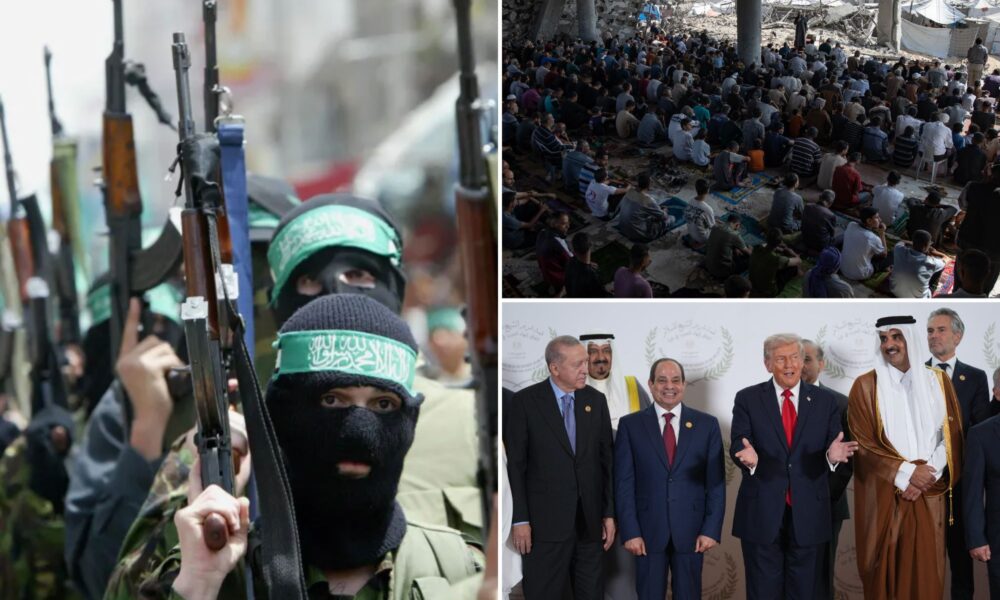
Tuggar emphasized that the terrorist threat in Nigeria is not a religious conflict but a broader regional security issue. He stated, “Simplistic labels don’t solve complex threats.” The Nigerian government has faced ongoing violence from various militant groups, with attacks affecting both Christian and Muslim communities across the country, which has a population of about 230 million.
The recent U.S. strikes received mixed reactions, with some supporters of Trump, including far-right commentator Laura Loomer, praising the military action. However, the Nigerian government has firmly rejected narratives that frame the violence as primarily anti-Christian. Instead, officials assert that the threat posed by terrorist organizations is part of a complex security landscape across West Africa.
According to Confidence MacHarry, a security analyst at SB Morgen Intelligence in Lagos, the initial attacks serve as a signal for more extensive military involvement. He noted, “Given what we know for now about the attacks, they are largely a signal for something larger. It is very likely that future attacks will do more damage.”
As Nigeria grapples with its enduring security challenges, the collaboration with the U.S. marks a significant shift. Ebenezer Obadare, a senior fellow for Africa studies at the Council on Foreign Relations, remarked, “It seems as if we’re at the moment where the Nigerian authorities have finally realized that they can’t do this thing alone. They need help, and the United States government appears more than willing to give that help.”
Nigerian officials have indicated that the recent U.S. strikes were carried out based on intelligence provided by the government in Abuja and followed discussions between Marco Rubio, the U.S. Secretary of State, and Nigerian officials. These developments underscore the complexities of international military cooperation in addressing terrorism in Nigeria and the broader West African region. As the situation evolves, both nations appear committed to a collaborative approach in tackling the persistent threats posed by extremist groups.