On October 26, 2023, Japan and the Philippines formalized a defense pact designed to enhance regional security amid escalating tensions with China. The agreement will facilitate the tax-free provision of essential supplies, such as ammunition, fuel, and food, during joint military exercises. This collaboration aims to strengthen deterrence against China’s growing assertiveness in the region and improve disaster response capabilities.
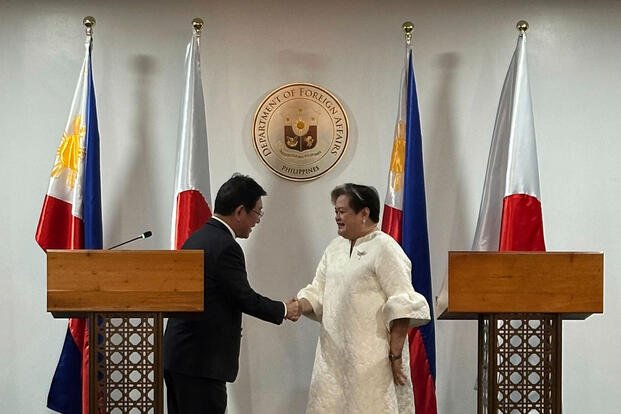
The signing ceremony took place in Manila, where Japanese Foreign Minister Toshimitsu Motegi and Philippine Foreign Secretary Theresa Lazaro underscored the importance of their nations’ cooperation. The pact comes in response to increasing political and security tensions, particularly after Prime Minister Sanae Takaichi suggested that any aggressive action by China towards Taiwan could provoke Japanese intervention.
Strengthening Security Alliances
Both Japan and the Philippines have faced territorial disputes with Beijing in the East China Sea and South China Sea. During the ceremony, Lazaro stated, “We both recognized the value of promoting the rule of law, including the freedom of navigation and overflight, especially in the South China Sea.” This sentiment was echoed by Motegi, who emphasized their shared opposition to “unilateral attempts to change the status quo by force or coercion.” While the statement did not name China directly, it clearly addressed concerns regarding Beijing’s actions.
The defense agreement, officially known as the Acquisition and Cross-Servicing Agreement, must receive approval from Japanese legislators before it can be enacted. This pact is a significant step in solidifying the security alliance between the two nations, facilitating joint military training and disaster response operations. Furthermore, it aims to enhance their participation in United Nations peacekeeping missions.
In mid-2024, Japan and the Philippines signed the Reciprocal Access Agreement, which allows for the deployment of military forces from one country to the other for larger joint exercises. This agreement took effect in September 2023 and marked a notable deepening of their military cooperation.
Regional Context and Implications
Negotiations are underway for an additional agreement that focuses on the protection of sensitive defense information shared between the nations. The push for these agreements reflects a shift in the Philippines’ foreign policy under President Ferdinand Marcos Jr., who has sought to strengthen ties with Japan after his predecessor, Rodrigo Duterte, fostered closer relations with China.
Under Marcos, confrontations between Chinese and Philippine coast guard vessels in the South China Sea have intensified. This area remains a point of contention, as Beijing claims nearly the entirety of the waterway and has fortified its position through military presence and artificial islands. Other nations, including Malaysia, Vietnam, Brunei, and Taiwan, also have interests in these disputed territories.
In the East China Sea, Japan has increasingly responded to incursions by Chinese coast guard vessels, which have intruded into waters claimed by both nations. These actions have prompted Japan to scramble jets on numerous occasions, reflecting the rising military tensions in the region.
The United States has consistently expressed concerns over China’s aggressive actions in these waters, reaffirming its commitment to defending treaty allies such as Japan and the Philippines. The evolving defense partnerships in the region are seen as crucial for maintaining stability and addressing shared security challenges.
As Japan and the Philippines continue to fortify their defense collaboration, the implications for regional security and international relations remain significant, particularly in the face of ongoing territorial disputes with China.