Israeli forces conducted airstrikes in Gaza on Wednesday, resulting in the deaths of at least 11 Palestinians, including two 13-year-old boys, three journalists, and a woman. This incident marks one of the deadliest days in the region since the ceasefire between Hamas and Israel began in October 2023. The ongoing violence has raised concerns within the international community, prompting discussions on peace negotiations spearheaded by the United States.
Among those killed were three Palestinian journalists, who were struck while documenting conditions near a displacement camp in central Gaza. Mohammed Mansour, a spokesperson for the Egyptian government committee managing the camp, stated that the journalists were approximately 5 kilometers (3 miles) from Israeli-controlled areas when the attack occurred. The Israeli military claimed it targeted individuals operating a drone perceived as a threat to its troops.
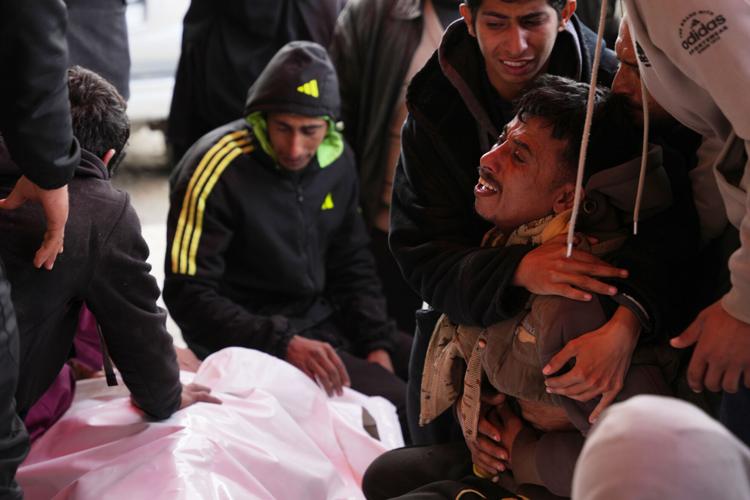
The tragic loss of the two boys occurred in separate incidents. One 13-year-old was reportedly killed by drones in the Bureij refugee camp, alongside his father and a 22-year-old man. Al-Aqsa Martyrs Hospital officials confirmed receiving the bodies. The other boy was shot by troops in Bani Suheila, according to Nasser Hospital. Videos circulating online depicted the grief of Moatsem al-Sharafy’s father, who mourned his son’s death. The boy’s mother, Safaa al-Sharafy, recounted his departure to gather firewood for dinner, expressing her heartbreak over his untimely death.
In addition to the journalists, Nasser Hospital reported the arrival of a woman’s body who had been shot by Israeli forces in the Muwasi area of Khan Younis. Meanwhile, three brothers lost their lives due to tank shelling in the Bureij camp, highlighting the ongoing violence affecting civilians.
The Gaza health ministry has reported that over 470 Palestinians have been killed by Israeli fire since the ceasefire was established on October 10, 2023. This includes at least 77 fatalities near the ceasefire line separating Israeli-held areas from the majority of Gaza’s Palestinian population. The ministry, which operates under the Hamas-led government, maintains detailed casualty records recognized as reliable by various U.N. agencies and independent experts.
The first phase of the ceasefire agreement focused on the return of hostages from both sides, with nearly all but one hostage being returned to Israel. The family of Ran Gvili, a 24-year-old police officer killed during the initial attack by Hamas on October 7, continues to seek answers regarding his remains. His mother, Talik Gvili, urged the Israeli government and U.S. President Donald Trump to assist in retrieving her son’s body, emphasizing the family’s commitment to keeping his memory alive.
Hamas has asserted that it has provided all available information regarding Gvili’s remains to ceasefire mediators, while accusing Israel of obstructing search efforts in areas under its control in Gaza.
In related developments, Israel’s military conducted strikes against sites in southern Lebanon, citing their use by the militant group Hezbollah for storing weapons. The military reported targeting four border crossings in Lebanon’s northeastern Hermel region, as well as weapon storage facilities in three villages in southern Lebanon. The Lebanese health ministry reported that 19 individuals, including journalists, were injured in the southern village of Qennarit as a result of these strikes.
Lebanese officials have condemned the attacks, with President Joseph Aoun characterizing them as “systematic aggression.” The strikes mark a continuation of Israeli military actions in the region since the ceasefire agreement concluded over a year ago, amid claims that Lebanon has yet to disarm militant groups as pledged.
The ongoing violence and loss of life underscore the urgent need for renewed efforts towards a lasting resolution to the conflict, with international observers calling for accountability and justice for the victims.