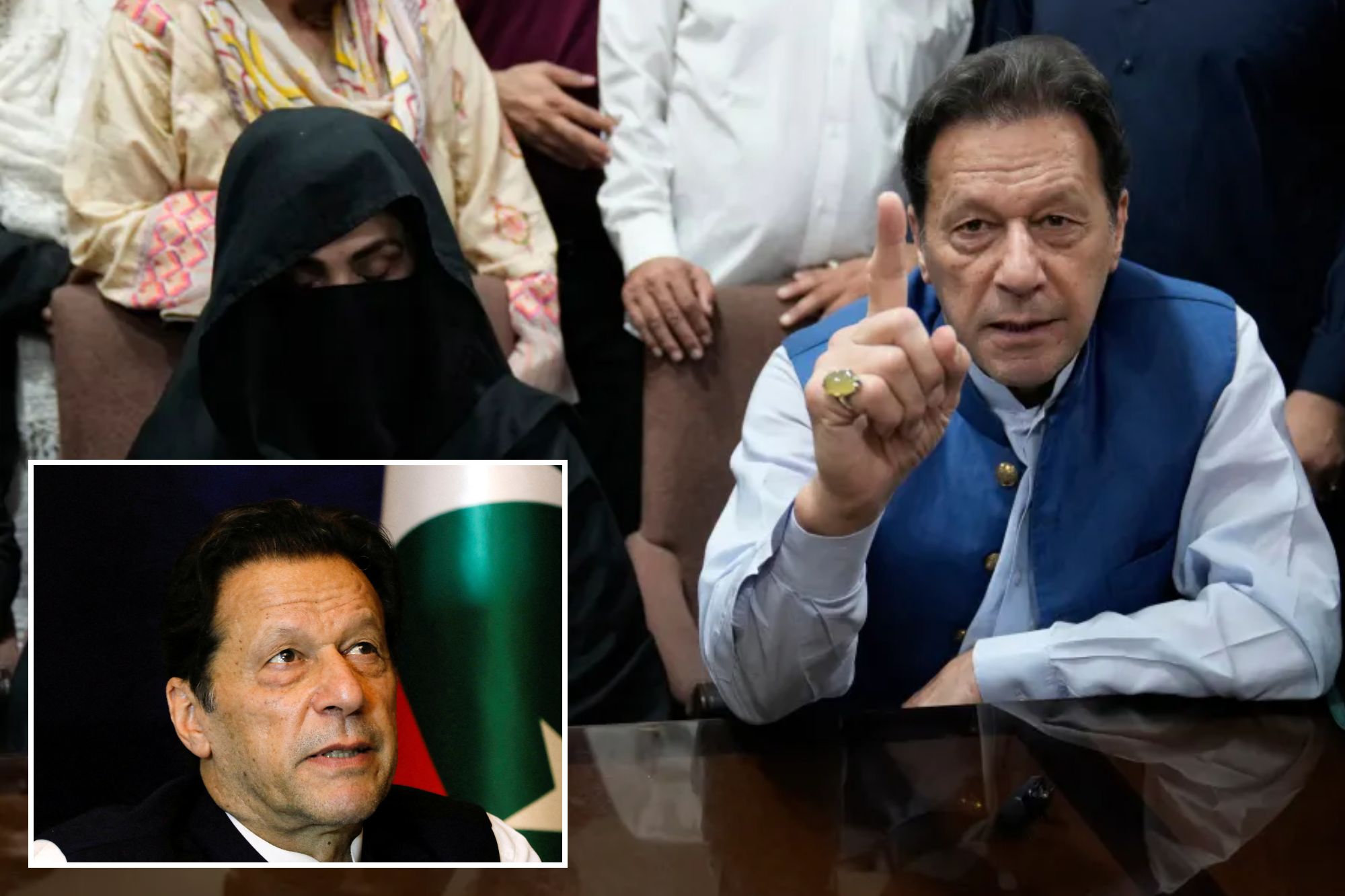
A Pakistani court has sentenced former Prime Minister Imran Khan and his wife Bushra Bibi to 17 years in prison for selling state gifts. The decision, announced on Saturday, finds the couple guilty of retaining and selling gifts received during Khan’s tenure in office. The verdict comes as Khan continues to serve multiple prison terms related to other corruption charges.
The court determined that Khan and Bibi sold state gifts, including items valued at over $285,521, for a mere $10,000, significantly below their actual market value. Prosecutors argued that this discrepancy allowed the couple to purchase the gifts at a reduced price. Khan’s lawyer, Salman Safdar, announced plans to appeal the ruling, asserting that the case lacked adequate evidence of criminal intent.
According to Pakistani law, public officials must declare the market value of gifts received from foreign dignitaries and purchase them accordingly if they wish to retain ownership. Following the sentencing, Khan’s spokesperson, Zulfiquar Bukhari, criticized the court’s decision, claiming it violated fundamental principles of justice. Bukhari stated that the ruling imposed criminal liability without proof of intent or gain, suggesting that it represented a “retrospective reinterpretation of rules.”
Political Repercussions and Reactions
The Pakistan Tehreek-e-Insaf (PTI) party, led by Khan, condemned the court’s verdict as a “black chapter in history.” The party’s statement indicated that Khan was present in Adiala prison in Rawalpindi when the verdict was delivered. The PTI also expressed concern that Khan’s family was barred from attending the court session, labeling the trial as a “closed-door jail trial,” which they claimed undermined the fairness of the proceedings.
Senior PTI leader Omar Ayub expressed on social media that there was “no rule of law in Pakistan.” In contrast, Information Minister Attaullah Tarar defended the court’s decision, citing solid evidence of corruption against the couple and claiming that the ruling was just.
Khan, who was ousted from office in a no-confidence vote in April 2022, remains a significant figure in Pakistani politics. His party performed strongly in the parliamentary elections on February 8, 2024, but did not secure a majority. Allegations of electoral fraud have been raised by the PTI, which the government has denied.
Khan has consistently alleged that his removal from power was orchestrated through a U.S.-backed conspiracy supported by Pakistan’s military. These claims have been denied by both the United States and the military, as well as by Khan’s political opponents. Since his ouster, Khan has faced numerous legal challenges, which he and his supporters describe as politically motivated efforts to curtail his influence.
As the legal battles continue, the political landscape in Pakistan remains turbulent, with Khan’s supporters rallying behind him as he battles these serious charges. The implications of the court’s decision extend beyond Khan and Bibi, potentially affecting the future of the PTI and the broader political climate in the country.