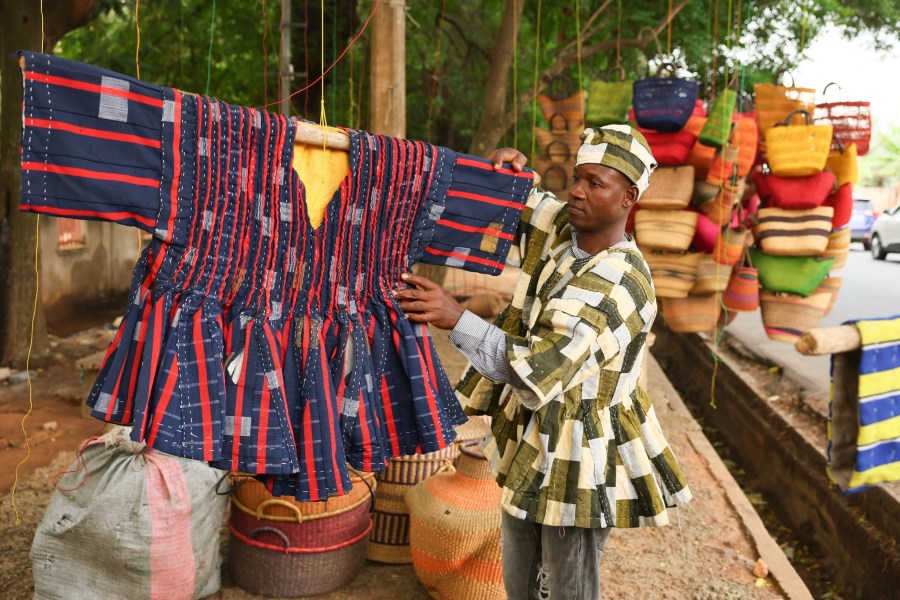
Ghanaians are increasingly donning traditional fugu smocks, reflecting a surge in cultural pride following recent remarks made by President Nana Akufo-Addo. The president’s comments, which some interpreted as dismissive of the garment, have sparked a renewed interest in this iconic attire, especially among the youth and local communities.
In the heart of Accra, the capital city, vendors like Clement Azaabire have noticed a significant uptick in sales. For over 15 years, Azaabire has been selling meticulously crafted fugu smocks, which are characterized by their vibrant patterns and cultural significance. “People are coming in more than ever to buy these clothes,” Azaabire noted while hanging the colorful garments on display. “It feels good to see more Ghanaians embracing their heritage.”
The fugu smock, traditionally worn in northern Ghana, has long been a symbol of identity and pride. The recent increase in popularity can be linked to social media campaigns encouraging Ghanaians to celebrate their cultural roots. Following the president’s comments in June 2023, many took to platforms like Twitter and Instagram to showcase their fugu outfits, turning what was an ordinary garment into a statement of nationalism and cultural affirmation.
Economic Impact on Local Artisans
The rise in demand for fugu smocks is not just a cultural phenomenon; it also has tangible economic implications. Local artisans and tailors are seeing a boost in business as more people seek authentic, handmade garments. Azaabire mentioned that his sales have increased by approximately 30% since the president’s comments, illustrating how quickly cultural sentiments can translate into economic opportunities.
According to the Ghana National Association of Tailors, the fabric industry is experiencing a revival as public interest in traditional clothing grows. The association reported that many tailors are now working overtime to meet the increased demand for fugu smocks. “This is a chance for us to not only showcase our skills but also to promote our culture,” stated a representative from the association.
As Ghanaians continue to wear these traditional outfits in various settings—from everyday wear to formal occasions—the cultural significance of the fugu smock is being reinforced. The garment is often worn during festivals, weddings, and other significant events, symbolizing unity and pride among the diverse communities of Ghana.
Social Media and Cultural Revitalization
Social media has played a pivotal role in this cultural revitalization. Campaigns encouraging Ghanaians to share their fugu styles have gone viral, with hashtags celebrating the garment trending across multiple platforms. Young influencers are leading the charge, often pairing the smocks with contemporary fashion elements, thus bridging the gap between traditional and modern styles.
The impact extends beyond fashion; it reflects a deeper societal trend where Ghanaians, particularly the youth, are seeking to connect with their cultural heritage. This movement has sparked discussions about the importance of preserving traditional attire in a rapidly globalizing world.
As the trend continues to grow, it remains to be seen how this newfound appreciation for fugu smocks will influence local economies and cultural identity in Ghana. For now, vendors like Azaabire are optimistic, believing that the cultural shift will sustain interest in traditional garments for years to come. “This is just the beginning,” he said, smiling as he adjusted the vibrant fabrics on display.