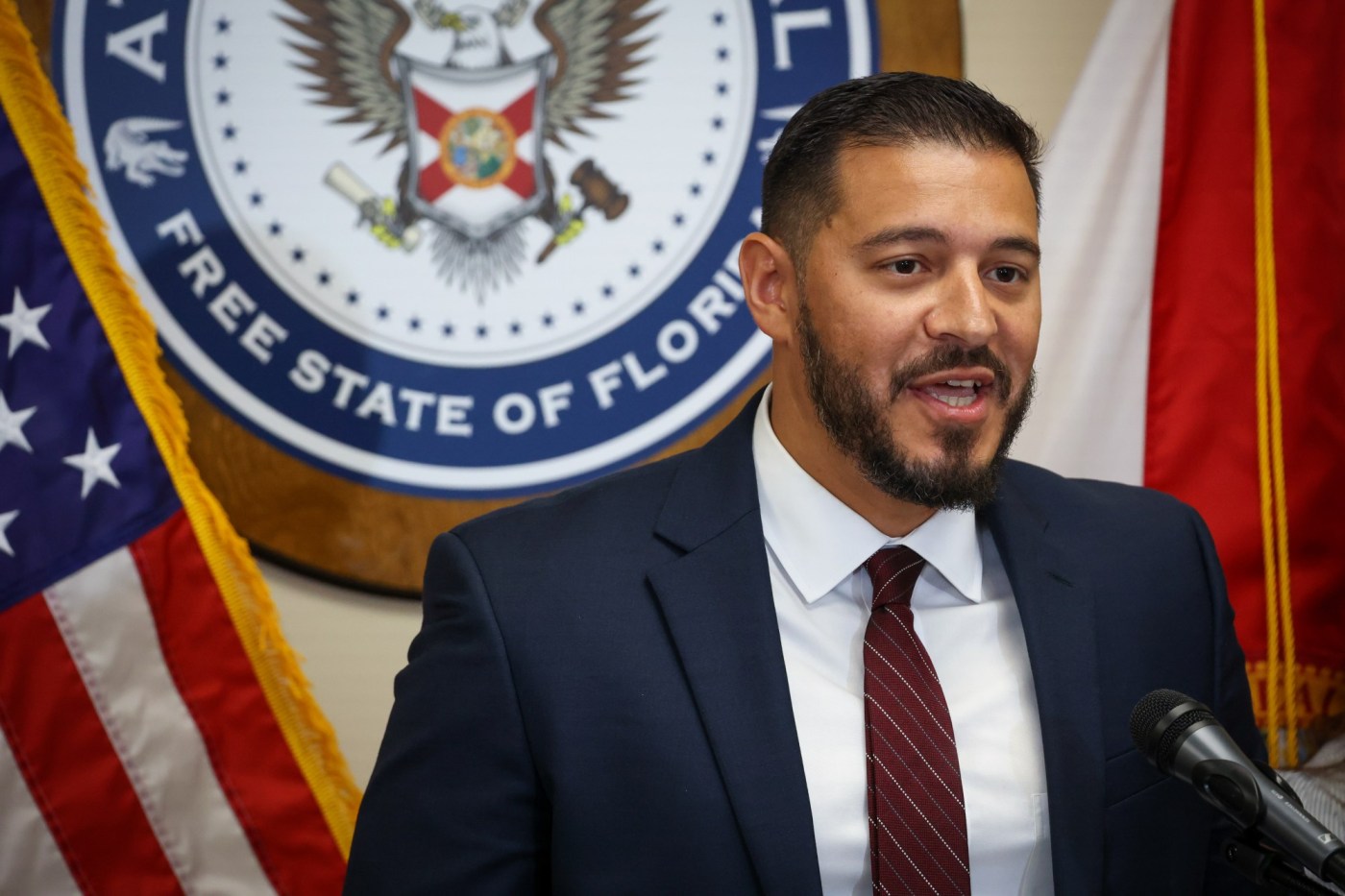
Florida Education Commissioner Anastasios Kamoutsas faced considerable backlash during his address at the Florida School Boards Association’s winter conference in Tampa on March 2025. His comments regarding the state’s Schools of Hope initiative, which seeks to co-locate charter schools in underutilized district buildings, sparked outrage among attendees, including school board members and superintendents from across the state.
Kamoutsas urged local leaders to move past complaints about the Schools of Hope program, suggesting that the state might consider shutting down “failing” school districts. This remark was met with immediate disapproval, resulting in loud boos from the audience. The tension escalated as Kamoutsas indicated that he expected local districts to innovate to ensure the success of this model, emphasizing that Florida students deserve better educational opportunities.
The commissioner highlighted the positive performance of Success Academy, a New York-based charter operator recently approved to run schools in Florida. He argued that local districts should aim for similar outcomes, stating, “That proven success is why Florida has committed to expanding the Schools of Hope model.” Kamoutsas reiterated that these charter schools would be held to the same assessment standards as traditional public schools but operate under performance-based agreements, which could lead to their closure if they fail to meet expectations.
As he continued his speech, Kamoutsas’s comments about potentially shutting down underperforming districts intensified the crowd’s reaction. He remarked, “There’s not a school district in this state that could be shut down for failing to meet performance standards, though maybe we can talk about that with the Legislature this session.” This statement prompted further unrest, with some attendees leaving the Grand Hyatt Tampa Bay ballroom in protest.
After a moment of chaos, Kamoutsas attempted to regain control of the room, insisting on the urgency of prioritizing student needs. “This is not the moment to protect the way things work,” he said. “We have a responsibility, a moral obligation to ensure that every child in Florida has access to a world-class education.” His call for accountability and immediate action resonated with some but alienated others who felt threatened by his aggressive stance.
Several board members voiced their concerns after the event. Beverly Slough, a board member from St. Johns County, expressed that Kamoutsas did not grasp the financial challenges associated with the Schools of Hope initiative. “The real problem is they’re coming in without any financial support at all,” she stated. “They pay nothing,” leaving operational expenses to the districts.
Others criticized his approach, which they described as divisive. Heather Felton from Manatee County remarked, “If you want to unite politically divided boards, he just did that,” referring to his combative tone. Stephanie Vanos from Orange County was taken aback by the commissioner’s aggressive comments, suggesting that he should focus on building relationships rather than issuing ultimatums.
Despite the backlash, some attendees found value in Kamoutsas’s willingness to address the group directly. Allison Campbell, president-elect of the Florida School Boards Association, appreciated the opportunity for direct dialogue. “We don’t often get the opportunity to hear directly from him,” she noted, acknowledging the importance of open communication.
The Schools of Hope initiative continues to be a contentious topic in Florida, with various charter operators vying for space in numerous public school campuses. Saul Speights, vice chairperson of the Hamilton County school board, indicated that co-location was not an issue for his district but criticized the state’s ongoing attacks on public education.
As tensions between state officials and local school leaders remain high, the future of Florida’s educational landscape hangs in the balance. The discussions from the conference are likely to influence upcoming legislative sessions and the implementation of education policies across the state.