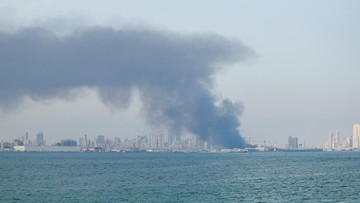
A series of explosions have been reported across various cities in the Gulf region following Iran’s retaliatory strikes on United States military facilities in the Middle East. The attacks, which occurred on September 22, 2023, have heightened tensions in the area, prompting security concerns among neighboring countries such as Kuwait, Bahrain, and the United Arab Emirates.
Eyewitness reports indicate that the blasts were heard in multiple urban centers, raising alarms among residents. The Iranian military announced the strikes as a direct response to perceived aggression from U.S. forces stationed in the region. Details regarding the scale of the explosions and any potential casualties remain unclear at this time.
Regional Impact and Security Measures
Authorities in Kuwait, Bahrain, and the UAE are on high alert. Security forces have increased patrols and are closely monitoring the situation to prevent any escalation. The Iranian government has stated that its military operations aim to deter further attacks on its sovereignty. Official statements from the Iranian Revolutionary Guard Corps described the strikes as successful, asserting that they targeted critical U.S. military infrastructure.
In response to the ongoing conflict, the U.S. has reaffirmed its commitment to protect its personnel and assets in the region. Defense Secretary Lloyd Austin emphasized that the United States would continue to respond decisively to any threats against its forces.
The situation has led to a surge in discussions about regional security alliances and defense strategies among Gulf Cooperation Council (GCC) member states. Analysts suggest that the recent events may prompt stronger military cooperation among these nations to counter potential threats from Iran.
International Reactions
The international community is closely monitoring developments in the Gulf. The United Nations has urged both Iran and the United States to de-escalate tensions and pursue diplomatic solutions. The ongoing conflict has raised concerns about the potential for broader regional instability.
Iran’s actions have drawn criticism from several Western nations. The European Union has called for restraint and emphasized the importance of dialogue to resolve disputes. Meanwhile, some regional analysts argue that the current situation underscores the fragility of peace in the Middle East and the need for comprehensive diplomatic efforts.
As the situation evolves, the possibility of further military engagements remains a significant concern. Residents of the affected cities are left to navigate the uncertainty while authorities work to ensure their safety in the face of rising tensions.
Strong reactions and strategic responses from both sides will undoubtedly shape the future dynamics of U.S.-Iran relations and the overall stability of the Gulf region.