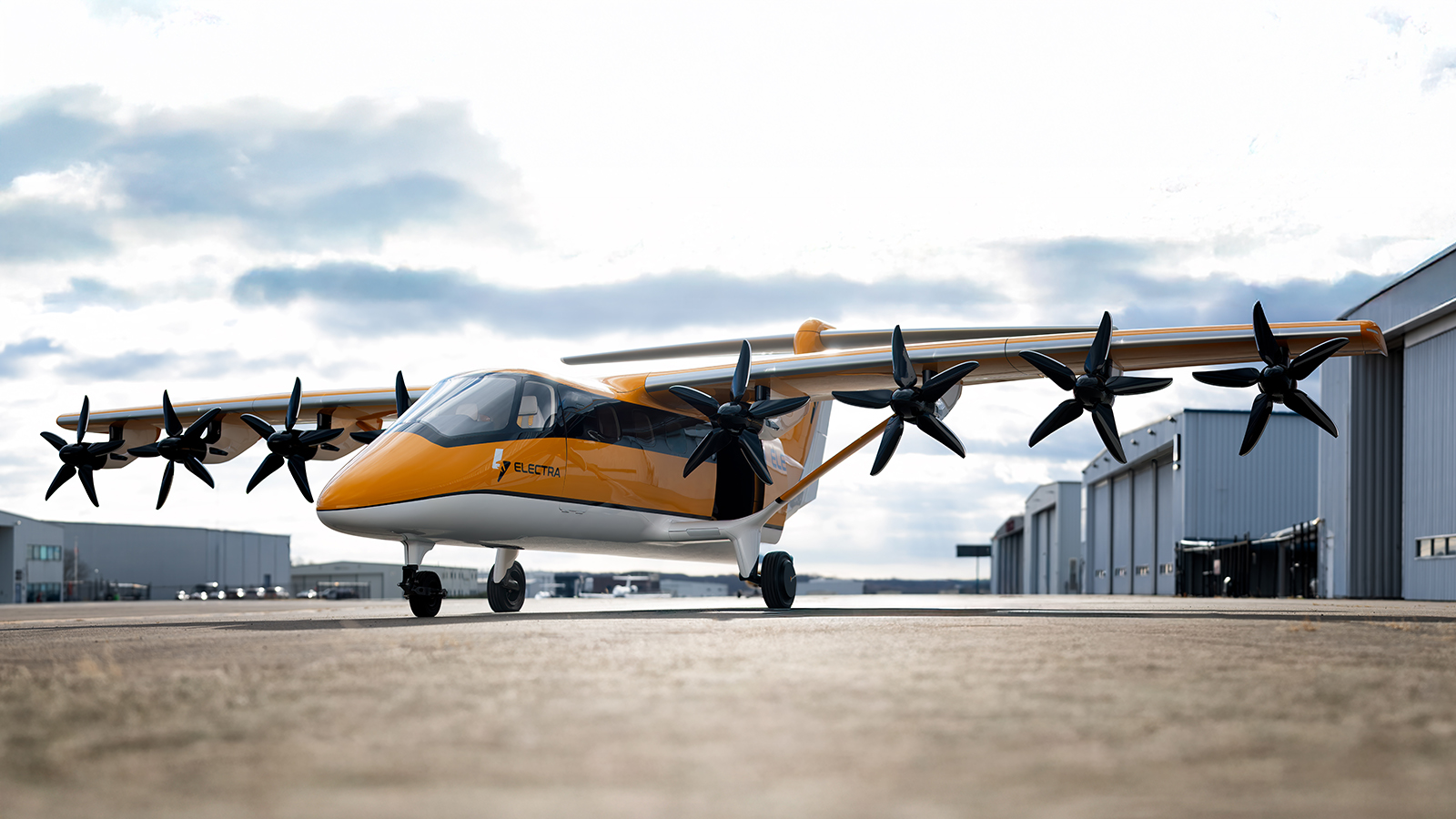
Electra, an electric aircraft startup, has introduced its hybrid-electric aircraft, the EL9, designed to meet the needs of the Pentagon. The aircraft, resembling a traditional plane at first glance, features a unique configuration with eight electric rotors on a fixed wing, enabling ultra-short takeoff and landing capabilities. During a visit to the company’s hangar in Manassas, Virginia, Electra CEO Marc Allen emphasized the company’s ambition to “fundamentally transform air travel” by providing direct aviation services, particularly for military applications.
The EL9, also referred to as the Ultra Short, has been developed with military operations in mind. It can accommodate up to nine passengers or transport a maximum of 3,000 pounds of cargo. According to Allen, the aircraft addresses a critical gap in military logistics: the need for “runway independence.” He noted, “If that’s true, then this is absolutely right in the center of the target.”
Electra is actively establishing a defense business unit to court military contracts. The firm plans to have a prototype of the EL9 ready for flight testing by late 2027 or early 2028, with hopes of receiving FAA certification by 2029. On the day of the visit, Electra announced that it had submitted its application for the aircraft’s Part 23 type certification.
Innovative Design and Capabilities
The EL9 is designed to cruise at a maximum speed of 175 knots, approximately 200 mph, operating between 8,000 and 12,000 feet. Donn Yates, head of Electra’s government programs and a former Boeing executive, explained that the aircraft’s unique design incorporates a technique called “blown lift,” which enhances its short takeoff and landing abilities. Traditionally used in larger aircraft, this method has been adapted for the EL9 thanks to advances in distributed electric propulsion technology.
The aircraft’s power system includes 600 kilowatts of output, allowing it to function as a mobile power station for other systems. Additionally, an onboard gas generator continuously charges the batteries that drive the rotors, providing a backup power source in case of battery failure.
Electra’s defense unit aims to align the EL9 with military strategies such as the Air Force’s Agile Combat Employment approach, which focuses on decentralizing operations to enhance resilience against enemy attacks on fixed bases. The Air Force previously contracted Electra as part of an $85 million funding initiative, during which the company tested an earlier technology demonstrator known as “Goldfinch.”
Future Prospects and Market Demand
Yates highlighted the EL9’s potential as a vital link between key military hubs, capable of taking off and landing in small clearings or unprepared strips, making it a suitable complement to larger airlift platforms like the C-17 and C-130. This capability allows for cost-effective transport of smaller cargo loads that would otherwise require larger aircraft.
Commercial interest in the EL9 appears robust, with Electra currently scouting manufacturing sites and reporting a backlog of 2,200 aircraft. Allen expressed ambition for high production rates, stating the company aims to manufacture hundreds of aircraft annually, similar to the output of major players like Boeing and Airbus.
The anticipated entry into service around the turn of the decade marks a significant milestone for Electra. As the company navigates the challenges of developing a platform that currently lacks a defined military requirement, Yates remains optimistic, noting, “We’re building a platform we don’t have a requirement for yet. So what we’re doing is we’re going out and making a compelling argument.”
In summary, Electra’s EL9 hybrid aircraft represents a bold step in the evolution of aviation, with potential applications in both military and commercial sectors, tapping into a growing demand for innovative air transport solutions.