China has officially condemned the United States for seizing oil tankers off the coast of Venezuela, marking a significant escalation in tensions between Beijing and Washington. This condemnation comes as the U.S. intensifies its efforts to enforce a blockade aimed at crippling Venezuela’s oil exports, a crucial component of the country’s economy.
During a press briefing on January 23, 2024, Chinese Foreign Ministry spokesman Lin Jian criticized the U.S. actions, asserting that they “grossly violate international law.” He emphasized that China supports Venezuela’s right to maintain its sovereignty and engage in international trade without interference.
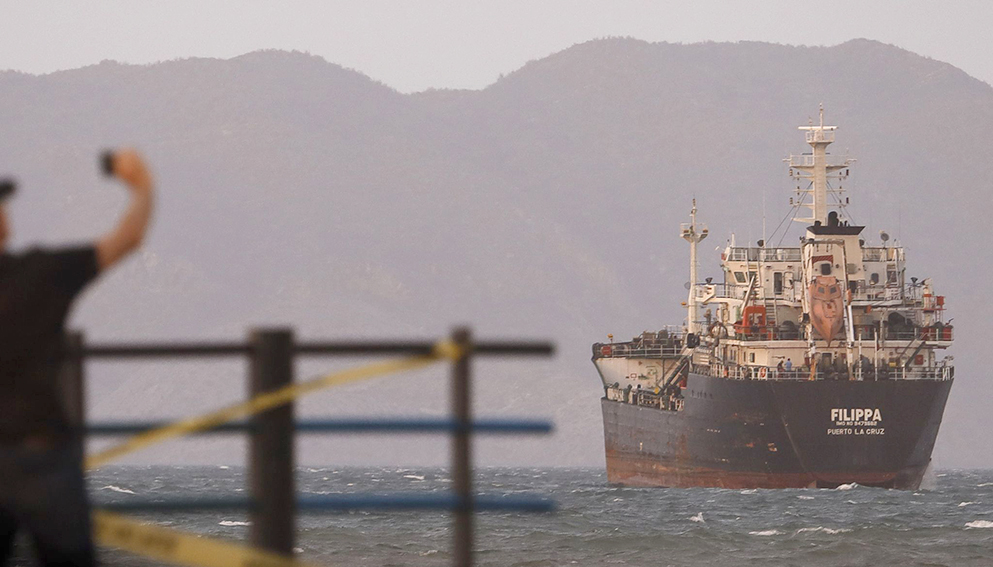
The U.S. has reportedly targeted a third oil tanker in its campaign, which aims to isolate the government of Venezuelan President Nicolás Maduro. This blockade is a continuation of strategies initiated under the Trump Administration, which sought to undermine the Maduro regime by limiting its access to oil revenues.
According to Lin, “Venezuela has the right to independently develop mutually beneficial cooperation with other countries.” He reiterated that China stands firmly with Caracas in its efforts to defend its legitimate rights and interests, highlighting the importance of respecting international norms and opposing unilateral actions.
China has been a significant importer of Venezuelan oil, largely through state-owned Petróleos de Venezuela SA. The oil is typically shipped via “dark-fleet” tankers—older vessels with ambiguous ownership that transport oil from Venezuela as well as from countries like Iran and Russia.
The U.S. seizure of oil tankers signals a broader strategy to cut off essential economic lifelines for Venezuela, a country already grappling with severe economic challenges. In the context of rising geopolitical tensions, China’s support for Venezuela may complicate U.S. efforts to enforce its sanctions.
Lin’s statements reflect Beijing’s broader stance against what it perceives as unilateralism and bullying by the U.S. government. This situation adds another layer to the complex relationship between China and the United States, particularly regarding issues of trade and international law.
As the situation evolves, the implications for global oil markets and international relations remain significant. Both China and the U.S. continue to navigate a landscape marked by competing interests and assertive foreign policies, particularly in regions critical to their respective economic strategies.