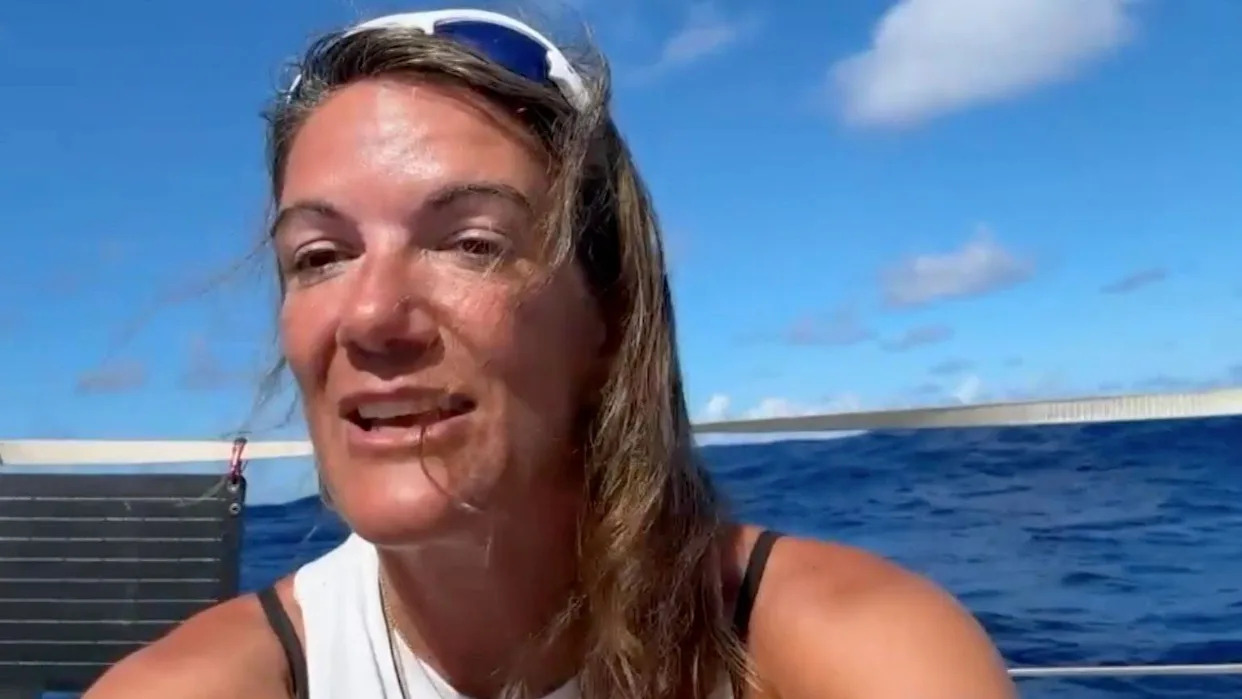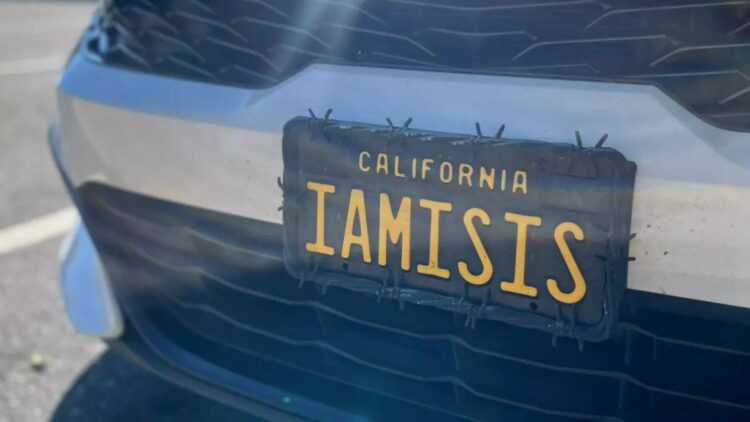
A woman from Sacramento is contesting the California Department of Motor Vehicles’ (DMV) decision to revoke her personalized license plate, which reads “IAMISIS.” The DMV deemed the plate offensive, claiming it could incite violence. Isis Wharton, the owner of the plate, argues that her name is derived from the ancient Egyptian goddess, who symbolizes healing and love, and should not be linked to a terrorist organization.
Wharton has been paying $50 annually since 2022 for her personalized plate. She received a letter from the DMV stating that her plate “creates a risk of inciting violence.” The DMV’s reasoning suggests that the phrase could be interpreted as “I am the Islamic State of Iraq and Syria,” thereby associating it with a group responsible for global terrorist acts.
Upon receiving the letter, Wharton expressed her surprise and disappointment. “I felt hurt and offended by them, which implies that my name was something that would incite violence,” she told The Times. Wharton believes that the name “Isis” should be reclaimed from negative associations and hopes her legal battle will highlight the importance of understanding cultural contexts.
DMV’s Authority and License Plate Guidelines
The California DMV is tasked with reviewing personalized license plates to ensure compliance with state laws. According to DMV guidelines, plates may be rejected if they contain sexual or scatological meanings, profane terms, or convey messages related to race, religion, or sexual orientation. They may also be denied if they suggest violence, gang affiliation, or illegal activity.
In a statement, the DMV acknowledged the complexities of language and its varying interpretations across cultures. “What may be a term of affection in one context can be perceived differently in another,” the statement noted. The agency’s position has sparked controversy, as it can restrict language deemed potentially harmful.
Wharton is not the first individual affected by the DMV’s policies. In 2020, Steve Gordon, the DMV director, received five complaints from residents whose personalized plates were rejected. These individuals claimed the DMV imposed “speech restrictions based on content and viewpoint,” which they argued violated their rights under the First Amendment.
Contested License Plates and Legal Precedents
The rejected plates included terms such as “OGWOOLF,” which referenced a band, and “SLAAYRR,” deemed threatening or aggressive. Other examples included “QUEER,” which the DMV found potentially offensive, and “DUKNA,” rejected for sounding like a vulgar term. The DMV also denied “BO11LUX” due to its sexual connotation.
In a significant ruling, a court sided with drivers whose plates were deemed protected speech under the First Amendment. This precedent raises questions about the balance between public safety and individual expression.
As Wharton prepares to fight the DMV’s decision, she hopes to reclaim the name “Isis” and restore its positive connotations. “That’s why I choose to fight,” she stated. “I believe this could be a great example of bringing back the powerful and peaceful name Isis and not giving all the negative power to the terrorist group.”
Wharton’s case highlights broader issues concerning freedom of speech and the interpretation of language in a multicultural society. As regulations evolve, the outcome of her appeal may influence future policies regarding personalized license plates in California and beyond.