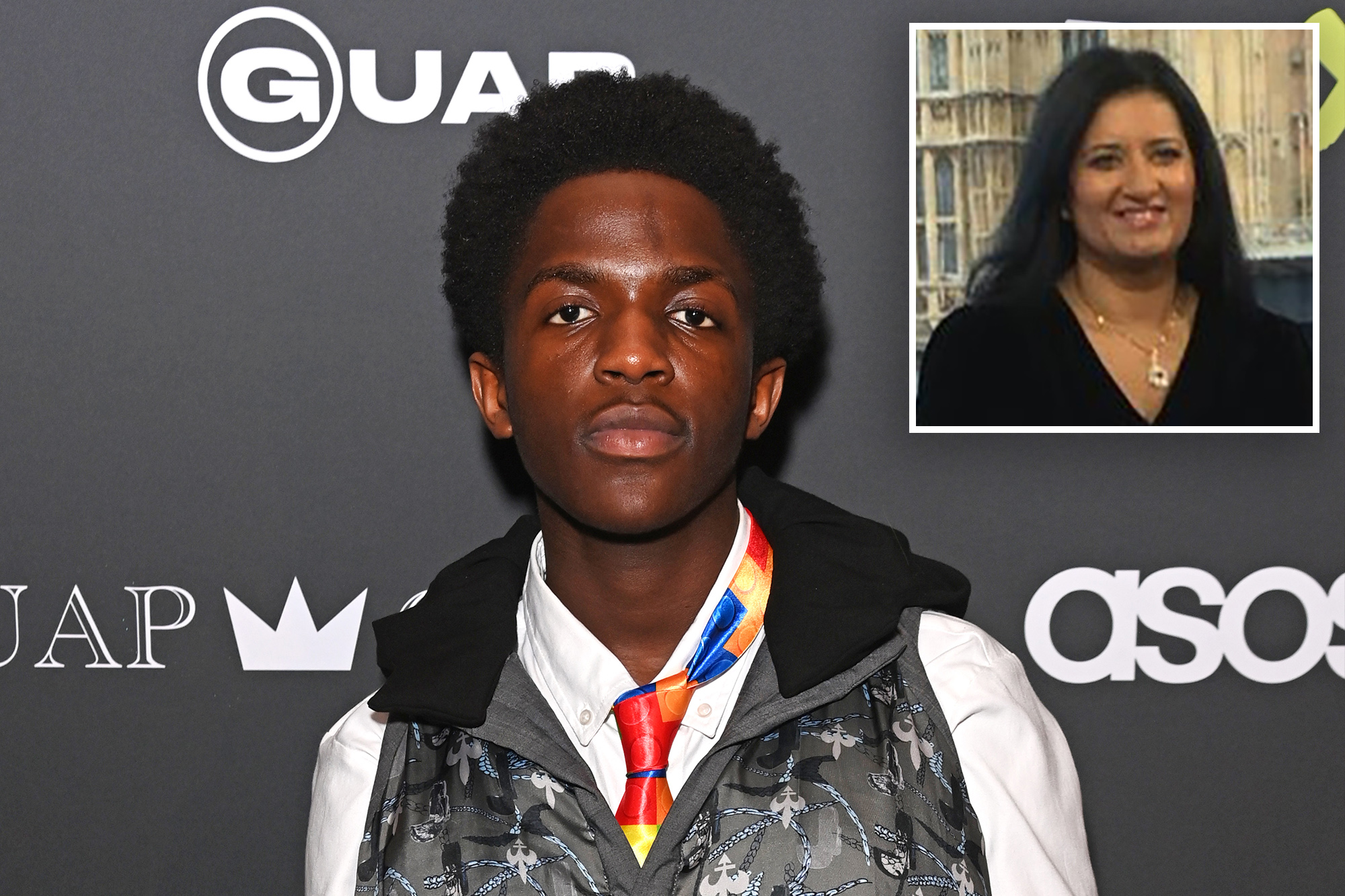
A BBC News anchor has ignited significant backlash online after her apparent reaction to a young musician naming Jesus Christ as one of his heroes during a live interview. Geeta Guru-Murthy, 58, was speaking with the 18-year-old artist known as DC3, whose real name is Daniel Chenjerai, when the incident occurred on Saturday. When asked to identify his inspirations, DC3 listed several artists, concluding with “most of all, Jesus Christ.” Guru-Murthy’s audible wince immediately following this statement has since prompted a wave of criticism on social media.
The moment has sparked a flurry of memes and comments on X, the platform formerly known as Twitter, with users accusing the host and the BBC of bias against Christians. Journalist Peter Lloyd expressed his outrage, stating, “BBC’s [Geeta Guru-Murthy] hisses at a man who says Jesus Christ is his hero. Imagine the outrage if this happened with Prophet Muhammad.” Another user, Didumissthenews, questioned, “Why did the BBC news reader act like the man said a racial slur mentioning Jesus Christ?”
Many users took to social media to share humorous memes that depicted Guru-Murthy’s reaction, comparing her to a vampire troubled by bright light and likening her to Gollum from “The Lord of the Rings.”
DC3, who appeared on the BBC following his nomination for two 2026 MOBO Awards, addressed the controversy directly. He posted, “Jesus Christ is real,” followed by, “The revolution will be televised in Jesus name,” emphasizing his faith in light of the incident.
In response to the uproar, Guru-Murthy defended herself on X, stating, “I’ve seen there’s some discussion about the end of my interview with DC3 this week. For the record, I was simply breathing in before moving to end the interview.” She described the insinuation of bias as “just untrue,” tagging the BBC in her post.
The BBC has publicly dismissed claims that Guru-Murthy hissed upon hearing the name Jesus Christ. A spokesperson for the organization stated, “This is categorically untrue,” aiming to quell the ongoing controversy.
This incident reflects a broader conversation about media representation of faith and the potential repercussions of personal reactions in public broadcasting. The exchange has stirred discussions about the treatment of religious figures in media and the expectations placed on public personalities.