Bac Ninh, a city in northern Vietnam, is experiencing a significant economic transformation as factories relocate from China. This shift, accelerated by trade tensions between the United States and China, has turned Bac Ninh into a bustling manufacturing zone. The local economy has benefited from heightened foreign investment, particularly from companies seeking to avoid tariffs imposed by former President Donald Trump.
Once recognized for its agricultural landscape and traditional folk songs, Bac Ninh is now a critical component of Vietnam’s industrial landscape. The city saw its first manufacturing boom in 2008 when Samsung established a major phone factory, making Vietnam its largest offshore production base. Recently, Chinese investments have surged, as companies diversify their operations to mitigate risks associated with U.S. tariffs and trade restrictions.
As Bac Ninh grows, it faces challenges that may hinder its rapid ascent. Rising labor costs, shortages of skilled workers, and inadequate infrastructure are becoming pronounced issues. The city is not alone; neighboring nations like Indonesia and the Philippines are actively seeking to attract new manufacturing projects, intensifying competition in the region.
To maintain its momentum, Vietnam is aiming for higher-value manufacturing and expanding its export markets. Bac Ninh is at the forefront of this initiative. The Vietnamese government is investing in infrastructure improvements, including a new highway to the Chinese border that has reduced travel times significantly. Additionally, a railway connecting Hanoi to Haiphong, the country’s largest seaport, is underway.
On December 19, 2024, Bac Ninh commenced construction on an expansion of its industrial zone focused on high-tech manufacturing, encompassing electronics, pharmaceuticals, and clean energy. This initiative is part of a broader national strategy that includes launching 234 major projects worth over $129 billion prior to a pivotal National Party Congress in January 2025, where the country’s future political and economic leadership will be decided.
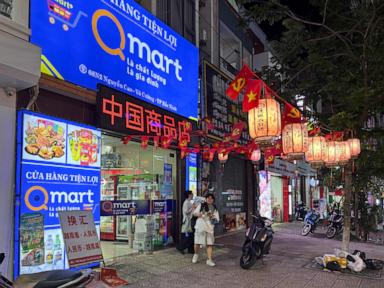
In Bac Ninh’s downtown, the influence of Chinese investment is palpable, evident in the presence of businesses like Tmall, Alibaba’s flagship online marketplace. Local convenience stores display signs in Chinese, and language schools are emerging to facilitate communication for both Vietnamese and Chinese residents.
Despite the influx of investment, challenges remain. Labor costs in Vietnam have surged by approximately 10% to 15% since 2024, making it increasingly difficult for companies to recruit workers. Peng, an employee at a telecom equipment company that relocated from Shenzhen, indicated that labor shortages are a pressing concern for many firms.
Vietnam continues to rely heavily on technology and expertise from China, which has developed a robust manufacturing ecosystem over decades. Jacob Rothman, co-founder and CEO of Velong Enterprises, a China-based company that produces kitchen gadgets, noted that while some production has moved to Southeast Asia, replicating China’s established supply chains is a formidable challenge.
As foreign investment flows into Vietnam, including a cumulative total of $28.5 billion as of September 2024, some manufacturers are cautious. The scrutiny of Vietnam’s role as a potential hub for tariff avoidance has led to a diversification of strategies, with some companies relocating aspects of their operations to other countries. For instance, a customer of SEKO Logistics has begun shifting furniture production to India, reflecting a desire to mitigate risks associated with over-reliance on Vietnam.
Despite competition from countries like Indonesia and the Philippines, Vietnam has set ambitious goals for its economic future. The government aims to transition from low-cost assembly to higher-value manufacturing by 2045, with plans to develop export markets beyond the U.S. This includes expanding trade with regions such as the Middle East, Africa, and Latin America.
“We must reach far into the ocean, delve deep underground, and soar high into space,”
stated Pham Minh Chinh, Prime Minister of Vietnam, emphasizing the country’s aspirations and the challenges that lie ahead.
As Bac Ninh and Vietnam navigate the complexities of a shifting global landscape, the outcomes will significantly shape their economic trajectories and influence the broader dynamics of manufacturing in Asia.