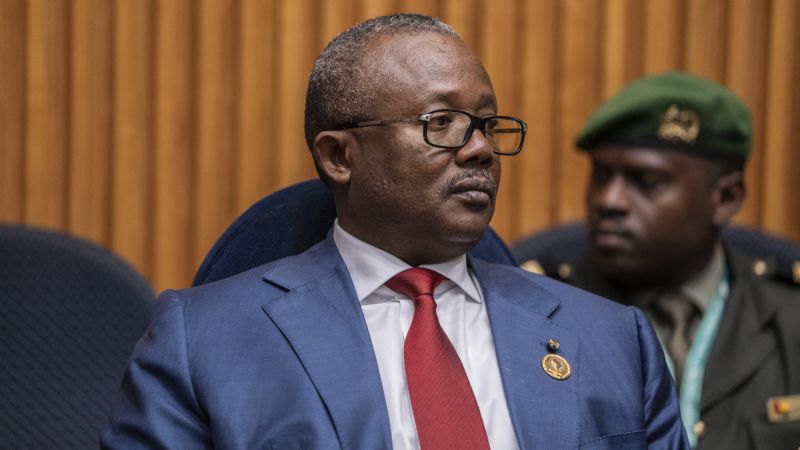
A group of army officers in Guinea-Bissau has announced the seizure of power following a coup, just before the expected results of a contentious presidential election. In a statement broadcast on state television, the officers declared that they had deposed President Umaro Sissoco Embalo, suspended the electoral process, closed the borders, and imposed a curfew. They stated that they formed “The High Military Command for the Restoration of Order” and would govern the nation until further notice.
Gunfire erupted near key government sites, including the electoral commission headquarters and the presidential palace, shortly before the announcement. Witnesses reported that the gunfire lasted for approximately one hour but ceased by 14:00 GMT (9:00 a.m. ET). Initial reports indicated no casualties. The electoral commission was scheduled to announce provisional results from the election held on March 10, 2024. Embalo faced significant competition from his main challenger, Fernando Dias, with both candidates claiming victory following the first round of voting.
Embalo aimed to become the first president in three decades to secure a second consecutive term in the small coastal nation located between Senegal and Guinea. His office did not immediately respond to requests for comment regarding the coup. Antonio Yaya Seidy, a spokesperson for Embalo, asserted that unidentified gunmen attacked the electoral commission to prevent the announcement of results, suggesting a link to Dias’s supporters, although no evidence was provided to substantiate this claim.
In contrast, Domingos Simoes Pereira, a former Prime Minister who lost to Embalo in a contentious runoff in 2019 and has endorsed Dias, denied any involvement from Dias. Pereira stated that Dias was safe and in Bissau at the time of the incident, noting that Dias was meeting with election observers when news broke of the gunfire in the city.
Guinea-Bissau has a tumultuous history, having experienced at least nine coups and attempted coups since gaining independence from Portugal in 1974. Embalo himself has claimed to have survived three coup attempts during his presidency. Critics of his administration have accused him of creating crises as a means to justify crackdowns on dissent.
As the situation in Guinea-Bissau unfolds, the international community is watching closely, given the nation’s history of political instability and the potential implications for regional security.